
Twenty-two days before the November 3 midterm election, I got a call about the Yukon-Kuskokwim Delta—one of the largest river deltas in the world, spanning the western coast of Alaska. A year ago, the remnants of Typhoon Halong pushed more than 1,500 Alaska Native people out of their homes in Kipnuk, in Kwigillingok, and the villages around them. Most are still displaced, living in Bethel or Anchorage, hundreds of miles from where they were registered to vote.
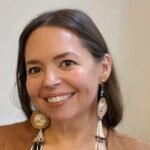
In the August 2026 primary, only twenty or so of them made it to the polls. Michelle Sparck, the director of the nonprofit Get Out the Native Vote, is one of many Native women in Alaska working tirelessly to get people to where they need to be in November in order to vote.
When Native voters come out in force, they flip states and move mountains. In 2020, Arizona’s presidential race was decided by 10,457 votes, and the counties on and around the Navajo Nation turned out at rates nobody had seen before. Montana, Nevada, Minnesota, Michigan, Wisconsin, and Alaska all have statewide races that come down to margins that a few tribal communities can cover.
To keep the momentum this year, Native leaders called for the need to keep more than 200 fellows, working through 24 grassroots groups, on the roads across Indian Country. These fellows have been registering voters at community events, going door to door on reservations, and driving people to the polls. In Alaska, this kind of effort can quickly get expensive; the gap in gas money alone was more than $100,000. So friends emailed friends. A few thousand dollars came in, then a few thousand more. One person asked me how many tanks of gas her donation would fill so she could tell her friends. This is how Indian Country affords civic life when the grants run out. “Every dollar counts,” said Judith LeBlanc, executive director of Native Organizers Alliance, at our Native Civic Power Initiative (NCPI) Leadership Table meeting in September, and she meant it as arithmetic.
When Native voters come out in force, they flip states and move mountains.
Gas is one of the reasons the math is not mathing this year. The war with Iran has pushed regular gas to about $4.43 a gallon nationally, up from $3.15 a year ago, and in one Alaska village it went to $26 when low water levels kept the fuel barge out. On a reservation where the polling place is an hour away, those prices serve as substantial barriers for Native voters. The impact will limit who is able to exercise their right to vote. But not if Native civic leaders, like Michelle, have anything to do with it.
Indian Country is activated, and Native women are leading
This is a record year for Native civic leadership. According to Advance Native Political Leadership, 355 Native and Indigenous candidates have run or are running in local, state, and federal races in 2026. The previous record was 263, in 2024. A Native woman has never served as a governor or a US senator, and this year they are leading a national effort to build free civic resources for all of Indian Country.
Yet, Tribal Nations and civic leaders are worried. Proof-of-citizenship proposals like the SAVE Act would put another barrier between Native voters and the ballot, when poll workers already turn away tribal IDs. In South Dakota, a new law that took effect in March, bars anyone whose address is a P.O. box from voting on state and local races by registering them as a “federal-only” voters. On reservations without home mail delivery, the law has disfranchised over 6,000 Native voters. Mail voting, which many Alaska Native villages entirely depend on, has long been at the mercy of postmarks, and US Postal Service recent cuts to daily pickups has further placed rural ballots at the same risk.
In 2024, grants serving Native communities were less than one percent of foundation and corporate giving, and half of the grants made exclusively to Native causes were under $20,000.
Meanwhile, the Census Bureau has proposed unprecedented changes that would eliminate demographic data and impact how the 2030 Census counts the country. The comment period for Tribal Nations to respond closed on November 2, the day before the election. This strategy is undeniably meant to create civic overwhelm. The 2030 count decides a decade of federal funding for housing, roads, and clinics.
The same organizers driving voters to the polls are writing comment letters and helping Tribal Nations file theirs, more than 39,000 at last count. Two campaigns, three weeks, one set of people. Indian Country is doing all of this on less than one-third of the grant money it had in prior cycles. That figure comes from nearly 170 interviews with Tribal Nations, Native-led civic organizations, and Native media outlets that NCPI conducted.
Where is the money?
After 2024, many civic funders decided that voter-facing work carried too much risk in a political environment where the administration has targeted philanthropy specifically. Grant money moved toward election administration, information integrity, and research. Yet, Indian Country is overlooked in that funding too. The baseline was already thin: in 2024, grants serving Native communities were less than one percent of foundation and corporate giving, and half of the grants made exclusively to Native causes were under $20,000, according to Brookings.
There was no grant money left to put gas in Native organizers’ cars in October.
Federal policy spent a century and a half dividing Native peoples. It drew reservation lines through our homelands, sorted families onto enrollment rolls, measured children by blood quantum, and assigned each community to a different agency. The purpose was dismemberment—to keep Tribal Nations from acting together, and for a long time it worked.
Philanthropy splits the same work a different way, and most of the people doing the splitting have no idea they are repeating this pattern. A foundation has a democracy portfolio, a health portfolio, a youth portfolio, when in Indian Country, all of it falls under the responsibility of the same folks, regardless of funding.
Sign up for our free newsletters
Subscribe to NPQ's newsletters to have our top stories delivered directly to your inbox.
By signing up, you agree to our privacy policy and terms of use, and to receive messages from NPQ and our partners.
A language program registers voters at its community dinners. A tribal housing authority updates the address list the Census Bureau will use in 2030. A youth program’s Elders drive people to the polls. A funder with a democracy portfolio sees one of those and funds that one at a fraction of what it needs.
Philanthropy also sorts us by legal status. Tribal governments are sovereign Nations, so most civic grant programs written for 501(c)(3)s leave us out. Native-led organizations, where Native people make the decisions, get counted together with Native-serving organizations led by non-Natives and where, ultimately, we are not the deciders. Coordination across all of it, the shared tools and the back office and the relationships with tribal leaders, fits no portfolio whatsoever in philanthropy.
What coordination looks like among Native-led networks
Coordination among Tribal Nations and Native-led networks is how we work to address the legacy of divide and conquer. When we share tools, information, and money in the open, we are resisting colonial ideologies of individualism. Because we know that the metric of wealth is “we” and never “I.”
At the NCPI Leadership Table, we are a collective of Native women who lead voting rights, election protection, GOTV, and census organizations. Whatever the Leadership Table receives, the field receives. In September, when we had a small amount of money to share, the first voices in the room spoke for the states and other organizations with the deepest need, while the members whose own states went without, agreed. Together, we decided that our focus would be on creating tools and resources that could be shared and customized nationally.
In August, on the anniversary of the Voting Rights Act, NCPI launched the Native Power Resources Hub, with free voter protection guides, tribal voter packets, toolkits, and artwork that any Tribal Nation or organization can download and make its own. Behind the hub, the Leadership Table member organizations do the incredible work that funders aren’t always seeing: more than 300 trained volunteers at polling places in Native communities across nine states, with Native attorneys standing by on Election Day; fellows in the field; public service announcements on tribal radio; and a network of 16 state-based Native organizations building a shared back office, because many of them run with a small staff of one or two people.
The big work: Speaking to the skeptical voter
The hardest conversations this fall are with Native people who have been told that voting is either pointless or dangerous. Some have heard that federal ICE agents will be at the polls, and that Native Americans will become targets. Some have heard talk of martial law. The rumors are themselves a kind of voter suppression, and the organizers at our Leadership Table treat them that way. Instead, we’ve been working through a national coordinated plan to inform people exactly what the process is, what their rights are, to get them to vote early, and ask to bring a relative or an entire clan.
Philanthropy talks a lot right now about going local. In Indian Country the local groups already exist, and they do the whole job on a third of the money. Or less.
Last week NCPI partnered with Dallas Goldtooth who posted a video that said voting is about using the levers we have, whatever we think of the system that built them. Your one ballot will not change the colonial system, he said, “but this government still makes decisions about our land, our water, our sovereignty, and our bodies, whether we participate or not. Voting doesn’t mean you trust the system, it means you refuse to hand every lever of power to the people who use it against us.” The video was viewed almost million times and over 100 thousand times. The video directs viewers to a Native Organizers Alliance site that supports voter registration and state voting information. In the Yukon-Kuskokwim Delta, a young woman from Kipnuk recorded the voice-over for a video that walks displaced Halong survivors through how to vote from where they are now.
Tribal Nations are doing incredible work too. The Oneida Nation is running its transit free all day for voters and giving every tribal employee an hour off to vote. Tribal radio stations are running early voting reminders. Organizers are telling people to bring their relatives and their Elders, because a van full of cousins is harder to scare than one person alone. In Nevada, our census lead handed out voter packets in Elko last week and is taking them to eight more communities.
Our strategies grow from the deep relationships our people have built and sustained through generations, and from experts in the field. Native organizers and professionals know their communities and carry a responsibility to their relatives. That knowledge guides whose voices carry trust, how voting information reaches people, and how a neighbor becomes an organizer. Our partners help us carry that knowledge and know what’s needed to challenge any intimidation or barriers to getting out the Native vote.
What to fund
Philanthropy talks a lot right now about going local. In Indian Country the local groups already exist, and they do the whole job on a third of the money. Or less.
If philanthropy is going to fund this work in an impactful way, it must direct resources to the work that is fighting to overcome the legacy of divide and conquer: the communal coordination, the shared tools, the relationships across Tribal Nations and Native-led organizations that no portfolio has a line for. In other words, it must fund efforts to unite and accomplish. And it must seed the leadership that is emerging right now, because it is emerging right now without philanthropy.
What is happening now is extraordinary. When threats come, it is the women who come together—the Matriarchy—who organize and fight back. What people don’t see from a foundation office is that we have been in ceremony together. The private conversations, the building and navigating of relationships, the planning, the sharing of knowledge. We are in a spiritual movement to protect what is ours: democracy and the legacy of working together.
We unite to build. We strengthen each other. We stand and face the wind.