logo logo
Donate
    • Membership
    • Donate
  • Social Justice
    • Racial Justice
    • Climate Justice
    • Disability Justice
    • Economic Justice
    • Food Justice
    • Health Justice
    • Immigration
    • LGBTQ+
  • Civic News
  • Nonprofit Leadership
    • Board Governance
    • Equity-Centered Management
    • Finances
    • Fundraising
    • Human Resources
    • Organizational Culture
    • Philanthropy
    • Power Dynamics
    • Strategic Planning
    • Technology
  • Columns
    • Ask Rhea!
    • Ask a Nonprofit Expert
    • Economy Remix
    • Gathering in Support of Democracy
    • Humans of Nonprofits
    • The Impact Algorithm
    • Living the Question
    • Nonprofit Hiring Trends & Tactics
    • Notes from the Frontlines
    • Parables of Earth
    • Re-imagining Philanthropy
    • State of the Movements
    • We Stood Up
    • The Unexpected Value of Volunteers
  • CONTENT TYPES
  • Leading Edge Membership
  • Newsletters
  • Webinars

Has Your Nonprofit Image Remained Stagnant as Your Community Moved On?

Ruth McCambridge
April 12, 2017
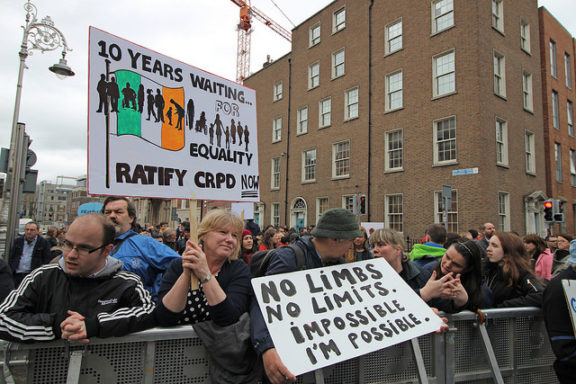
“Disability Rights protest” by Sinn Féin

April 10, 2017; Observer-Reporter (Washington County, PA)

“We’re not talking about disability rights anymore. We’re talking about disability justice,” says Chad Underkoffler, a spokesperson for Transitional Paths to Independent Living. “We have our rights. We’re moving forward.”

Underkoffler was discussing the implications of the organization’s name change and its new logo, which is full of self-propelled energy and forward momentum.
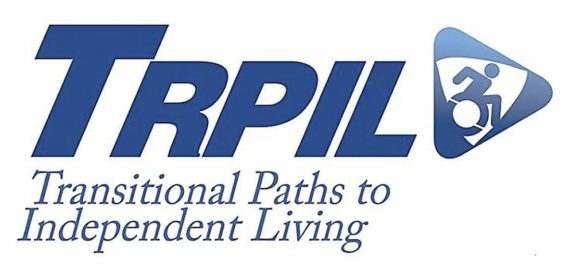
The new logo for TRPIL, Transitional Paths to Independent Living.

We’ve noted many organizational name changes in and around organizations dealing with intellectual and physical disabilities in the last few decades. These changes reflect cultural shifts and the striking changes in societal norms. We excerpt a newswire from 2014 below to illustrate this and to help you consider how your organization’s name may age you or render you less relevant.

Valerie Lang, now 77, was on the executive council of the former Spastics Society when it changed its name a mere 20 years ago. Lang, who herself has cerebral palsy, had advocated for the organization to change its name years before the organization finally made the decision.

“I felt that we could not afford to stay with the name we had,” she says. “The name spastic was a playground term of abuse. Children would shout to each other ‘You big spastic’ every time someone was clumsy or even if they just disagreed with them…. Mothers with young babies who had cerebral palsy weren’t seeking help from the society because they had heard the word used in playground parlance. I think it put the younger generation off.”

The name “Scope” was chosen at a general meeting in 1994 explicitly because it was neutral and could not be easily turned into a term of abuse.

Sign up for our free newsletters

Subscribe to NPQ's newsletters to have our top stories delivered directly to your inbox.

By signing up, you agree to our privacy policy and terms of use, and to receive messages from NPQ and our partners.

Other disability groups have since taken such names as Enable or Ability, which, the author writes, “may eventually come back to haunt the charities because of their earnest positivity. It’s terribly difficult to get it right when it comes to disability which—despite undoubtedly improving attitudes—is still an uneasy subject matter.”

Then there is the Royal National Institute of Deaf People (RNID), which recently changed its name to the simple yet descriptive Action on Hearing Loss. Paul Breckell, the CEO, says that the organization had always been referred to by its acronym, which was often confused with other similarly acronymic organizations. “People don’t always know what acronyms mean—they’re clumsy and clunky—and words like ‘National Institute’ have a tendency to date an organization.”

On the other hand, a group founded as the Association of Parents of Backward Children in 1946 later changed its name to Mencap, which is short for “mentally handicapped,” a term that has been relegated to the trash heap. But Mencap has decided to keep its name, saying that changing it will not improve the problems experienced by people with learning disabilities—who are, by the way, included in decision-making. They point out that the name has brand recognition and is widely recognized.

Not so for Scope, which has experienced a decline in brand recognition. Where 90 percent of the public used to know what the Spastics Society was, only 64 percent recognize Scope, though no declines in donations have been noted.

Richard Hawkes still believes that, on balance, the name change was a good move. “It was an important moment in our transition from being a traditional charity that helped vulnerable beneficiaries to being an organization that’s about working alongside disabled people to make change happen.

“Changing the name meant we could be side by side with all disabled people—who at that time were campaigning for important changes, like the introduction of the Disability Discrimination Act.”

Has your community moved on while your name and image has remained stagnant? Something to consider.—Ruth McCambridge


Our Voices Are Our Power.

Journalism, nonprofits, and multiracial democracy are under attack. At NPQ, we fight back by sharing stories and essential insights from nonprofit leaders and workers—and we pay every contributor.

Can you help us protect nonprofit voices?

Your support keeps truth alive when it matters most.
Every single dollar makes a difference.

Donate now
logo logo logo logo logo
About the author
Ruth McCambridge

Ruth is Editor Emerita of the Nonprofit Quarterly. Her background includes forty-five years of experience in nonprofits, primarily in organizations that mix grassroots community work with policy change. Beginning in the mid-1980s, Ruth spent a decade at the Boston Foundation, developing and implementing capacity building programs and advocating for grantmaking attention to constituent involvement.

More about: BrandingDisability JusticeEquity-Centered ManagementNonprofit News
See comments

You might also like
Disability Groups Are Standing United for Trans Rights. That Hasn’t Always Been the Case.
Sara Luterman
90 Percent of Student Discrimination and Harassment Complaints Were Dismissed Last Year. Here’s Why.
Nadra Nittle
Giving Bigger, Organizing More Boldly: Centering Disability Justice
Katrina Schaffer
The Danger ICE Poses to the Disabled Community
Alison Stine
The Silent “Cinderella” Disease
Rebecca L. Root
On the Oracle Alice Wong, Disability, and Community
Alison Stine

Upcoming Webinars

Group Created with Sketch.
March 19th, 2:00 pm ET

Open Board Search

How Casting a Wide Net Transforms Nonprofit Governance

Register
Group Created with Sketch.
March 26, 2:00 pm ET

Learn Out Loud

How Every Philanthropy, Nonprofit, and Community Member Can Leverage Power in Our Fight Against ICE

Register

    
You might also like
A person at a march holds a sign with the blue, pink, and white trans flag that reads “We See You, We’ve Got You”
Disability Groups Are Standing United for Trans Rights. That...
Sara Luterman
Yellow CLOSED sign hanging in a dusty shop window, conveying themes of business failure, recession, and economic downturn.
Nonprofits in Limbo as Flipcause Bankruptcy Unfolds
Lauren Girardin
A young Black student with braids sitting on a step with her head tucked in her arms, as other students walk around her.
90 Percent of Student Discrimination and Harassment...
Nadra Nittle

Like what you see?

Subscribe to the NPQ newsletter to have our top stories delivered directly to your inbox.

See our newsletters

By signing up, you agree to our privacy policy and terms of use, and to receive messages from NPQ and our partners.

  • About
  • Advertise
  • Careers
  • Contact
  • Copyright
  • Donate
  • Editorial Policy
  • Funders
  • Submissions

We are using cookies to give you the best experience on our website.


Nonprofit Quarterly | Civic News. Empowering Nonprofits. Advancing Justice.
Powered by  GDPR Cookie Compliance
Privacy Overview

This website uses cookies so that we can provide you with the best user experience possible. Cookie information is stored in your browser and performs functions such as recognising you when you return to our website and helping our team to understand which sections of the website you find most interesting and useful.

Strictly Necessary Cookies

Strictly Necessary Cookie should be enabled at all times so that we can save your preferences for cookie settings.