logo logo
giving banner
Donate
    • Membership
    • Donate
  • Social Justice
    • Racial Justice
    • Climate Justice
    • Disability Justice
    • Economic Justice
    • Food Justice
    • Health Justice
    • Immigration
    • LGBTQ+
  • Civic News
  • Nonprofit Leadership
    • Board Governance
    • Equity-Centered Management
    • Finances
    • Fundraising
    • Human Resources
    • Organizational Culture
    • Philanthropy
    • Power Dynamics
    • Strategic Planning
    • Technology
  • Columns
    • Ask Rhea!
    • Ask a Nonprofit Expert
    • Economy Remix
    • Gathering in Support of Democracy
    • Humans of Nonprofits
    • The Impact Algorithm
    • Living the Question
    • Nonprofit Hiring Trends & Tactics
    • Notes from the Frontlines
    • Parables of Earth
    • Re-imagining Philanthropy
    • State of the Movements
    • We Stood Up
    • The Unexpected Value of Volunteers
  • CONTENT TYPES
  • Leading Edge Membership
  • Newsletters
  • Webinars

Nonprofit Newswire | Failing Grade for Charter School Discourse

Rick Cohen
June 22, 2010

June 18, 2010; Source: Huffington Post | Very few people are public critics of charter schools, given their bipartisan support and, unlike private schools, their public school status. But Hofstra University professor Alan Singer pulls no punches in his critique. This article responds to questions he received in response to his June 8 Huffpo article provocatively titled, “Charter Vultures Circle the Public Schools.”

Singer’s June 8 article made the following points: that the critics of public schools like Mayor Michael Bloomberg and others are products of elite private schools, send their kids to elite private schools, and have no solid experience with public schools; that they’re driven ideologically and politically—“blindly wedded to the free market economic approach that produced the economic disasters that continue to plague the global economy;” and that charter schools “virtually equal corruption.”

Sign up for our free newsletters

Subscribe to NPQ's newsletters to have our top stories delivered directly to your inbox.

By signing up, you agree to our privacy policy and terms of use, and to receive messages from NPQ and our partners.

As Singer’s June 18 defense shows, overreaching arguments don’t help. Examples of corrupt charter schools no more characterize all charter schools than examples of corrupt nonprofits characterize all nonprofits. Making the leap from the logical and explainable charge of privatization to examples of profiteering doesn’t work. For people who might agree with parts of Singer’s analysis of charters, broad brush charges undermine the argument (for example, his contention that “For the Black politicians, the charters replace the now defunct community school boards as sources of patronage. High quality education is at best an afterthought.”). And using epithets for charter school supporters (“Mayor Michael ‘Moneybags’ Bloomberg” and schools chancellor “Joel ‘Clueless’ Klein”) lowers the quality of the political discourse.— Rick Cohen


Our Voices Are Our Power.

Journalism, nonprofits, and multiracial democracy are under attack. At NPQ, we fight back by sharing stories and essential insights from nonprofit leaders and workers—and we pay every contributor.

Can you help us protect nonprofit voices?

Your support keeps truth alive when it matters most.
Every single dollar makes a difference.

Donate now
logo logo logo logo logo
About the author
Rick Cohen

Rick joined NPQ in 2006, after almost eight years as the executive director of the National Committee for Responsive Philanthropy (NCRP). Before that he played various roles as a community worker and advisor to others doing community work. He also worked in government. Cohen pursued investigative and analytical articles, advocated for increased philanthropic giving and access for disenfranchised constituencies, and promoted increased philanthropic and nonprofit accountability.

More about: Nonprofit News
See comments

You might also like
Supermajority, Group Organizing Women Around Politics, Is Shutting Down
Jennifer Gerson
Nonprofits Devise Creative Solutions to Address Federal Funding Cuts
Vicki Pozzebon
Does Personal Investment Hurt Fundraising?
Rochelle Jerry
Beyond the Plantation Economy: How Alabama Can Benefit from Cooperatives
Andre Carter
Women’s Rights Under Siege—but We’ve Come Too Far to Go Back
Ann Lehman
For Every $100 Foundations Give, Only 19 Cents Go to Volunteer Support
Jan Masaoka

Upcoming Webinars

Group Created with Sketch.
January 29th, 2:00 pm ET

Participatory Decision-making

When & How to Apply Inclusive Decision-making Methods

Register
Group Created with Sketch.
February 26th, 2:00 pm ET

Understanding Reduction in Force (RIF) Law

Clear Guidance for Values-centered Nonprofits

Register

    
You might also like
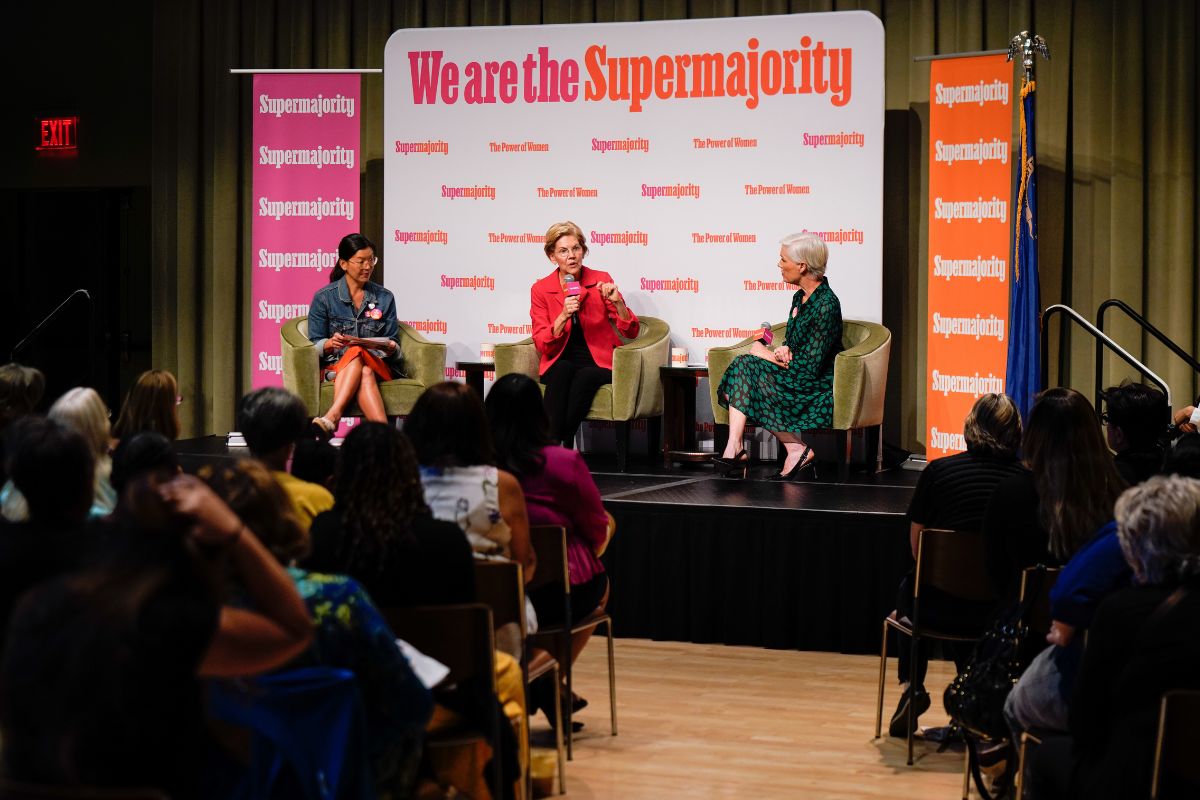
Senator Elizabeth Warren speaks into a microphone in front of a sign reading "We are the Supermajority" while an audience listens.
Supermajority, Group Organizing Women Around Politics, Is...
Jennifer Gerson
A red circle overlayed on a yellow background with three multi-colored dots on each side. In the center it reads, " Isaiah Thompson: Staff Picks for 2025"
Staff Picks for 2025: Isaiah Thompson
Isaiah Thompson
Staff Picks for 2025: Steve Dubb
Steve Dubb

Like what you see?

Subscribe to the NPQ newsletter to have our top stories delivered directly to your inbox.

See our newsletters

By signing up, you agree to our privacy policy and terms of use, and to receive messages from NPQ and our partners.

  • About
  • Advertise
  • Careers
  • Contact
  • Copyright
  • Donate
  • Editorial Policy
  • Funders
  • Submissions

We are using cookies to give you the best experience on our website.


Nonprofit Quarterly | Civic News. Empowering Nonprofits. Advancing Justice.
Powered by  GDPR Cookie Compliance
Privacy Overview

This website uses cookies so that we can provide you with the best user experience possible. Cookie information is stored in your browser and performs functions such as recognising you when you return to our website and helping our team to understand which sections of the website you find most interesting and useful.

Strictly Necessary Cookies

Strictly Necessary Cookie should be enabled at all times so that we can save your preferences for cookie settings.