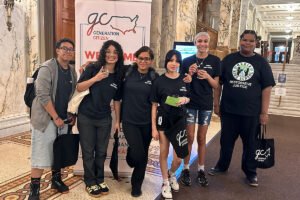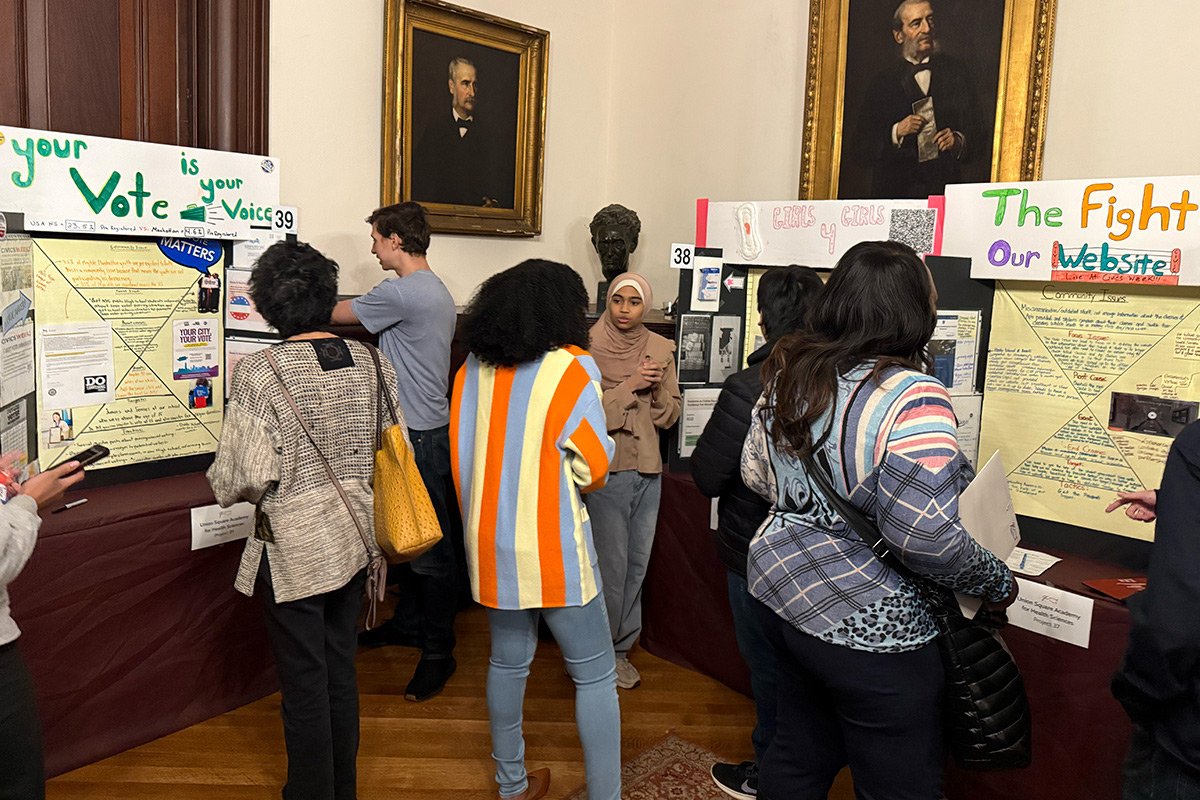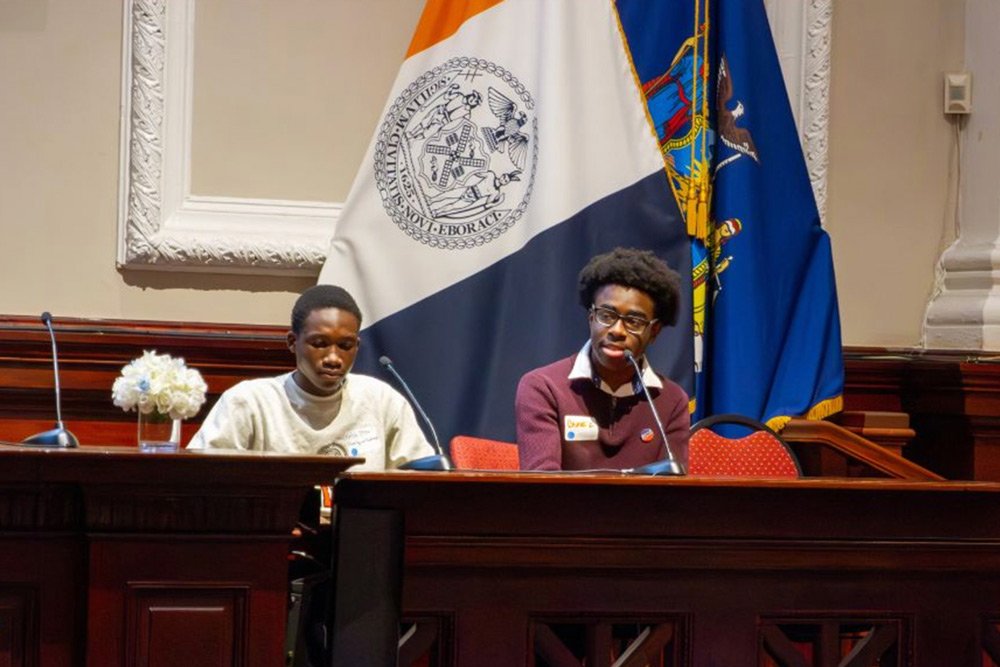

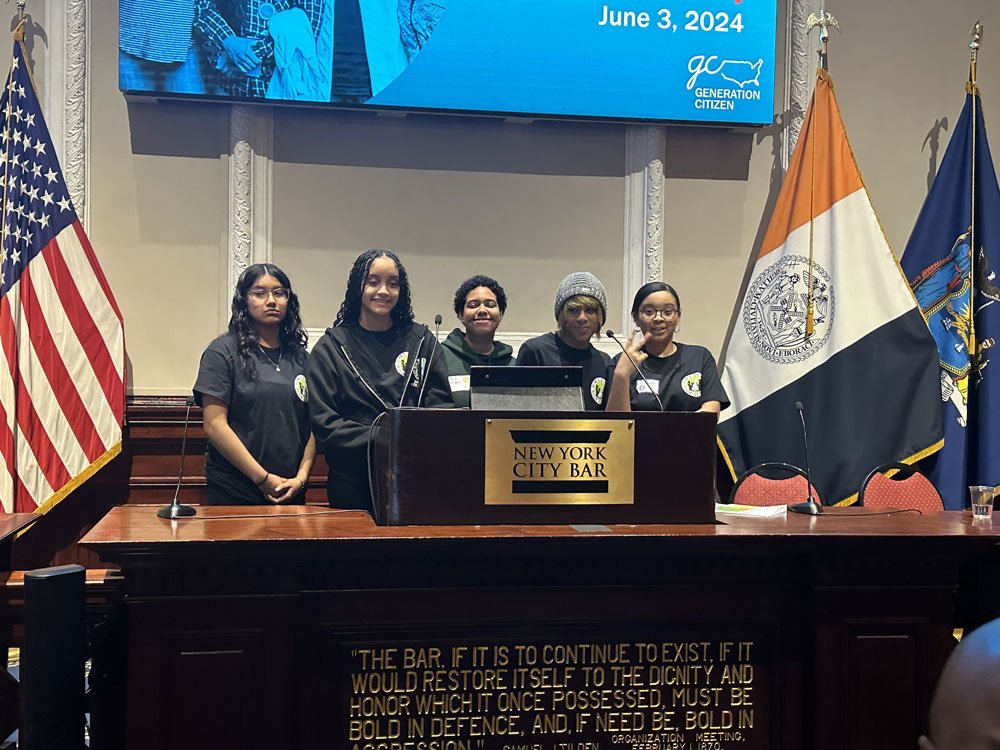
Generation Citizen opens with a call to reimagine democracy by recognizing youth voice and civic imagination as essential civic infrastructure and makes the case for why expanding youth access to civic opportunities is essential to democracy’s next 250 years. The essays that follow feature personal reflections from young people on the experiences that shaped their civic identities—from advocating for change in their schools to engaging local leaders and organizing in their communities.
____________________________________________________________________________
We want young people to understand that they have power in their schools, in their communities right now.Generation Citizen: For those who are new to RISE Vote 2026, what is the initiative and what are you hoping to accomplish?
Faith Vieira: RISE Vote 2026 is Generation Citizen’s initiative to expand youth civic participation by creating more opportunities for high school students to register and pre-register to vote. RISE stands for Registering, Informing, Supporting, and Empowering, and we’re working alongside New Voters and The Civics Center to support 200 high school voter registration drives across 15 states. But our goal is bigger than the number of registrations we collect. We want young people to understand that they have power in their schools, in their communities right now. Registering to vote is one of the most visible ways for a young person to begin exercising that power.
GC: RISE stands for Registering, Informing, Supporting and Empowering. What does each of those pillars look like in practice for high school students?
FV: Registering means making sure students have accessible opportunities to register or pre-register to vote. Informing means helping them understand not only how to participate, but why their participation matters. Supporting means giving students the resources, guidance, and partnerships they need to lead voter registration efforts themselves. And empowering means making sure young people see themselves as people who can influence what happens in their communities. The empowerment piece is especially important. We want to do more than tell young people that their voices matter. We want to create opportunities where they can actually use their voices and see the impact of doing so.
Empowering means making sure young people see themselves as people who can influence what happens in their communities.
GC: Why is RISE Vote specifically focused on creating voter registration opportunities in high schools?
FV: Young people are often given responsibility without being given the power that should come with it. Imagine being told you’re responsible for babysitting your younger sibling, but you’re not allowed to feed them. You’re responsible for their well-being, but you haven’t been given the power to fully care for them. We do something similar to young people all the time. We ask young people to take responsibility for their futures and contribute to their communities. Yet we don’t always create meaningful opportunities for them to influence the decisions shaping those same communities. High schools are one of the places where we can begin changing that. Voter registration is tangible. A student can fill out a form, help a classmate register, organize a drive, and internally recognize “I have a choice. I have a voice. I have power here.”
GC: What does a student’s participation in a RISE Vote opportunity look like?
Sign up for our free newsletters
Subscribe to NPQ's newsletters to have our top stories delivered directly to your inbox.
By signing up, you agree to our privacy policy and terms of use, and to receive messages from NPQ and our partners.
FV: We want students to be participants and leaders, not simply the people sitting on the other side of a registration table. A student might register or pre-register themselves, encourage their peers to register, organize a voter registration drive at their school or organization, or work alongside other students to build excitement around civic participation. The larger goal is for a student to leave a RISE Vote opportunity understanding that civic engagement isn’t something they have to wait until adulthood to begin. Voting may be one expression of their power, but learning how to organize, educate their peers, advocate for their communities, and make choices about the issues affecting their lives can start now.
GC: What has the team learned so far about what helps make voter registration feel relevant and accessible to high school students?
There’s a moment when a young person goes from thinking, “This is something adults decide,” to realizing, “I can be part of this too.”
FV: We’ve learned peer leadership does more work than almost anything else we offer. Students trust other students in a way they don’t automatically trust an outside organization walking in with a clipboard, and that trust is the whole game when you’re asking someone to do something as personal as registering to vote. The second thing is specificity. Vague appeals to “civic duty” don’t land in the same way a clear, concrete answer to “does this affect me, in my state, right now?” lands. The third is nonpartisanship, and I mean that as a practical finding, not just a policy. Students can tell almost immediately when something is trying to persuade them toward a position instead of just handing them a tool. The moment they sense that, trust drops. We believe staying rigorously nonpartisan is a big part of why the work is effective.
GC: How does RISE Vote fit into Generation Citizen’s broader approach to youth voice and civic engagement?
FV: Generation Citizen has always worked from the belief that civics is something young people practice, not something they memorize. RISE Vote is a natural extension of that: instead of a classroom project that ends when the semester does, it’s a real action with a real deadline, a real outcome a student can point to. It also reflects how GC approaches partnership. We didn’t try to build every piece of this ourselves. The Civics Center brings deep training and state-by-state expertise, New Voters brings student leadership and mentorship infrastructure, and RISE Vote’s role is to connect schools and organizations to whichever combination fits them, so no partner has to reinvent the wheel to get their students registered.
The more we create space for young people to experience their own power, the more hopeful I am about the future of our democracy.
GC: What gives you hope about the future of youth civic participation?
FV: What gives me hope is seeing young people realize that they don’t have to wait for permission to make a difference. There’s a moment when a young person goes from thinking, “This is something adults decide,” to realizing, “I can be part of this too.” Whether that starts with registering to vote, organizing their peers, or simply asking questions, that shift matters. The more we create space for young people to experience their own power, the more hopeful I am about the future of our democracy.