
logo logo
giving banner
Donate
    • Membership
    • Donate
  • Social Justice
    • Racial Justice
    • Climate Justice
    • Disability Justice
    • Economic Justice
    • Food Justice
    • Health Justice
    • Immigration
    • LGBTQ+
  • Civic News
  • Nonprofit Leadership
    • Board Governance
    • Equity-Centered Management
    • Finances
    • Fundraising
    • Human Resources
    • Organizational Culture
    • Philanthropy
    • Power Dynamics
    • Strategic Planning
    • Technology
  • Columns
    • Ask Rhea!
    • Ask a Nonprofit Expert
    • Gathering in Support of Democracy
    • Humans of Nonprofits
    • The Impact Algorithm
    • Living the Question
    • Nonprofit Hiring Trends & Tactics
    • Notes from the Frontlines
    • Parables of Earth
    • Reimagining Philanthropy
    • State of the Movements
    • We Stood Up
    • The Unexpected Value of Volunteers
  • Leading Edge Membership
  • Newsletters
  • Online Events
  • CONTENT TYPES

Theda Skocpol on the Self-Imposed ACA Quandary of Republican Governors

Rick Cohen
February 23, 2015

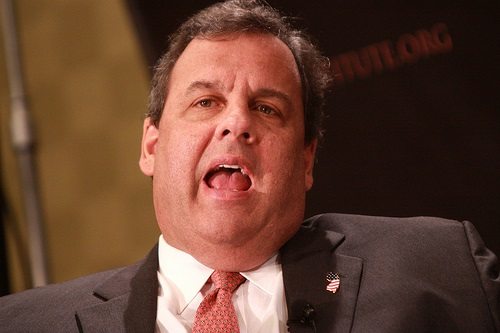
Christie

February 20, 2015;The Atlantic

The NPQ Newswire has cited Theda Skocpol before on a number of variations on political advocacy, so it is a pleasure to see an article from Skocpol on the political problems facing Republican governors concerning conservatives’ longstanding crusade to destroy the Affordable Care Act.

As NPQ has written recently, the King v. Burwell case now before the Supreme Court, prompted by conservative think tanks, could bring down the Affordable Care Act if the court somehow decides that health insurance subsidies should not be provided to people who purchased their health insurance on the federal health exchange. The problem comes for some Republican governors who have figured out how to work with—and live with the benefits of—the ACA.

The prime example is Ohio governor John Kasich, who got the support of the Ohio Chamber of Commerce to convince the Ohio legislature to expand Medicaid eligibility. In the process, more than 230,000 Ohioans were able to purchase health insurance on the state exchange, many receiving subsidies that reduced their premiums to an average of $100 a month. Skocpol references the Dayton Daily News to the effect that insurance companies are flocking to the Ohio exchange—16 this past year, compared to 12 on the exchange in the first year of ACA enrollment, and offering 290 plans in 2015 compared to about 200 in 2014.

Sign up for our free newsletters

Subscribe to NPQ's newsletters to have our top stories delivered directly to your inbox.

By signing up, you agree to our privacy policy and terms of use, and to receive messages from NPQ and our partners.

A somewhat similar situation confronts New Jersey Governor Chris Christie. In New Jersey, expanded Medicaid eligibility has given new coverage to 350,000 residents. However, because the state doesn’t sponsor a health exchange, the 200,000 or so Garden State residents who purchased insurance on the federal exchange and got subsidized to do so would potentially lose their subsidies as a result of King v. Burwell.

Kasich and Christie are both potential Republican presidential candidates. If King v. Burwell were to succeed in denying insurance subsidies to people who purchased policies on the federal exchange, they would have to explain to the public how it makes sense to provide subsidies to the very poor through Medicaid but to deny subsidies to people just above the expanded Medicaid income eligibility level. Even governors who are ardent opponents of the ACA, like Wisconsin’s Scott Walker, who has rejected both Medicaid expansion and a state exchange, would have to explain how they can justify the deprivation of subsidies from people who purchased their policies on the federal exchanges, particularly since Walker’s strategy has been to push people who would have qualified for expanded Medicaid to purchase insurance on the federal exchange instead.

Essentially, Skocpol has pointed out how the Republican governors who are potential presidential candidates have in many cases taken the route of “politically pleasing anti-Obamacare rhetoric” while knowing that many of their lower-income constituents have benefited extensively from the provisions of the Affordable Care Act. Skocpol’s expertise in nonprofit advocacy should lead to suggestions for nonprofits to mobilize their stakeholders to explain that the ACA has brought major benefits to lower income households in their states and that the strategy of the ACA. As a result of the ACA, healthcare has turned into an issue for nonprofits beyond those specifically mission-focused on health. Whether people get health coverage, what they pay as insurance premiums, whether the coverage leads to improved healthcare delivery, and other factors embedded in the implementation of the ACA take a wide swath of nonprofits into the healthcare arena—and potentially into healthcare advocacy, regardless of how the Supreme Court rules in King v. Burwell.—Rick Cohen


 

Our Voices Are Our Power.

Journalism, nonprofits, and multiracial democracy are under attack. At NPQ, we fight back by sharing stories and essential insights from nonprofit leaders and workers—and we pay every contributor.

Can you help us protect nonprofit voices?

Your support keeps truth alive when it matters most.
Every single dollar makes a difference.

Donate now
logo logo logo logo logo
About the author
Rick Cohen

Rick joined NPQ in 2006, after almost eight years as the executive director of the National Committee for Responsive Philanthropy (NCRP). Before that he played various roles as a community worker and advisor to others doing community work. He also worked in government. Cohen pursued investigative and analytical articles, advocated for increased philanthropic giving and access for disenfranchised constituencies, and promoted increased philanthropic and nonprofit accountability.

More about: Health EquityNonprofit NewsPolicy
See comments

You might also like
Maternal Mortality Is a Policy Failure
Tina Sherman
The Politics of Loving Kindness: Insights from a Birth Equity Initiative
Dr. Zea Malawa
How to Undermine Authoritarian Control: On Empowering Parallel Institutions
Gretchen Goldman and Saul Levin
What Is the SAVE America Act?
Marissa Martinez
Disability Groups Are Standing United for Trans Rights. That Hasn’t Always Been the Case.
Sara Luterman
How to Counsel for Climate Anxiety
Rebecca L. Root

Upcoming Webinars

Group Created with Sketch.
April 23, 2:00 pm ET

Receiving & Giving Feedback

Essential Practices for Healthy Organizations and Communities

Register
Group Created with Sketch.
May 14, 2:00 pm ET

Equitable Compensation in Practice

A New Values-Aligned Toolkit & Discussion Guide

Register
Group Created with Sketch.
May 28, 2:00 pm ET

Learn Out Loud

Revisiting Maurice Mitchell's "Building Resilient Organizations"

Register

    
You might also like
A close up of a Black woman with red painted nails cradling her pregnant belly.
Maternal Mortality Is a Policy Failure
Tina Sherman
The Politics of Loving Kindness: Insights from a Birth...
Dr. Zea Malawa
A pair of red and blue zippers, with tracks intertwined to reveal a small gap in between them. Where one zipper stops, the other zipper starts.
How to Undermine Authoritarian Control: On Empowering...
Gretchen Goldman and Saul Levin

Like what you see?

Subscribe to the NPQ newsletter to have our top stories delivered directly to your inbox.

See our newsletters

By signing up, you agree to our privacy policy and terms of use, and to receive messages from NPQ and our partners.

  • About
  • Advertise
  • Careers
  • Contact
  • Copyright
  • Donate
  • Editorial Policy
  • Privacy Policy
  • Funders
  • Submissions

We are using cookies to give you the best experience on our website.


Nonprofit Quarterly | Civic News. Empowering Nonprofits. Advancing Justice.
Powered by  GDPR Cookie Compliance
Privacy Overview

This website uses cookies so that we can provide you with the best user experience possible. Cookie information is stored in your browser and performs functions such as recognising you when you return to our website and helping our team to understand which sections of the website you find most interesting and useful.

Strictly Necessary Cookies

Strictly Necessary Cookie should be enabled at all times so that we can save your preferences for cookie settings.