logo logo
giving banner
Donate
    • Membership
    • Donate
  • Social Justice
    • Racial Justice
    • Climate Justice
    • Disability Justice
    • Economic Justice
    • Food Justice
    • Health Justice
    • Immigration
    • LGBTQ+
  • Civic News
  • Nonprofit Leadership
    • Board Governance
    • Equity-Centered Management
    • Finances
    • Fundraising
    • Human Resources
    • Organizational Culture
    • Philanthropy
    • Power Dynamics
    • Strategic Planning
    • Technology
  • Columns
    • Ask Rhea!
    • Ask a Nonprofit Expert
    • Economy Remix
    • Gathering in Support of Democracy
    • Humans of Nonprofits
    • The Impact Algorithm
    • Living the Question
    • Nonprofit Hiring Trends & Tactics
    • Notes from the Frontlines
    • Parables of Earth
    • Re-imagining Philanthropy
    • State of the Movements
    • We Stood Up
    • The Unexpected Value of Volunteers
  • CONTENT TYPES
  • Leading Edge Membership
  • Newsletters
  • Webinars

Easing of Cuba Restrictions Allows Foundation to Donate $862K to Preserve Hemingway Home

Shafaq Hasan
June 24, 2015

Hemingways-house

June 22, 2015; Pittsburgh Tribune-Review and CNN

Not long after the reinstatement of the United States’ relationship with Cuba, we started asking ourselves what the long-term impact for the nonprofit sector might be. For example, American museums have jumped on the opportunity to collaborate with Cuba in ways they could not before the embargo was loosened.

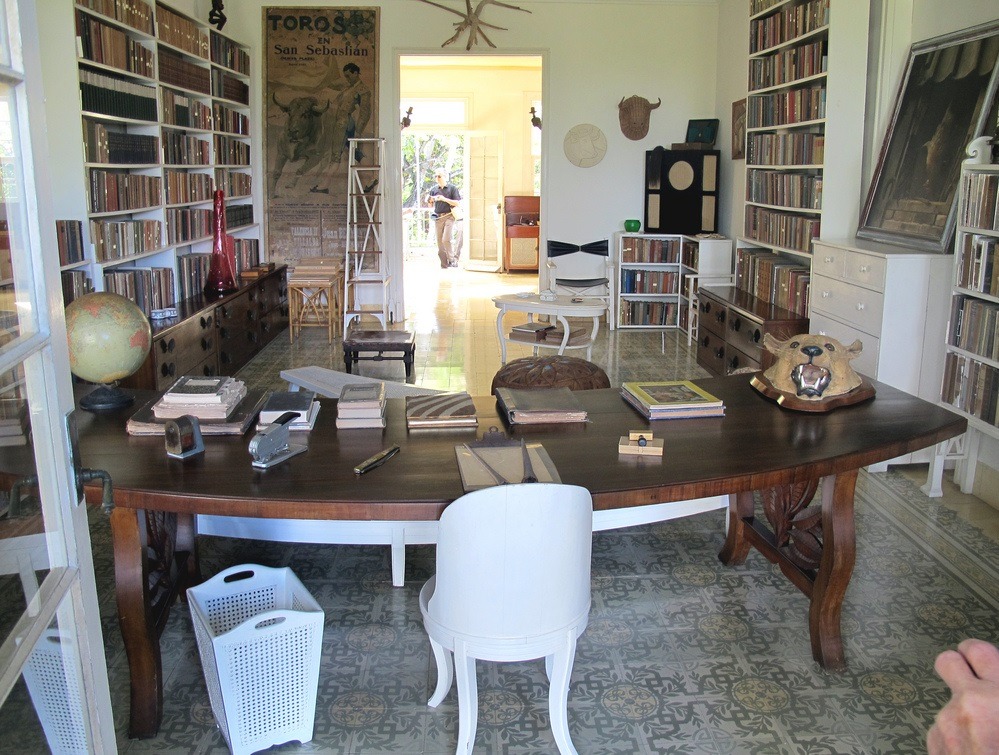
Now, the Boston-based Finca Vigia Foundation is also capitalizing on the renewed diplomatic relations to help preserve writer Ernest Hemingway’s books, letters, and photos, which are currently sitting in his home outside of Havana, where the writer spent time during the ’40s and ’50s and wrote part of his most famous novel, For Whom the Bell Tolls, and his Nobel Prize–winning book, The Old Man and the Sea. He left Cuba for good in 1961, just before the U.S. cut off diplomatic relations.

Finca Vigia is the name of the home Hemingway lived in at the time, which has now become a museum. Hemingway’s widow donated the house to the Cuban government. For the ten years since 2005, the foundation and Cuba have been struggling to prevent thousands of pages of Hemingway’s writing and his photos from disintegrating in the Havana heat.

Sign up for our free newsletters

Subscribe to NPQ's newsletters to have our top stories delivered directly to your inbox.

By signing up, you agree to our privacy policy and terms of use, and to receive messages from NPQ and our partners.

In the first major exported construction project since relations were reinstated, the foundation plans to ship almost $900,000 worth of supplies to build a state-of-the-art facility to preserve the material. The proposal indicates the foundation would send four shipping crates of a variety of building materials, accounting for basic nuts and bolts as well as tools for construction.

While many in Cuba had been enthusiastic about conservation efforts for the museum, funds and material for the facility are apparently unavailable in Cuba. According to the Associated Press, finding proper construction material is very difficult in the economically struggling country.

“We will need to send a tremendous amount of tools over here,” said Mary-Jo Adams, the executive director of the Finca Vigia Foundation. “Hammers, screwdrivers, nails, nuts, bolts. Everything we send needs to have all the corresponding parts. We are under no illusions that there is a Home Depot in Cuba.”

In the plan, Cuban architects and engineers would construct a 2,400-foot, two-story facility where Hemingway’s papers and photos can be processed and preserved. Finca Vigia board member and home improvement show host Bob Vila, who is Cuba-American and speaks Spanish fluently, will help oversee the project.

Many of the documents in the house have already been processed and scanned. While the originals remain in Cuba, the scanned copies are sent to Finca Vigia Foundation in Boston where they are displayed at the John F. Kennedy Presidential Library and Museum. The hope is that eventually the facility will be brought back to the United States, specifically Florida, where the original documents can be preserved in climate-controlled areas—which remains a concern in Cuba.—Shafaq Hasan


Our Voices Are Our Power.

Journalism, nonprofits, and multiracial democracy are under attack. At NPQ, we fight back by sharing stories and essential insights from nonprofit leaders and workers—and we pay every contributor.

Can you help us protect nonprofit voices?

Your support keeps truth alive when it matters most.
Every single dollar makes a difference.

Donate now
logo logo logo logo logo
About the author
Shafaq Hasan

Shafaq Hasan is a Community Builder at NPQ. She is a graduate of Brandeis University where she majored in Art History and spent most of her time working in the office of the student newspaper as the Opinions editor, and later, as an Associate editor. As an undergraduate, she was also a research assistant for the Justice Brandeis Law Project at the Schuster Institute for Investigative Journalism from 2011 to 2014.

More about: Arts and CultureGlobal IssuesNonprofit NewsPartnershipsPhilanthropy
See comments

Call to action
You might also like
An Artist Stands Up for Jornaleros
Nina R. Salerno
How the Next Set of UN Sustainability Goals Can Center the Solidarity Economy
Ilcheong Yi, Christina Clamp, Michael A. Peck, Zhen Lee, Ibon Zugasti and Yukyong Jung Yun Choe
Making Sense of GivingTuesday 2025
Isaiah Thompson
Blocking Authoritarianism: Steps Nonprofits and Foundations Must Take
Saqib Bhatti
The Power of Direct Community Funding
Ana Valéria Araújo
Equitable Intermediaries: Power, Protection, Partnership
Frank Gargione and Andrea Granda

Upcoming Webinars

Group Created with Sketch.
January 29th, 2:00 pm ET

Participatory Decision-making

When & How to Apply Inclusive Decision-making Methods

Register
Group Created with Sketch.
February 26th, 2:00 pm ET

Understanding Reduction in Force (RIF) Law

Clear Guidance for Values-centered Nonprofits

Register

    
You might also like
A black and white paste-up image of a day-laborer wearing a sun hat and looking away from the camera. The image is surrounded by missing posters of day laborers. Guadalajara, Jalisco, México.
An Artist Stands Up for Jornaleros
Nina R. Salerno
Humanity@Work&Life: Volume Two: New Directions for the Social Economy
How the Next Set of UN Sustainability Goals Can Center the...
Ilcheong Yi, Christina Clamp, Michael A. Peck, Zhen Lee, Ibon Zugasti and Yukyong Jung Yun Choe
A group of people standing and smiling together while holding up signs with the Giving Tuesday logo and that say, “I Give Time”
Making Sense of GivingTuesday 2025
Isaiah Thompson

Like what you see?

Subscribe to the NPQ newsletter to have our top stories delivered directly to your inbox.

See our newsletters

By signing up, you agree to our privacy policy and terms of use, and to receive messages from NPQ and our partners.

  • About
  • Advertise
  • Careers
  • Contact
  • Copyright
  • Donate
  • Editorial Policy
  • Funders
  • Submissions

We are using cookies to give you the best experience on our website.


Nonprofit Quarterly | Civic News. Empowering Nonprofits. Advancing Justice.
Powered by  GDPR Cookie Compliance
Privacy Overview

This website uses cookies so that we can provide you with the best user experience possible. Cookie information is stored in your browser and performs functions such as recognising you when you return to our website and helping our team to understand which sections of the website you find most interesting and useful.

Strictly Necessary Cookies

Strictly Necessary Cookie should be enabled at all times so that we can save your preferences for cookie settings.