logo logo
giving banner
Donate
    • Membership
    • Donate
  • Social Justice
    • Racial Justice
    • Climate Justice
    • Disability Justice
    • Economic Justice
    • Food Justice
    • Health Justice
    • Immigration
    • LGBTQ+
  • Civic News
  • Nonprofit Leadership
    • Board Governance
    • Equity-Centered Management
    • Finances
    • Fundraising
    • Human Resources
    • Organizational Culture
    • Philanthropy
    • Power Dynamics
    • Strategic Planning
    • Technology
  • Columns
    • Ask Rhea!
    • Ask a Nonprofit Expert
    • Economy Remix
    • Gathering in Support of Democracy
    • Humans of Nonprofits
    • The Impact Algorithm
    • Living the Question
    • Nonprofit Hiring Trends & Tactics
    • Notes from the Frontlines
    • Parables of Earth
    • Re-imagining Philanthropy
    • State of the Movements
    • We Stood Up
    • The Unexpected Value of Volunteers
  • CONTENT TYPES
  • Leading Edge Membership
  • Newsletters
  • Webinars

Will Brazilian Democracy Survive the Bolsonaro Shock?

Steve Dubb
October 30, 2018

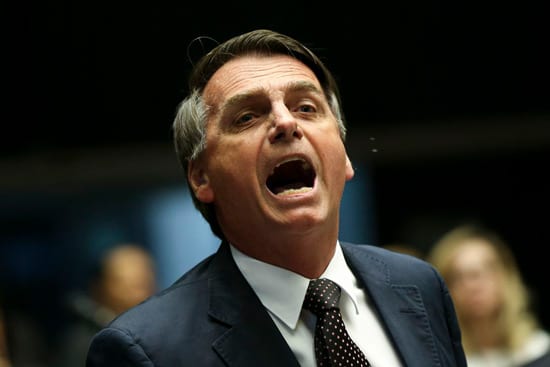
By Marcelo Camargo/Agência Brasil [CC BY 3.0 br], via Wikimedia Commons
October 29, 2018; North American Congress on Latin America

In a runoff election this Sunday, Jair Bolsonaro, a former army captain and congressman, won the presidency in Brazil by a margin of 55.1 percent to 44.9 percent, defeating Fernando Haddad, a son of Lebanese immigrants, former Mayor of São Paulo, and former Minister of Education. Haddad ran for the Partido dos Trabalhadores (Workers Party) or PT, which had led Brazil’s government from 2003 to 2016. All told, more than 114 million Brazilians cast their ballots, with 57.7 million favoring Balsonaro and 47 million favoring Haddad.

On the surface, Bolsonaro’s victory might appear to be an ordinary vote by the world’s fourth most populous electoral democracy. But that would be a gross misreading of the situation. As Ernesto Londoño and Shasta Darlington write in the New York Times, “The president-elect, Jair Balsonaro, has exalted the country’s military dictatorship, advocated torture and threatened to destroy, jail or drive into exile his political opponents.” Moreover, Bolsonaro’s victory is not an isolated event. It is, rather, the latest in a series of steps that have eroded Brazil’s institutions, similar to what we’ve seen in Poland recently.

In August 2016, former PT president Dilma Rousseff was impeached—not for corruption, not for electoral manipulation, not for a sex scandal—but as Catesby Holmes explained in an article written six months ago, for “bad budgeting.” Specifically, as Daniel Gallas writes for the BBC, the charges Rousseff faced concerned “allowing creative accounting techniques involving loans from public banks to the treasury that artificially enhanced the budget surplus. This gave the appearance that government accounts were in better shape than they actually were.”

It would be difficult to find a government that has not engaged in creative accounting, but in the face of her widespread unpopularity stemming from an economic recession, this was enough for Brazil’s lower house to impeach Rousseff, after which the upper house removed her from office.

Then, a year later, Rousseff’s predecessor Luiz Ignacio “Lula” de Silva was found guilty of accepting a seaside apartment as a bribe; for this offence, he has been sentenced to 12 years in jail and banned from competing in the 2018 election. As with Rousseff, though, the charges against Lula were hardly airtight.

Sign up for our free newsletters

Subscribe to NPQ's newsletters to have our top stories delivered directly to your inbox.

By signing up, you agree to our privacy policy and terms of use, and to receive messages from NPQ and our partners.

As Mark Weisbrot, codirector of the Center for Economic and Policy Research (CEPR), a nonprofit advocacy group, said in a New York Times op-ed, “The bribe alleged to have been received by Mr. da Silva is an apartment owned by [the construction company]. But there is no documentary evidence that either Mr. da Silva or his wife ever received title to, rented or even stayed in the apartment, nor that they tried to accept this gift.” It is widely believed that if Lula had been allowed to run for president this year, he would have won, and quite possibly by a sizeable margin. In office, Lula’s “Bolsa Familia” and related programs had helped reduce inequality that had been among the world’s worst—so bad that Brazilian had once been widely known as Belindia because the south was as wealthy as Belgium while the northeast was as poor as India before its recent tech-fueled economic growth. The regional disparity persists, but the gap under Lula was getting smaller, as Brazil’s northeast enjoyed rapid economic growth.

Earlier this month, Bolsonaro announced that, if elected president, he would “put an end to all activism in the country.” He is not alone in this desire. In Vox, Amy Erica Smith reports that in the last week, “Brazilian police have been staging raids, at times without warrants, in universities across the country…In these raids, police have been questioning professors and confiscating materials belonging to students and professors.”

Writing in NACLA, Gianpaolo Baiocchi and Marcelo Silva note that many gains made in Brazil over the past two decades—“Bolsa Família, the cash transfer program, affirmative action policies, and the expansion of access to education, construction of housing for the poor, improved access to basic healthcare”—are now under threat. Bolsonaro, they note, has also pledged to “reduce social spending and all manner of “pity policies” for “northeasterners, gays, blacks, and women,” as well as weakening worker rights and privatizing state companies. These claims may sound familiar to worried US voters, and indeed, the growing prominence of far-right, nationalist movements across the globe has emboldened individual leaders to make statements that might have been considered unthinkable ten years ago.

More broadly, Baiocchi and Silva note that Brazilian democracy is itself at risk. Were Brazilian democracy to collapse entirely, it would not be the first time.

This is what happened in 1930, and then again in 1964. The first time, it took 16 years until the return of democracy; the second, 21…with hobbled institutions, weakened political parties, and only the thinnest veneer of protections for the most vulnerable and for dissent, we must remember that Brazil’s democracy, however imperfect, had accomplishments worth defending.

—Steve Dubb

Our Voices Are Our Power.

Journalism, nonprofits, and multiracial democracy are under attack. At NPQ, we fight back by sharing stories and essential insights from nonprofit leaders and workers—and we pay every contributor.

Can you help us protect nonprofit voices?

Your support keeps truth alive when it matters most.
Every single dollar makes a difference.

Donate now
logo logo logo logo logo
About the author
Steve Dubb

Steve Dubb is senior editor of economic justice at NPQ, where he writes articles (including NPQ’s Economy Remix column), moderates Remaking the Economy webinars, and works to cultivate voices from the field and help them reach a broader audience. In particular, he is always looking for stories that illustrate ways to build a more just economy—whether from the labor movement or from cooperatives and other forms of solidarity economy organizing—as well as articles that offer thoughtful and incisive critiques of capitalism. Prior to coming to NPQ in 2017, Steve worked with cooperatives and nonprofits for over two decades, including twelve years at The Democracy Collaborative and three years as executive director of NASCO (North American Students of Cooperation). In his work, Steve has authored, co-authored, and edited numerous reports; participated in and facilitated learning cohorts; designed community building strategies; and helped build the field of community wealth building. Most recently, Steve coedited (with Raymond Foxworth) Invisible No More: Voices from Native America (Island Press, 2023). Steve is also the lead author of Building Wealth: The Asset-Based Approach to Solving Social and Economic Problems (Aspen 2005) and coauthor (with Rita Hodges) of The Road Half Traveled: University Engagement at a Crossroads, published by MSU Press in 2012. In 2016, Steve curated and authored Conversations on Community Wealth Building, a collection of interviews of community builders that Steve had conducted over the previous decade.

More about: Global IssuesNonprofit NewsPolicy
See comments

Call to action
You might also like
How the Next Set of UN Sustainability Goals Can Center the Solidarity Economy
Ilcheong Yi, Christina Clamp, Michael A. Peck, Zhen Lee, Ibon Zugasti and Yukyong Jung Yun Choe
Social Enterprise: Lessons from Down Under
Vicki Pozzebon
Whose Solidarity? Race, Colonialism, Economy, and the Global South
Omar Freilla
If Farm School NYC Closes, What Will the City Lose?
Farm School NYC and Iris M. Crawford
Foundations Look to New Models of International Development amid Retrenchment
Ted Siefer
The New COVID Vaccine Rules Leave Parents with More Questions Than Answers
Barbara Rodriquez

Upcoming Webinars

Group Created with Sketch.
January 29th, 2:00 pm ET

Participatory Decision-making

When & How to Apply Inclusive Decision-making Methods

Register
Group Created with Sketch.
February 26th, 2:00 pm ET

Understanding Reduction in Force (RIF) Law

Clear Guidance for Values-centered Nonprofits

Register

    
You might also like
Humanity@Work&Life: Volume Two: New Directions for the Social Economy
How the Next Set of UN Sustainability Goals Can Center the...
Ilcheong Yi, Christina Clamp, Michael A. Peck, Zhen Lee, Ibon Zugasti and Yukyong Jung Yun Choe
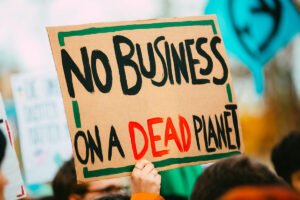
A protest sign reading, “No Business on a dead planet”, emphasizing how the wellbeing of our planet is more important than profit.
Social Enterprise: Lessons from Down Under
Vicki Pozzebon
A pair of Black hands hold cacao beans, remniscent of Chocolate Rebellion, a cooperative that equips members in the Global South to process and market their own chocolate.
Whose Solidarity? Race, Colonialism, Economy, and the Global...
Omar Freilla

Like what you see?

Subscribe to the NPQ newsletter to have our top stories delivered directly to your inbox.

See our newsletters

By signing up, you agree to our privacy policy and terms of use, and to receive messages from NPQ and our partners.

  • About
  • Advertise
  • Careers
  • Contact
  • Copyright
  • Donate
  • Editorial Policy
  • Funders
  • Submissions

We are using cookies to give you the best experience on our website.


Nonprofit Quarterly | Civic News. Empowering Nonprofits. Advancing Justice.
Powered by  GDPR Cookie Compliance
Privacy Overview

This website uses cookies so that we can provide you with the best user experience possible. Cookie information is stored in your browser and performs functions such as recognising you when you return to our website and helping our team to understand which sections of the website you find most interesting and useful.

Strictly Necessary Cookies

Strictly Necessary Cookie should be enabled at all times so that we can save your preferences for cookie settings.