logo logo
giving banner
Donate
    • Membership
    • Donate
  • Social Justice
    • Racial Justice
    • Climate Justice
    • Disability Justice
    • Economic Justice
    • Food Justice
    • Health Justice
    • Immigration
    • LGBTQ+
  • Civic News
  • Nonprofit Leadership
    • Board Governance
    • Equity-Centered Management
    • Finances
    • Fundraising
    • Human Resources
    • Organizational Culture
    • Philanthropy
    • Power Dynamics
    • Strategic Planning
    • Technology
  • Columns
    • Ask Rhea!
    • Ask a Nonprofit Expert
    • Gathering in Support of Democracy
    • Humans of Nonprofits
    • The Impact Algorithm
    • Living the Question
    • Nonprofit Hiring Trends & Tactics
    • Notes from the Frontlines
    • Parables of Earth
    • Reimagining Philanthropy
    • State of the Movements
    • We Stood Up
    • The Unexpected Value of Volunteers
  • CONTENT TYPES
  • Leading Edge Membership
  • Newsletters
  • Webinars

Corporate Social Responsibility and Starbucks

Rick Cohen
April 20, 2011

April 18, 2011; Source: Earth911 |  The autobiographical story of Howard Schulz’s second go-around as CEO of Starbucks hit number one on the New York Times hardcover nonfiction best-seller list its first week on the market, probably because of the big in-store displays wherever you order your iced espresso macchiato.  Too bad Starbucks outlets also don’t sell—or give away—the latest annual report on Starbucks’ corporate social responsibility (PDF).

Most of the press coverage of this tenth annual CSR report from Starbucks has focused on the company’s efforts to reduce its corporate environmental and energy footprint through LED lighting initiatives, purchasing renewable energy, and reducing water consumption.  Starbucks is also working on ethical sourcing of its coffee purchases, collaborating with Conservation International to develop social and economic guidelines, providing financing to farmers in coffee-growing communities, and purchasing 84 percent of coffee pursuant to Coffee and Farmer Equity (C.A.F.E.) practices (which Starbucks hopes to raise to 100 percent by 2015).

The press coverage is a little thin on the gourmet corporate retailer’s philanthropy.  Like many corporations in recent years, Starbucks leads with the community service volunteer hours of its employees, counting 191,000 hours through partners such as the HandsOn Network. The corporation also makes “Youth Action Grants” to get young people to devote hundreds of thousands of hours to community service, a program that Starbucks says it “amplified” somehow with “inspiring changemakers Blair Taylor of the Los Angeles Urban League and Geoffrey Canada with the Harlem Children’s Zone.”

Sign up for our free newsletters

Subscribe to NPQ's newsletters to have our top stories delivered directly to your inbox.

By signing up, you agree to our privacy policy and terms of use, and to receive messages from NPQ and our partners.

Starbucks distributed a total of $22.4 million in 2010, including $17 million in corporate giving and $5.4 million in grants through the Starbucks Foundation.  The corporate philanthropy was $10.3 million in cash and $6.7 million in in-kind contributions to community building initiatives, including its commitment Product (RED)™ campaign.  If the foundation’s 2009 990 is any indication, the bulk of the grants go to or through big program initiatives such as disaster relief, youth grants, and others, and the remainder is distributed as relatively small grants around the nation apparently through local stores.

Whether one likes or dislikes Starbucks or its philanthropy, the Starbucks CSR model looks like a recipe that many corporations recognize as a solid formula for social responsibility—a mix of environmental sensitivity, global development, disaster relief, employee community service, and small grants through retail outlets.  Is there a hidden downside to the Starbucks CSR model that isn’t immediately evident from its CSR report?—Rick Cohen


 

Our Voices Are Our Power.

Journalism, nonprofits, and multiracial democracy are under attack. At NPQ, we fight back by sharing stories and essential insights from nonprofit leaders and workers—and we pay every contributor.

Can you help us protect nonprofit voices?

Your support keeps truth alive when it matters most.
Every single dollar makes a difference.

Donate now
logo logo logo logo logo
About the author
Rick Cohen

Rick joined NPQ in 2006, after almost eight years as the executive director of the National Committee for Responsive Philanthropy (NCRP). Before that he played various roles as a community worker and advisor to others doing community work. He also worked in government. Cohen pursued investigative and analytical articles, advocated for increased philanthropic giving and access for disenfranchised constituencies, and promoted increased philanthropic and nonprofit accountability.

More about: Corporate Social ResponsibilityNonprofit NewsPolicy
See comments

You might also like
How to Undermine Authoritarian Control: On Empowering Parallel Institutions
Gretchen Goldman and Saul Levin
For Many Black Women, the Target Boycott is Not Over. It May Never Be.
Chabeli Carrazana
What Is the SAVE America Act?
Marissa Martinez
Disability Groups Are Standing United for Trans Rights. That Hasn’t Always Been the Case.
Sara Luterman
New Student Loan Limits Could Threaten Diversity in Nursing and Public Health Programs
Lauren Nuttall
‘I’m Heartbroken’: Trans Kansans Reckon with Their Driver’s Licenses Being Invalidated
Sherman Smith and Morgan Chilson

Upcoming Webinars

Group Created with Sketch.
April 23, 2:00 pm ET

Receiving & Giving Feedback

Essential Practices for Healthy Organizations and Communities

Register
Group Created with Sketch.
May 14, 2:00 pm ET

Equitable Compensation in Practice

A New Values-Aligned Toolkit & Discussion Guide

Register

    
You might also like
A pair of red and blue zippers, with tracks intertwined to reveal a small gap in between them. Where one zipper stops, the other zipper starts.
How to Undermine Authoritarian Control: On Empowering...
Gretchen Goldman and Saul Levin
The exterior of a Target store with the logo in plain view.
For Many Black Women, the Target Boycott is Not Over. It May...
Chabeli Carrazana
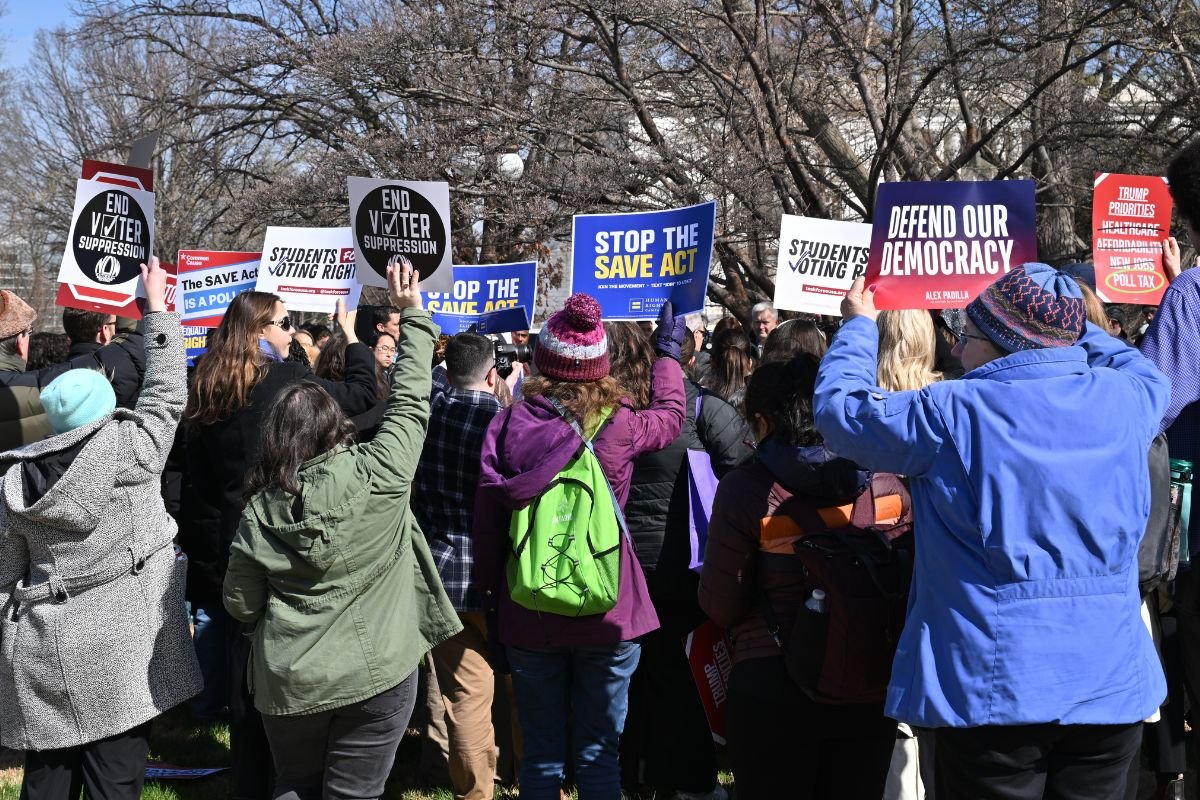
A crowd of people hold signs that read "Stop the SAVE Act", "End Voter Suppression" and "Defend Our Democracy"
What Is the SAVE America Act?
Marissa Martinez

Like what you see?

Subscribe to the NPQ newsletter to have our top stories delivered directly to your inbox.

See our newsletters

By signing up, you agree to our privacy policy and terms of use, and to receive messages from NPQ and our partners.

  • About
  • Advertise
  • Careers
  • Contact
  • Copyright
  • Donate
  • Editorial Policy
  • Privacy Policy
  • Funders
  • Submissions

We are using cookies to give you the best experience on our website.


Nonprofit Quarterly | Civic News. Empowering Nonprofits. Advancing Justice.
Powered by  GDPR Cookie Compliance
Privacy Overview

This website uses cookies so that we can provide you with the best user experience possible. Cookie information is stored in your browser and performs functions such as recognising you when you return to our website and helping our team to understand which sections of the website you find most interesting and useful.

Strictly Necessary Cookies

Strictly Necessary Cookie should be enabled at all times so that we can save your preferences for cookie settings.