logo logo
Fund the truth. #Wethecivic giving banner
Donate
    • Membership
    • Donate
  • Social Justice
    • Racial Justice
    • Climate Justice
    • Disability Justice
    • Economic Justice
    • Food Justice
    • Health Justice
    • Immigration
    • LGBTQ+
  • Civic News
  • Nonprofit Leadership
    • Board Governance
    • Equity-Centered Management
    • Finances
    • Fundraising
    • Human Resources
    • Organizational Culture
    • Philanthropy
    • Power Dynamics
    • Strategic Planning
    • Technology
  • Columns
    • Ask Rhea!
    • Ask a Nonprofit Expert
    • Gathering in Support of Democracy
    • Humans of Nonprofits
    • The Impact Algorithm
    • Living the Question
    • Nonprofit Hiring Trends & Tactics
    • Notes from the Frontlines
    • Parables of Earth
    • Reimagining Philanthropy
    • State of the Movements
    • We Stood Up
    • The Unexpected Value of Volunteers
  • Newsletters
  • NPQ Online Events
    • Premium Webinars
    • Learn Out Loud
    • Partner Events
    • On Demand
  • Leading Edge Membership

Tillerson’s Downplaying of Human Rights Report: A Signifier to Civil Society Worldwide?

Anna Berry
March 6, 2017
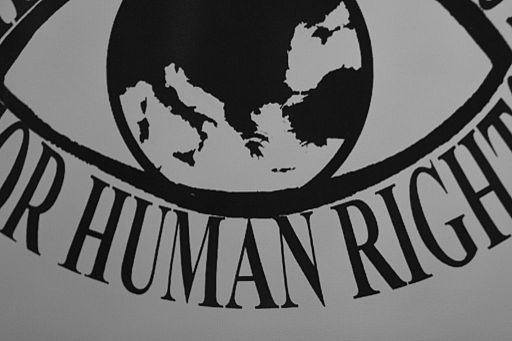
By Cogiati (Own work) [CC0], via Wikimedia Commons

March 3, 2017; Department of State

The U.S. State Department issued its annual report tracking human rights abuses worldwide on Friday, highlighting both ongoing crises like the brutal war on drugs in the Philippines as well as long-simmering conflicts including Israeli-Palestinian relations, and China’s position on Hong Kong’s autonomy.

Given that the 41st annual Human Rights Reports were issued by the Trump administration, the rollout naturally included some controversy, which centered on the decision by Secretary of State Rex Tillerson not to hold an official unveiling.

“Our values are our interests when it comes to human rights. The production of these reports underscores our commitment to freedom, democracy, and the human rights guaranteed to all individuals around the world,” Tillerson said in a preface to the reports.

Critics argued that his absence gave the report less attention, as Reuters reported, with only an anonymous U.S. official answering reporters’ questions by phone instead of the usual press conference. Republican Sen. Marco Rubio (R-FL) even tweeted:

Sign up for our free newsletters

Subscribe to NPQ's newsletters to have our top stories delivered directly to your inbox.

By signing up, you agree to our privacy policy and terms of use, and to receive messages from NPQ and our partners.

For 1st time in a long time @StateDept #humanrights report will not be presented by Secretary of State. I hope they reconsider.

The administration’s commitment to human rights was already under fire, after news recently emerged that the U.S. was considering leaving the United Nations’ Human Rights Council under new Ambassador to the UN, Nikki Haley.

Will America’s future role as a policeman of the world change under President Trump? It’s still too soon to tell.

Here are a few items of note in the reports, which cover nearly 200 countries and territories:

  • Haaretz reported that the Human Rights Reports devoted one of the largest number of pages—second only to China—to the human rights situation in Israel and the occupied Palestinian territories and abuses by both sides. The coverage was also the largest for any country in the Middle East.
  • Many media sources noted that the report rightly critiqued the Philippines, where police and vigilantes killed more than 6,000 suspected drug dealers and users since July under President Duterte.
  • Iran rejected the report, while Taiwan’s president called for reforms after the country was criticized for exploiting migrant workers.

While the reports are always a good benchmark on human rights around the world, many countries are justified in pointing a finger back at America, which doesn’t exactly have a perfect record. From the UN declaring the Flint water crisis a violation of human rights to our history of racial discrimination called out by world, there is no shortage of work to be done both here and abroad.—Anna Berry


Our Voices Are Our Power.

Journalism, nonprofits, and multiracial democracy are under attack. At NPQ, we fight back by sharing stories and essential insights from nonprofit leaders and workers—and we pay every contributor.

Can you help us protect nonprofit voices?

Your support keeps truth alive when it matters most.
Every single dollar makes a difference.

Donate now
logo logo logo logo logo
About the author
Anna Berry

Anna Berry is a writer and editor with more than a decade of experience in nonprofit management, fundraising, and communications. She has covered international civil society, human rights, and the media, among other topics, for Nonprofit Quarterly since 2016.

More about: Human RightsNonprofit NewsPolicy
See comments

Sidebar-WTC
You might also like
The New Counterterrorism State
Darakshan Raja
As Surveillance of Immigrant Communities Expands, How Can Nonprofits Respond?
María Constanza Costa
Trump’s Threat to Afterschool Funding—and What’s Emerging to Meet It
Lauren Girardin
How to Undermine Authoritarian Control: On Empowering Parallel Institutions
Gretchen Goldman and Saul Levin
What Is the SAVE America Act?
Marissa Martinez
Disability Groups Are Standing United for Trans Rights. That Hasn’t Always Been the Case.
Sara Luterman

Upcoming Webinars

Group Created with Sketch.
June 25, 2:00 pm ET

Reframing Organizational Risk

Register
Group Created with Sketch.
July 16, 2:00 pm ET

Readying for the 2026 Midterms

How 501(c)(3)s Can Educate and Advocate During this Election Season

Register

    
You might also like
An photograph of an active car bombing scene with army tanks and civilian vehicles nearby.
The New Counterterrorism State
Darakshan Raja
A group of surveillance cameras are mounted in different directions on a single pole against a clear blue sky.
As Surveillance of Immigrant Communities Expands, How Can...
María Constanza Costa
An empty classroom with wooden student chairs stacked on top of wooden desks.
Trump’s Threat to Afterschool Funding—and What’s...
Lauren Girardin

Like what you see?

Subscribe to the NPQ newsletter to have our top stories delivered directly to your inbox.

See our newsletters

By signing up, you agree to our privacy policy and terms of use, and to receive messages from NPQ and our partners.

  • About
  • Advertise
  • Careers
  • Contact
  • Copyright
  • Donate
  • Editorial Policy
  • Privacy Policy
  • Funders
  • Submissions

We are using cookies to give you the best experience on our website.


Nonprofit Quarterly | Civic News. Empowering Nonprofits. Advancing Justice.
Powered by  GDPR Cookie Compliance
Privacy Overview

This website uses cookies so that we can provide you with the best user experience possible. Cookie information is stored in your browser and performs functions such as recognising you when you return to our website and helping our team to understand which sections of the website you find most interesting and useful.

Strictly Necessary Cookies

Strictly Necessary Cookie should be enabled at all times so that we can save your preferences for cookie settings.