logo logo
giving banner
Donate
    • Membership
    • Donate
  • Social Justice
    • Racial Justice
    • Climate Justice
    • Disability Justice
    • Economic Justice
    • Food Justice
    • Health Justice
    • Immigration
    • LGBTQ+
  • Civic News
  • Nonprofit Leadership
    • Board Governance
    • Equity-Centered Management
    • Finances
    • Fundraising
    • Human Resources
    • Organizational Culture
    • Philanthropy
    • Power Dynamics
    • Strategic Planning
    • Technology
  • Columns
    • Ask Rhea!
    • Ask a Nonprofit Expert
    • Economy Remix
    • Gathering in Support of Democracy
    • Humans of Nonprofits
    • The Impact Algorithm
    • Living the Question
    • Nonprofit Hiring Trends & Tactics
    • Notes from the Frontlines
    • Parables of Earth
    • Re-imagining Philanthropy
    • State of the Movements
    • We Stood Up
    • The Unexpected Value of Volunteers
  • CONTENT TYPES
  • Leading Edge Membership
  • Newsletters
  • Webinars

A Nobel Economics Prize That Speaks to the Nonprofit Sector

Rick Cohen
October 14, 2015

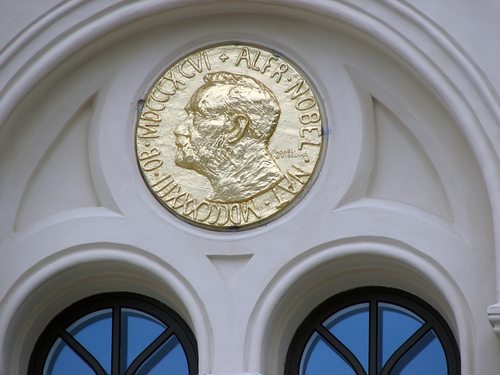
Nobel-coin

October 13, 2015; New York Times

Justin Wolfers, a professor of economics and public policy at the University of Michigan, explains the qualifications of Angus Deaton for the Nobel Prize in economics that he won this week:

The central contribution of Angus Deaton…has been to shift the gaze of his fellow economists beyond measures of income, to broader measures of well-being.

Much of his research has focused on consumption—measures of the food people eat, the condition of their housing, and the services they consume. And he has been a trailblazer in shifting the attention of economists away from the behavior of economy-wide aggregates such as gross domestic product, and toward the analysis of individual households.

This is also the first Nobel to acknowledge explicitly the increasingly empirical nature of modern economic research.

Sign up for our free newsletters

Subscribe to NPQ's newsletters to have our top stories delivered directly to your inbox.

By signing up, you agree to our privacy policy and terms of use, and to receive messages from NPQ and our partners.

Why is Deaton’s Nobel of interest to nonprofits? First, it is because he has been a critic of the reliance on randomized testing to prove or disprove government interventions, long popularized by earlier economists and adopted by foundations as though it were the holy grail for determining “proven” practices.

“In Mr. Deaton’s telling, the observation that a particular government intervention worked is no guarantee that it will work again, or in another context,” Wolfers writes.

Second, because Deaton has been a critic of foreign aid. According to Tom Murphy writing for Humanosphere, Deaton’s 2013 book, The Great Escape, “uses his decades of research to describe the challenges faced by the world’s poor…singling out the harm caused by wealthy countries providing foreign aid. He concedes that foreign aid helps make improvements on health, but does not change the structural problems that contribute to poverty.”

Deaton himself wrote, “Unfortunately, the world’s rich countries currently are making things worse. Foreign aid—transfers from rich countries to poor countries—has much to its credit, particularly in terms of health care, with many people alive today who would otherwise be dead. But foreign aid also undermines the development of local state capacity.”

This is a Nobel-winning economist who wasn’t rewarded for arcane economic theories. Deaton’s work in economics addresses how economic inequities undermine democracy. “If democracy becomes plutocracy, those who are not rich are effectively disenfranchised,” Deaton has written. “The political equality that is required by democracy is always under threat from economic inequality, and the more extreme the economic inequality, the greater the threat to democracy. If democracy is compromised, there is a direct loss of well-being…To worry about these consequences of extreme inequality has nothing to do with being envious of the rich and everything to do with the fear of rapidly growing top incomes are a threat to the well-being of everyone else.”

This is one Nobel Prize in economics that speaks to the U.S. nonprofit sector. Nonprofits have a lot to learn from listening to Angus Deaton.—Rick Cohen


Our Voices Are Our Power.

Journalism, nonprofits, and multiracial democracy are under attack. At NPQ, we fight back by sharing stories and essential insights from nonprofit leaders and workers—and we pay every contributor.

Can you help us protect nonprofit voices?

Your support keeps truth alive when it matters most.
Every single dollar makes a difference.

Donate now
logo logo logo logo logo
About the author
Rick Cohen

Rick joined NPQ in 2006, after almost eight years as the executive director of the National Committee for Responsive Philanthropy (NCRP). Before that he played various roles as a community worker and advisor to others doing community work. He also worked in government. Cohen pursued investigative and analytical articles, advocated for increased philanthropic giving and access for disenfranchised constituencies, and promoted increased philanthropic and nonprofit accountability.

More about: Economic PolicyNonprofit NewsPolicy
See comments

You might also like
Can the Fight Against AI Revitalize the US Labor Movement?
Ted Siefer
Social Enterprise: Lessons from Down Under
Vicki Pozzebon
If Farm School NYC Closes, What Will the City Lose?
Farm School NYC and Iris M. Crawford
How to Oppose Divisive Narratives and Preserve Social Benefits for All
Stephen Nuñez and Noa Rosinplotz
The New COVID Vaccine Rules Leave Parents with More Questions Than Answers
Barbara Rodriquez
The Protective Visas That May Never Come
Mel Leonor Barclay

Upcoming Webinars

Group Created with Sketch.
January 29th, 2:00 pm ET

Participatory Decision-making

When & How to Apply Inclusive Decision-making Methods

Register
Group Created with Sketch.
February 26th, 2:00 pm ET

Understanding Reduction in Force (RIF) Law

Clear Guidance for Values-centered Nonprofits

Register

    
You might also like
Senator Elizabeth Warren speaks into a microphone in front of a sign reading "We are the Supermajority" while an audience listens.
Supermajority, Group Organizing Women Around Politics, Is...
Jennifer Gerson
A black and white x-ray image of human lungs.
Can the Fight Against AI Revitalize the US Labor Movement?
Ted Siefer
A red circle overlayed on a yellow background with three multi-colored dots on each side. In the center it reads, " Isaiah Thompson: Staff Picks for 2025"
Staff Picks for 2025: Isaiah Thompson
Isaiah Thompson

Like what you see?

Subscribe to the NPQ newsletter to have our top stories delivered directly to your inbox.

See our newsletters

By signing up, you agree to our privacy policy and terms of use, and to receive messages from NPQ and our partners.

  • About
  • Advertise
  • Careers
  • Contact
  • Copyright
  • Donate
  • Editorial Policy
  • Funders
  • Submissions

We are using cookies to give you the best experience on our website.


Nonprofit Quarterly | Civic News. Empowering Nonprofits. Advancing Justice.
Powered by  GDPR Cookie Compliance
Privacy Overview

This website uses cookies so that we can provide you with the best user experience possible. Cookie information is stored in your browser and performs functions such as recognising you when you return to our website and helping our team to understand which sections of the website you find most interesting and useful.

Strictly Necessary Cookies

Strictly Necessary Cookie should be enabled at all times so that we can save your preferences for cookie settings.