logo logo
Donate
    • Membership
    • Donate
  • Social Justice
    • Racial Justice
    • Climate Justice
    • Disability Justice
    • Economic Justice
    • Food Justice
    • Health Justice
    • Immigration
    • LGBTQ+
  • Civic News
  • Nonprofit Leadership
    • Board Governance
    • Equity-Centered Management
    • Finances
    • Fundraising
    • Human Resources
    • Organizational Culture
    • Philanthropy
    • Power Dynamics
    • Strategic Planning
    • Technology
  • Columns
    • Ask Rhea!
    • Ask a Nonprofit Expert
    • Gathering in Support of Democracy
    • Hope in the Dark
    • Humans of Nonprofits
    • Inside the States
    • In Defense of Civil Society
    • The Myth of Heroic Leadership
    • Notes from the Frontlines
    • Notes from the Long Arc
    • Reimagining Philanthropy
    • The Unexpected Value of Volunteers
    • We Stood Up
  • Newsletters
  • NPQ Online Events
    • Learn Out Loud
    • Leading Edge Webinars
    • Partner Events
    • On Demand
  • Leading Edge Membership

Unraveling Development: Thank your donors. And thank them again.

Simone Joyaux
November 4, 2009

Thank your donors. Thank them more. Thank them even more.

I know—at least I hope—that you send out the formal written acknowledgement letter as soon as you receive the gift. This letter—on your letterhead—also includes the specific gift amount and, if you’re in the USA, the IRS statement regarding “no goods or services.” You send this letter ASAP. What does ASAP mean? The standard is within 48 hours, though within 72 hours is acceptable. The donor wants reassurance that you received the gift.

That’s only the minimum thank-you. Do more. Do more because it makes donors feel great. Do more because feeling great is important to donor loyalty. Do more because it’s smart business.

Yes, thanking donors is smart business. Check out Penelope Burk’s research detailed in her book Donor-Centered Fundraising. Ninety-three percent of the individuals Burk studied said they would “definitely or probably give again the next time they were asked to a charity that thanked them promptly and in a personal way…and followed up later with a meaningful report on the program [the donor] funded. Under these circumstances, 64 percent would give a larger gift and 74 percent would continue to give indefinitely.”

Here are more thank-you strategies:

  • Executive Director or Development Officer picks up the telephone and calls and says “thank you” to the donor. Do this the day you receive the gift, or maybe the next day.
  • Someone writes a personal handwritten thank-you note. Wow. If you could write a personal handwritten thank-you note to every single donor, wouldn’t that be great? I did that when I was the chair of the Women’s Fund of Rhode Island. Sure, it took time. The donor received this personal note a couple weeks after receipt of his or her gift. I actually heard donors comment on how gracious the personal note was. Donors seemed happy and that made me happy. By the way, it didn’t matter if I knew the donor or not. They all received a handwritten note.
  • Board members make thank-you calls. That’s even better than staff doing it. Penelope Burk’s research says that if a board member makes the call within two to three days of gift receipt, the donor is likely to give again and give more.

How about hosting an annual donor—of time or money—thank-you party? When I was the chief development officer at Trinity Repertory Company, we hosted this kind of party. A local restaurant that loved us dearly provided the location and hors d’oeuvres at no charge. The cash bar provided some income to the restaurant.

Sign up for our free newsletters

Subscribe to NPQ's newsletters to have our top stories delivered directly to your inbox.

By signing up, you agree to our privacy policy and terms of use, and to receive messages from NPQ and our partners.

Here’s some bad news from Burk’s research: 94 percent of the donors she studied said that the charities they support “never or hardly ever” call without asking for another gift. That’s awful! Just call to say thank you. Just call to ask what a donor thought of the most recent issue of the newsletter. Just call to say “hi” to that donor who’s been giving for years and years.

More bad news from Burk: 98 percent of the donors she studied said that charities “never or hardly ever” visit without asking for money. How awful! You don’t visit your donors without asking for money? What happened to cultivation meetings? What happened to meeting a donor for coffee and asking them about why they give?

There’s so much to be ashamed of. Not enough thanking. Poorly written communications. Too little contact with donors. Money, money, money. Organizations treat philanthropy and fund development as a financial transaction. Shame on us!

Hey out there! Raise your donor-centric quotient. Improve your relationship-building program—or start one if you don’t have one yet.

Thank your donors. Thank them better. Thank them more.

Our Voices Are Our Power.

Journalism, nonprofits, and multiracial democracy are under attack. At NPQ, we fight back by sharing stories and essential insights from nonprofit leaders and workers—and we pay every contributor.

Can you help us protect nonprofit voices?

Your support keeps truth alive when it matters most.
Every single dollar makes a difference.

Donate now
logo logo logo logo logo
About the author
Simone Joyaux

Simone P. Joyaux, ACFRE is recognized internationally as an expert in fund development, board and organizational development, strategic planning, and management. She is the founder and director of Joyaux Associates.

More about: FundraisingOpinionPhilanthropy
See comments

Stuffing-1
You might also like
Why the good offers seem to go to others
Rhea Wong
To preserve our democracy, philanthropy must invest in Black women
Chanceé Lundy
Can a deck of cards interrupt bias in grantmaking?
Devyn Taylor
A campaign saying ‘NO MORE’ to a violent and corrupt prison system in Alabama
Kindred Motes and Daniel Forkkio
How can nonprofits do more with less? Try addressing multiple issues at once
Zanny Merullo
Why philanthropy must close the digital resilience gap before AI makes it impossible
Jessica Walton and Jean Westrick

Upcoming Webinars

Group Created with Sketch.
December 3, 2:00 pm ET

After the Midterms

What’s Next for Nonprofits?

Register
Group Created with Sketch.
January 28, 2:00 pm ET

Democratic Staff Structures

Weaving Shared Leadership and Union Practice in Nonprofits

Register
You might also like
A woman of color looks into the camera with a serious expression. She is sandwiched by a white female and Asian female coworker.
Why the good offers seem to go to others
Rhea Wong
A Black woman with cropped hair and a white turtleneck smiling broadly as she looks away from the camera.
To preserve our democracy, philanthropy must invest in Black...
Chanceé Lundy
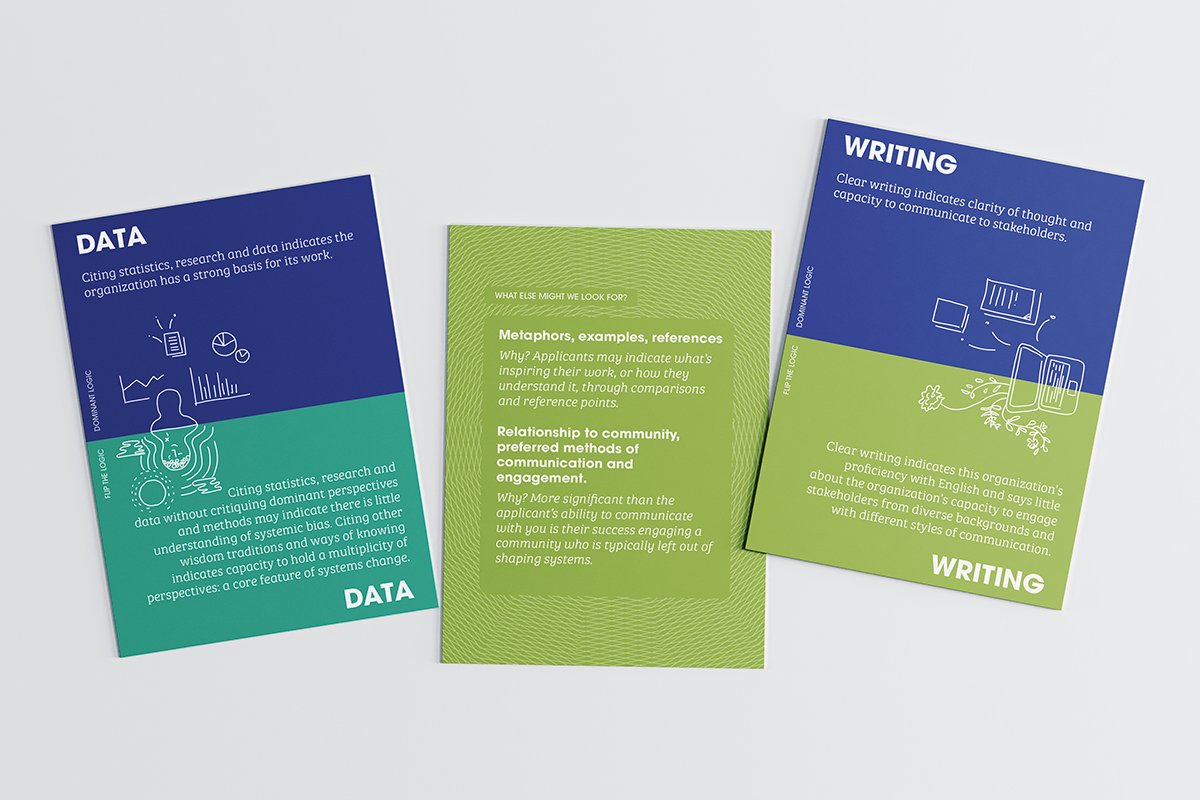
“Flippin’ Logics Cards” identify eight “dominant logics,” or recurring assumptions and ways of thinking that can shape how reviewers interpret an application.
Can a deck of cards interrupt bias in grantmaking?
Devyn Taylor

Like what you see?

Subscribe to the NPQ newsletter to have our top stories delivered directly to your inbox.

See our newsletters

By signing up, you agree to our privacy policy and terms of use, and to receive messages from NPQ and our partners.

  • About
  • Advertise
  • Careers
  • Contact
  • Copyright
  • Donate
  • Funders
  • Editorial Policy
  • Media Relations
  • Privacy Policy
  • Submissions

We are using cookies to give you the best experience on our website.


Nonprofit Quarterly | Civic News. Empowering Nonprofits. Advancing Justice.
Powered by  GDPR Cookie Compliance
Privacy Overview

This website uses cookies so that we can provide you with the best user experience possible. Cookie information is stored in your browser and performs functions such as recognising you when you return to our website and helping our team to understand which sections of the website you find most interesting and useful.

Strictly Necessary Cookies

Strictly Necessary Cookie should be enabled at all times so that we can save your preferences for cookie settings.