January 31, 2018; NextCity and the Capital Research Center
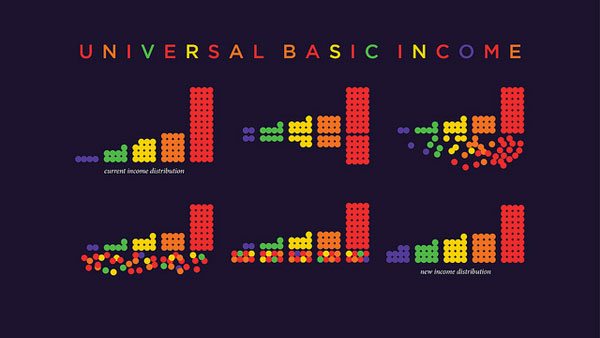
Two nonprofits are set to begin a pilot test of universal basic income (UBI) in Stockton, California. The program will provide, through the City of Stockton, $500 per month to some of the city’s poorest residents, no strings attached. The Stockton Economic Empowerment Demonstration (SEED) is accepting letters of intent to research and share stories of the impact of UBI on the Stockton community.
Stockton is a city of around 300,000 whose residents have felt the impact of Silicon Valley’s perpetual sprawl. San Joaquin County unemployment is above the national average, and its per capita income is just over $40,000 with a higher than average cost of living. The growth in housing needs for Silicon Valley’s ever-growing workforce is cited as the primary driving force behind economic turmoil for low-skilled workers in the area.
The goal of the UBI program is to provide relief for Stockton residents who might feel the squeeze from stagnant wages and increasing costs of living that come with a burgeoning population. The program will run for six to nine months, and its results should follow closely behind. Advocates for UBI, including the program’s funders—the Economic Security Project and the Goldhirsch Foundation—hope the project will show enough promise to convince other municipalities or even states to launch UBI programs of their own.
Herein lies something of a philosophical quandary. As this article points out, these sorts of philanthropic partnerships with government can be a means of bypassing the democratic process. Megadonors have the power to fund projects of their choosing, and governments have the infrastructure necessary to implement projects on a grander scale than most nonprofits.
Sign up for our free newsletters
Subscribe to NPQ's newsletters to have our top stories delivered directly to your inbox.
By signing up, you agree to our privacy policy and terms of use, and to receive messages from NPQ and our partners.
At the turn of the 20th century, Rockefeller funded programs to educate farmers on the “scientific” way of farming by funding Agriculture Department salaries that taught his ideals. This is a clear example of an incredibly wealthy individual using the weight of his money to impact government policy. Similarly, the nonprofit World Resources Institute in 2015 funded a position of one of the governor of Washington’s climate advisors. This is another example of an unelected entity influencing government policy, raising concerns that official policies will be tailored to the preferences of the elite, potentially at the expense of the population at large.
At the federal level, our democracy is not designed to move quickly. This is both a feature and a bug, depending upon where one falls on a particular policy. The 60-vote threshold in the Senate is a clear illustration of that. The slow-moving nature prevents novel ideas from being implemented, especially without much evidence of success. Again, that can be both good and a bad.
When nonprofits pair with government entities to implement a new idea, it can certainly be seen as an influential group working around the electoral systems to test their own policies. However, when an electorate chooses a politician to lead it, there is some expectation of delegation of decision-making to other entities. For example, several agencies that fall under the executive branch are run by political appointees, many of whom are chosen by the elected but are not themselves elected. This, however, is not considered unsavory. The trouble comes when there is a lack of transparency. There is a certain degree of perceived opacity that comes with the role of appointees in policy decisions. When a nonprofit itself is funding a particular project, that project is the policy, and it is perceived to be more transparent. When the electorate understands who is funding various projects or employees, it can, in theory, choose to reward or punish leaders according to performance through elections.
Nonprofits must walk this line, especially when exploring revolutionary concepts. Universal Basic Income is an idea that has been around for some time but has never had its day. Between SEED and a YCombinator-funded study, that day is coming. It is hard to imagine UBI making inroads without some governmental buy-in. To what degree we should be comfortable with this is a matter of philosophy.—Sean Watterson