logo logo
giving banner
Donate
    • Membership
    • Donate
  • Social Justice
    • Racial Justice
    • Climate Justice
    • Disability Justice
    • Economic Justice
    • Food Justice
    • Health Justice
    • Immigration
    • LGBTQ+
  • Civic News
  • Nonprofit Leadership
    • Board Governance
    • Equity-Centered Management
    • Finances
    • Fundraising
    • Human Resources
    • Organizational Culture
    • Philanthropy
    • Power Dynamics
    • Strategic Planning
    • Technology
  • Columns
    • Ask Rhea!
    • Ask a Nonprofit Expert
    • Economy Remix
    • Gathering in Support of Democracy
    • Humans of Nonprofits
    • The Impact Algorithm
    • Living the Question
    • Nonprofit Hiring Trends & Tactics
    • Notes from the Frontlines
    • Parables of Earth
    • Re-imagining Philanthropy
    • State of the Movements
    • We Stood Up
    • The Unexpected Value of Volunteers
  • CONTENT TYPES
  • Leading Edge Membership
  • Newsletters
  • Webinars

A Community Foundation Establishes a Land Trust to Address Homeless Crisis

Rob Meiksins
May 1, 2018

April 26, 2018; Reno Gazette Journal

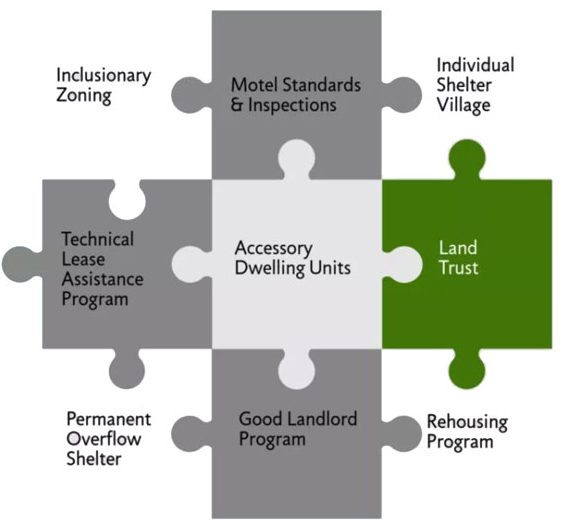
In what is being described as a new model to address homelessness, a community land trust (CLT) has been granted a plot of land in Reno, Nevada, for the express purpose of developing housing for the working poor, homeless teens, and older adults without permanent housing.

On April 20th of this year, the Community Foundation of Western Nevada established the Community Housing Land Trust, culminating a few years of work on issues of affordable housing in that part of the state. A few days later, they went before the Reno City Council and asked for the right to purchase a city-owned property on Sage Street for $1. It was unanimously approved.

As NPQ has covered in the past, CLTs enable nonprofits to hold land in trust and keep it off the commercial real estate market. In many instances, CLTs support affordable housing by having the land purchased and owned by the trust while the housing on it is owned at lower expense by the resident. This is seen as a way to help people with modest income to get housing while beginning to build equity. In other cases, as in Washington, DC, CLTs are used to preserve land that might otherwise become victim of gentrification, pushing current residents who cannot afford higher rents or property taxes to leave.

Sign up for our free newsletters

Subscribe to NPQ's newsletters to have our top stories delivered directly to your inbox.

By signing up, you agree to our privacy policy and terms of use, and to receive messages from NPQ and our partners.

The Reno model is unique in that it will be the site of 200 rental units with the express purpose of providing transitional housing for the formerly homeless. They are projected to be dorm units, or very small living spaces with shared bathrooms, a gym, laundry facility and other communal amenities. The units will be prefabricated and will carry a total cost of $1.9 million—i.e., under $10,000 per unit. The Foundation has committed to raising the money. If the money is not raised in a timely fashion, the land will revert back to the city.

The units are projected to rent for less than $400 a month. Renters will have to meet very specific qualifications such as proving that they either are minimum wage workers, participate in a program serving teens, or older adults who have been displaced from motels where they had been staying. The goal is to provide interim housing between a shelter and more permanent solutions.

Several people on the City Council are quoted in support of the project. One Councilperson has been working on a tiny housing solution for some time and sees this as an opportunity that can be completed more quickly. Another chides his fellow legislators for taking so long to come up with their own solution to the affordable housing crisis while applauding the Community Foundation.

The CEO of the Community Foundation, Chris Askin, believes because the effort is a nontraditional approach, it will require a significant donation of funds, services, and materials. However, he says it could be a model for the nation.—Rob Meiksins


Our Voices Are Our Power.

Journalism, nonprofits, and multiracial democracy are under attack. At NPQ, we fight back by sharing stories and essential insights from nonprofit leaders and workers—and we pay every contributor.

Can you help us protect nonprofit voices?

Your support keeps truth alive when it matters most.
Every single dollar makes a difference.

Donate now
logo logo logo logo logo
About the author
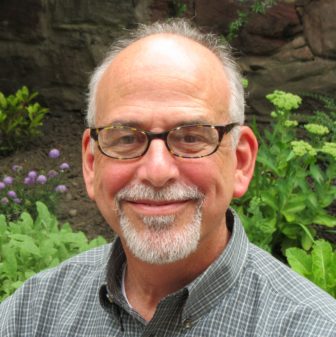
Rob Meiksins

Rob has served in the nonprofit sector for over 30 years in roles ranging from intern to program manager, executive director to board director, and consultant. Starting out in professional theatre in New York City, Rob moved to Milwaukee to work with Milwaukee Rep as the dramaturg. Later, he started to work more and more helping people and organizations in the nonprofit sector articulate, and then take the next step towards their vision. Currently he is working on a new effort to establish an intentional process for nonprofits to identify their capacity-building needs and then learn about and implement the tools that will help. Ideally this is a partnership between nonprofits, consultants, and the philanthropic community to strengthen the sector we all see as critical.

More about: Community Land TrustsHousing JusticeNonprofit NewsPhilanthropy
See comments

You might also like
Making Sense of GivingTuesday 2025
Isaiah Thompson
Blocking Authoritarianism: Steps Nonprofits and Foundations Must Take
Saqib Bhatti
How the Drug War Undermined Fair Housing—and What to Do About It
Yusuf Dahl
The Power of Direct Community Funding
Ana Valéria Araújo
A Vision for Land and Liberation
Emily Kawano
What Is Land Justice? Nonprofit Leaders Share Their Answers
Steve Dubb, Savannah Romero, Trevor Smith, Peter Sabonis, Olga Talamante and Nick Tilsen

Upcoming Webinars

Group Created with Sketch.
January 29th, 2:00 pm ET

Participatory Decision-making

When & How to Apply Inclusive Decision-making Methods

Register
Group Created with Sketch.
February 26th, 2:00 pm ET

Understanding Reduction in Force (RIF) Law

Clear Guidance for Values-centered Nonprofits

Register

    
You might also like
A group of people standing and smiling together while holding up signs with the Giving Tuesday logo and that say, “I Give Time”
Making Sense of GivingTuesday 2025
Isaiah Thompson
In 2013, I was working with local Detroit organizers to protect essential community services during the city’s bankruptcy. When we sat down with the organizers, one of my mentors asked them, “Who are the people that can pick up the phone, call the governor, and know that, nine times out of ten, he will do whatever they ask?” A man in the background controlling strings attached to a pair of hands in the foreground, symbolizing the puppet-like control that billionaires have over President Trump.
Blocking Authoritarianism: Steps Nonprofits and Foundations...
Saqib Bhatti
A shadow of a hand looming over a house made of paper, symbolizing the shadow that the Drug War has cast on fair housing.
How the Drug War Undermined Fair Housing—and What to Do...
Yusuf Dahl

Like what you see?

Subscribe to the NPQ newsletter to have our top stories delivered directly to your inbox.

See our newsletters

By signing up, you agree to our privacy policy and terms of use, and to receive messages from NPQ and our partners.

  • About
  • Advertise
  • Careers
  • Contact
  • Copyright
  • Donate
  • Editorial Policy
  • Funders
  • Submissions

We are using cookies to give you the best experience on our website.


Nonprofit Quarterly | Civic News. Empowering Nonprofits. Advancing Justice.
Powered by  GDPR Cookie Compliance
Privacy Overview

This website uses cookies so that we can provide you with the best user experience possible. Cookie information is stored in your browser and performs functions such as recognising you when you return to our website and helping our team to understand which sections of the website you find most interesting and useful.

Strictly Necessary Cookies

Strictly Necessary Cookie should be enabled at all times so that we can save your preferences for cookie settings.