
logo logo
giving banner
Donate
    • Membership
    • Donate
  • Social Justice
    • Racial Justice
    • Climate Justice
    • Disability Justice
    • Economic Justice
    • Food Justice
    • Health Justice
    • Immigration
    • LGBTQ+
  • Civic News
  • Nonprofit Leadership
    • Board Governance
    • Equity-Centered Management
    • Finances
    • Fundraising
    • Human Resources
    • Organizational Culture
    • Philanthropy
    • Power Dynamics
    • Strategic Planning
    • Technology
  • Columns
    • Ask Rhea!
    • Ask a Nonprofit Expert
    • Gathering in Support of Democracy
    • Humans of Nonprofits
    • The Impact Algorithm
    • Living the Question
    • Nonprofit Hiring Trends & Tactics
    • Notes from the Frontlines
    • Parables of Earth
    • Reimagining Philanthropy
    • State of the Movements
    • We Stood Up
    • The Unexpected Value of Volunteers
  • Leading Edge Membership
  • Newsletters
  • Online Events
  • CONTENT TYPES

Is Economic Development Charitable Work—Or Just Maintaining the Status Quo?

Rob Meiksins
December 3, 2018
From EdwardLowe.org. Artist unknown.

November 28, 2018; Twin Cities Business

In an opinion piece posted on the Twin Cities Business website, Sarah Lutman reflects on the topics discussed at a recent mini-conference held in St. Paul. Entitled, “Inclusive Economic Prosperity in the Midwest,” and sponsored by the Council on Foundations, the mini-conference covered how philanthropies—foundations in particular—are increasingly engaged in investing in private businesses as a way to accelerate economic development and alleviate poverty.

The basic premise of this kind of charitable contribution is that by investing in business development in economically challenged neighborhoods, foundations can help entrepreneurs establish or grow business ventures, which will build wealth and provide jobs within that neighborhood. In so doing, the foundation fulfills its goal of addressing a significant need in a distressed community.

Examples from the mini-conference include the Edward Lowe Foundation’s partnership with the City of St. Paul on an “economic gardening” project, which brings money, expertise, and support for businesses to grow within their community rather than relocate or use other strategies. Another example is Wells Fargo Bank, one of the lead sponsors of this mini-conference, and its Diverse Community Capital program. The bank has committed $100 million to local community development financial institutions to work with racially diverse small business owners.

The opinion piece concludes by describing a panel discussion of entrepreneurs of color who each described their challenges in establishing mission-based businesses. Lutman, a St. Paul-based consultant, ends by saying, “When the businesses founded by and serving people of color have the resources and connections to grow, we all benefit.”

Sign up for our free newsletters

Subscribe to NPQ's newsletters to have our top stories delivered directly to your inbox.

By signing up, you agree to our privacy policy and terms of use, and to receive messages from NPQ and our partners.

Moving beyond the self-congratulatory pats on the back that inevitably come with this kind of event, as Lutman points out, one can question whether it’s reasonable for a foundation even to be engaged in this kind of activity. The staff often do not have expertise in business innovation, startup investing, or other critical knowledge areas. Moreover, she wonders, is this work even charitable in nature? Private philanthropy can pay significant penalties if it gives to efforts that lie outside of the IRS definition of “charitable purposes.”

In an article on regional economic development organizations for the Brooklyn Law Review, Matthew Rossman explains that the work can be defined as charitable if the for-profit corporation receiving the investment lies inside the boundaries of an economically distressed neighborhood. In that case, the primary beneficiary of the results of the investment is the economically distressed neighborhood. However, if the corporation is located outside that type of neighborhood, even if it hires people from the neighborhood, or if it works on a regional level, then the argument could be that the private owner is the primary beneficiary of the investment and so might not be considered charitable.

One question Lutman doesn’t bring up is if this is the most effective way foundations can invest to ameliorate poverty. Statistics demonstrate that more than 50 percent of startup businesses fail within the first four years of their existence. So, a foundation gets excited about having started three businesses, but what should the reaction be four years later when only one is still active? How do we measure the success and impact of that investment?

What about alternative investments? NPQ has been covering the growing movement around worker cooperatives as a way of creating “a more democratic and a greater equitable distribution of economic resources.” However, if foundations considered investing in those trickle-up ideas, it would mean changing our economic model, supporting a system that is more equitable by its very nature than standard capitalism is considered to be. Would the Ford Foundation, which got its money from that very system, consider an alternative? Maybe.—Rob Meiksins


Our Voices Are Our Power.

Journalism, nonprofits, and multiracial democracy are under attack. At NPQ, we fight back by sharing stories and essential insights from nonprofit leaders and workers—and we pay every contributor.

Can you help us protect nonprofit voices?

Your support keeps truth alive when it matters most.
Every single dollar makes a difference.

Donate now
logo logo logo logo logo
About the author
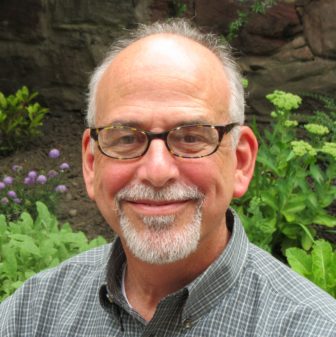
Rob Meiksins

Rob has served in the nonprofit sector for over 30 years in roles ranging from intern to program manager, executive director to board director, and consultant. Starting out in professional theatre in New York City, Rob moved to Milwaukee to work with Milwaukee Rep as the dramaturg. Later, he started to work more and more helping people and organizations in the nonprofit sector articulate, and then take the next step towards their vision. Currently he is working on a new effort to establish an intentional process for nonprofits to identify their capacity-building needs and then learn about and implement the tools that will help. Ideally this is a partnership between nonprofits, consultants, and the philanthropic community to strengthen the sector we all see as critical.

More about: Economic DevelopmentNonprofit NewsPhilanthropy
See comments

You might also like
Earth Day Is for the Planet. What About the People Protecting It?
Rhett Ayers Butler
Faster Than Authoritarianism: Rapid Response as a Frontline Strategy for Democracy Defense
Santana Moreno
Bridging Funders to the Front Lines: Pluralism and Greater Philanthropic Opportunity
alvin starks and Helen Wong
Why Americans Give: New Research Finds 5 Distinct Profiles for Generosity
George E. Mitchell
Pepper Spray and the Courage to Stay
Sadé Dozan
After the Breaking: A Black Feminist Response to Retrenchment
Vanessa Thomas and Lerato Mashianoke

Upcoming Webinars

Group Created with Sketch.
April 23, 2:00 pm ET

Receiving & Giving Feedback

Essential Practices for Healthy Organizations and Communities

Register
Group Created with Sketch.
May 14, 2:00 pm ET

Equitable Compensation in Practice

A New Values-Aligned Toolkit & Discussion Guide

Register
Group Created with Sketch.
May 28, 2:00 pm ET

Learn Out Loud

Revisiting Maurice Mitchell's "Building Resilient Organizations"

Register

    
You might also like
A view from above of two trees in the woods.
Earth Day Is for the Planet. What About the People...
Rhett Ayers Butler
An arrangement of aligned domino pieces ready to topple at any moment.
Faster Than Authoritarianism: Rapid Response as a Frontline...
Santana Moreno
A large suspension bridge reaching out over a body of water, with one end covered in fog.
Bridging Funders to the Front Lines: Pluralism and Greater...
alvin starks and Helen Wong

Like what you see?

Subscribe to the NPQ newsletter to have our top stories delivered directly to your inbox.

See our newsletters

By signing up, you agree to our privacy policy and terms of use, and to receive messages from NPQ and our partners.

  • About
  • Advertise
  • Careers
  • Contact
  • Copyright
  • Donate
  • Editorial Policy
  • Privacy Policy
  • Funders
  • Submissions

We are using cookies to give you the best experience on our website.


Nonprofit Quarterly | Civic News. Empowering Nonprofits. Advancing Justice.
Powered by  GDPR Cookie Compliance
Privacy Overview

This website uses cookies so that we can provide you with the best user experience possible. Cookie information is stored in your browser and performs functions such as recognising you when you return to our website and helping our team to understand which sections of the website you find most interesting and useful.

Strictly Necessary Cookies

Strictly Necessary Cookie should be enabled at all times so that we can save your preferences for cookie settings.