logo logo
Donate
    • Membership
    • Donate
  • Social Justice
    • Racial Justice
    • Climate Justice
    • Disability Justice
    • Economic Justice
    • Food Justice
    • Health Justice
    • Immigration
    • LGBTQ+
  • Civic News
  • Nonprofit Leadership
    • Board Governance
    • Equity-Centered Management
    • Finances
    • Fundraising
    • Human Resources
    • Organizational Culture
    • Philanthropy
    • Power Dynamics
    • Strategic Planning
    • Technology
  • Columns
    • Ask Rhea!
    • Ask a Nonprofit Expert
    • Gathering in Support of Democracy
    • Hope in the Dark
    • Humans of Nonprofits
    • Inside the States
    • In Defense of Civil Society
    • The Myth of Heroic Leadership
    • Notes from the Frontlines
    • Notes from the Long Arc
    • Reimagining Philanthropy
    • The Unexpected Value of Volunteers
    • We Stood Up
  • Newsletters
  • NPQ Online Events
    • Learn Out Loud
    • Leading Edge Webinars
    • Partner Events
    • On Demand
  • Leading Edge Membership

Public Annoyance Grows with Showy Philanthropic (and Other) Excesses

Ruth McCambridge
January 25, 2019
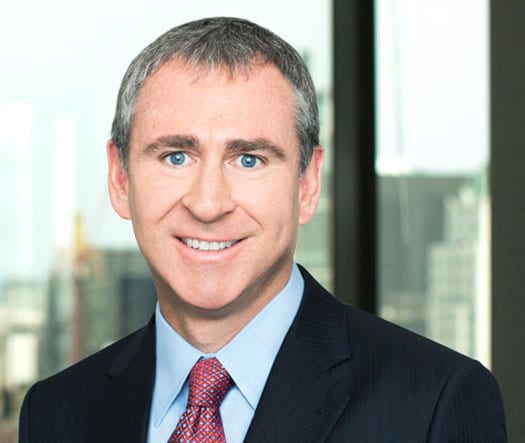
Paul Elledge [CC BY-SA 3.0], via Wikimedia Commons

January 24, 2019; New York Times

Readers may recall the flap around Kenneth Griffin’s 2014 gift to Harvard University, where you have to go way out of your way to log in a “biggest ever” contribution. Harvard, of course, has the biggest endowment of any university in the country, so, as was observed by Matthew Yglesias, Slate’s business and economics correspondent and author of The Rent is Too Damn High, the gift stunk of over-the-top wealth ostentation. As Yglesias wrote:

Let’s say I was feeling inspired to give someone $1,500 tomorrow. Who should I give it to? That’s a difficult question to answer. Should I give it to Kenneth Griffin? Nope! That’s a really easy question to answer. You don’t give extra money to Kenneth Griffin because Kenneth Griffin is already really rich. And guess what: Harvard is already really rich.

Now, Griffin, the founder and chief executive of the global investment firm Citadel has captured himself a second “biggest-ever” title by laying out a record $238 million for a residential property—in this case, an as-yet-unbuilt penthouse in Manhattan. Where will he stay until the residence, which required the eviction of dozens of tenants from formerly rent-stabilized apartments, is finished? Maybe he can camp out in his $60 million home in Miami or trot across to his $122 million mansion in London. Does Griffin’s philanthropy make up for his flagrant hoarding of the world’s resources, even if it tends to focus on elite institutions in education or art?

Reporters Nikita Stewart and David Gelles call Griffin’s abandoned display provocatively tone-deaf in the face of public sentiment.

Sign up for our free newsletters

Subscribe to NPQ's newsletters to have our top stories delivered directly to your inbox.

By signing up, you agree to our privacy policy and terms of use, and to receive messages from NPQ and our partners.

“The plutocrats continue brazenly flaunting the excesses that have enraged much of humanity,” said Anand Giridharadas, author of Winners Take All, and a critic of wealthy philanthropists. “They’re displaying very little awareness of the moment that we are in.”

On Thursday, economic advisers to Senator Elizabeth Warren, who is running for president, said that she would propose introducing a new “wealth tax” on the richest Americans.

Mayor Bill de Blasio has long pushed for a tax on millionaires earning more than a certain amount of money, but legislators in Albany have not supported that plan. On Thursday, he called for an expansion of the mansion tax. Currently, buyers of homes that sell for $1 million or more are required to pay a 1 percent tax. The tax, the mayor said, needs to be adjusted to “explicitly” target “high-value purchases” to generate extra revenue that could be used to create affordable housing.

The article also features a small argument among observers about whether Griffin is a celebrated philanthropist to be eagerly courted or simply reprehensibly greedy. It’s a half-hearted choice at best, since most of us have long since understood that the two designations are often found together.

Meanwhile, the wealth gap is beginning to annoy ever-increasing numbers of people. In that fertile ground, proposals for taxes on the unreasonably rich are proliferating, starting with Rep. Alexandria Ocasio-Cortez and her recent proposal for a 70 percent graduated tax rate for incomes over $10 million.—Ruth McCambridge


The work isn’t done. Neither is our commitment.

The challenges facing nonprofits aren’t going away. Neither can the journalism that informs, connects, and amplifies the sector.

Help NPQ keep this work free and accessible.

Give Today
logo logo logo logo logo
About the author
Ruth McCambridge

Ruth is Editor Emerita of the Nonprofit Quarterly. Her background includes forty-five years of experience in nonprofits, primarily in organizations that mix grassroots community work with policy change. Beginning in the mid-1980s, Ruth spent a decade at the Boston Foundation, developing and implementing capacity building programs and advocating for grantmaking attention to constituent involvement.

More about: Corporations and InequalityNonprofit NewsPhilanthropy
See comments

Stuffing-1
You might also like
The mental health challenges of an aging America
Danielle Neveles-McGrath
Three assumptions we unlearned about participatory grantmaking
Ciara Coleman
Proposition 40 and the question at the heart of America’s safety net: Who should pay?
María Constanza Costa
To preserve our democracy, philanthropy must invest in Black women
Chanceé Lundy
Can a deck of cards interrupt bias in grantmaking?
Devyn Taylor
A campaign saying ‘NO MORE’ to a violent and corrupt prison system in Alabama
Kindred Motes and Daniel Forkkio

Upcoming Webinars

Group Created with Sketch.
December 3, 2:00 pm ET

After the Midterms

What’s Next for Nonprofits?

Register
Group Created with Sketch.
January 28, 2:00 pm ET

Democratic Staff Structures

Weaving Shared Leadership and Union Practice in Nonprofits

Register
You might also like
An older man with brown skin and dark sunglasses looking into the cmaera with a serious expression. Behind him is a freshwater marsh.
The mental health challenges of an aging America
Danielle Neveles-McGrath
A group of colorful wooden humanoid figures arranged in a circle, as if working or talking together.
Three assumptions we unlearned about participatory...
Ciara Coleman
A person holding up a protest sign that reads, “Tax the Rich”
Proposition 40 and the question at the heart of America’s...
María Constanza Costa

Like what you see?

Subscribe to the NPQ newsletter to have our top stories delivered directly to your inbox.

See our newsletters

By signing up, you agree to our privacy policy and terms of use, and to receive messages from NPQ and our partners.

  • About
  • Advertise
  • Careers
  • Contact
  • Copyright
  • Donate
  • Funders
  • Editorial Policy
  • Media Relations
  • Privacy Policy
  • Submissions

We are using cookies to give you the best experience on our website.


Nonprofit Quarterly | Civic News. Empowering Nonprofits. Advancing Justice.
Powered by  GDPR Cookie Compliance
Privacy Overview

This website uses cookies so that we can provide you with the best user experience possible. Cookie information is stored in your browser and performs functions such as recognising you when you return to our website and helping our team to understand which sections of the website you find most interesting and useful.

Strictly Necessary Cookies

Strictly Necessary Cookie should be enabled at all times so that we can save your preferences for cookie settings.