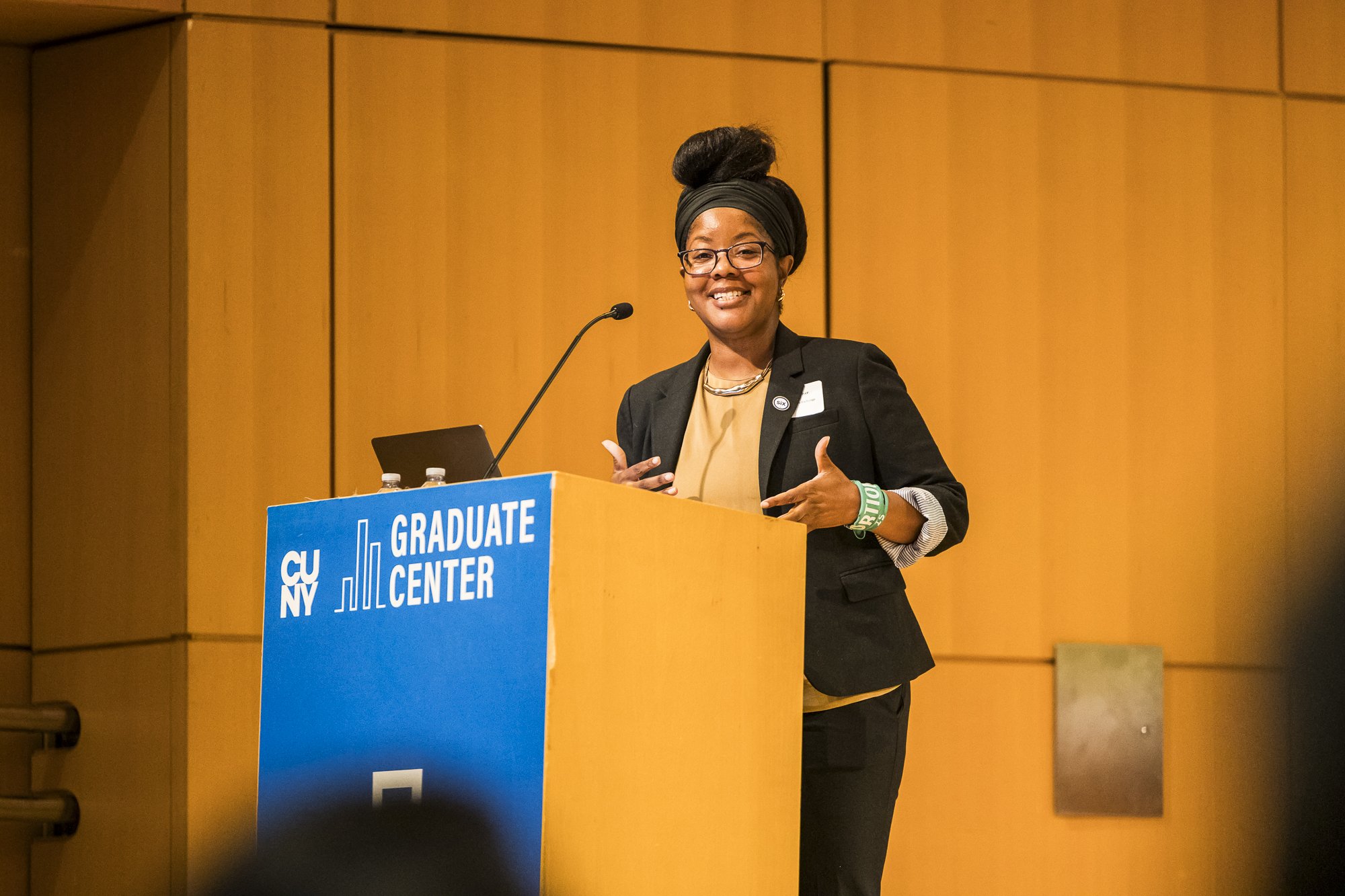


Eveline Shen has spent more than two decades as an executive director in the nonprofit sector, working closely with organizers and movement leaders across the country. Her new book, Choosing to Lead Against the Current, offers what she calls a “courageous operating system” for leadership—especially for leaders from communities historically denied institutional power.
Speaking with NPQ, Shen discussed burnout, the pitfalls of mission-driven leadership, and why courage should be understood as a collective practice.
This interview has been edited for length and clarity.
Isaiah Thompson: We’re in an unusually chaotic moment for nonprofits. Funding is unstable, political threats are rising, and leaders are stretched thin. How do the lessons in your book speak to this moment?
Eveline Shen: As you mentioned, nonprofit funding is being threatened. Leaders are particularly [at risk]—immigrant rights leaders and trans justice leaders, leaders working for Palestinian liberation. And then there’s self-censorship that’s happening. So there are a lot of challenges that folks are facing. And these challenges are only going to get worse. You know, over the course of my two decades as an ED, I was fortunate to work with a lot of really powerful and inspirational leaders who are still right on the front lines.
Leaders tend to kind of dive in and adopt this sink-or-swim mentality.
What I noticed was yes, there’s a lot of chaos and things happening, but there are also obstacles that are not only by the opposition, but also that we have to grapple with from within the movement. And there’s just increasingly now so much demand on our time and our effort. And because everything is urgent, I think leaders tend to kind of dive in and adopt this sink-or-swim mentality.
I wrote this book to help leaders increase their capacity for leadership, increase their capacity to be strategic by creating conditions for our success internally and externally. Because I believe that in the long term, and especially now when everything is coming at us, we really need to make sure that the work we do not only benefits the issues and the activism that we’re working toward, but also ourselves.
IT: You talk about “pitfalls” that nonprofit leaders fall into. What are some of the most common, or the most pernicious?
ES: There are a number of them, unfortunately. One of the pitfalls—and this is why I have a systems approach—is that we don’t act with our leadership components in synergy with each other and in alignment with each other.
So, for example: purpose. There’s a lot of talk about how we need to identify our purpose. And while that’s true, unfortunately I think one of the pitfalls is that we leaders identify purpose based on the needs around us. Like, “We just lost a major grant; now I’m going to jump right in and focus on finding another funder.” Or, “Our communications staff doesn’t have enough capacity to run this campaign; okay, now I’m going to slot in.” Or, “We need representation in this coalition on the East Coast, so I’m going to take another weekend and be away from my family.”
Thinking about purpose solely based on needs is like piloting a boat just by looking only at the wind gauge and not thinking about the compass, not thinking about the currents, and not thinking about what we have to bring as captain of the ship—the unique sets of wisdom and strength and experience and lessons learned that we can bring to bear.
If we don’t think about solving problems in a one-dimensional way, we bring a systems approach to our leadership where we tether our purpose to our core values, tether it to how we define success—not how society defines it—and tether it to how we’re going to get up when setbacks happen and learn from it. Because people are burnt out, they’re exhausted, and urgency makes it easy to be reactive instead of holistic.
Sign up for our free newsletters
Subscribe to NPQ's newsletters to have our top stories delivered directly to your inbox.
By signing up, you agree to our privacy policy and terms of use, and to receive messages from NPQ and our partners.
IT: There’s no shortage of leadership books, guides, frameworks. What makes yours distinct?
ES: This book is not meant to be: “Here are 10 easy tips for you to be a more powerful leader.” It recognizes that most of the time I’ve had to translate tools or leadership resources because they don’t fit communities of color. They don’t fit women of color leadership.
It’s for all leaders who are leading against the current, but it’s particularly centering women of color and gender-expansive folks of color so that it recognizes, for example, that we don’t always get second chances to fail.
Courage is a muscle. The more you use it, the more you get. And courage is a collective practice.
We don’t talk about failure enough. People say, “It’s important to fail forward,” but for a lot of us who come from marginalized communities, failure wasn’t an option because we felt like we had to prove ourselves over and over again.
I have found that when I generated a culture where we talked about failure from the get-go, it allows people to be more creative. It fortifies the work. We need that in this moment.
IT: And that leads to courage. Why is courage so central to your framework?
ES: It’s called the Courageous Operating System because it takes courage to use it and it also gives you courage as you implement it.
When I ask a room full of leaders to think about a recent moment of courage, 50 percent of those leaders have a hard time doing that. It’s not because they’re not courageous. It’s because they’re thinking about courage with a big C—Nelson Mandela, Ella Baker, someone jumping into raging water to save a drowning child.
But it’s the everyday acts of courage that are just as important: acting into the unknown, setting limits, making a tough decision when you know you’re going to get pushback, entering a difficult conversation in hopes of repair.
And especially for people from marginalized communities, if we don’t acknowledge the everyday acts of courage we take, we internalize it as something deficient in us. We need courage to resist authoritarianism, to not give up power before we’re even asked.
Courage is a muscle. The more you use it, the more you get. And courage is a collective practice. We don’t have to do it alone.