

This article is part of NPQ’s series, Money in Movements: The Role of Donor Organizing. Co-produced with Solidaire Network, this series offers firsthand narratives from donor organizers deeply embedded in justice struggles to illuminate how individuals with wealth can authentically align with grassroots movements.
Disability Justice taught me that the edges of our movements hold the deepest lessons—and that centering them opens new possibilities for liberation.
I was born into great wealth, yet that privilege could not protect my sibling with a disability from the systemic failures that exclude so many.
That experience led me to commit my inheritance to investing in social justice movements at large and the infrastructure that the Disability Justice movement needs to thrive.
Disability, Privilege, and Love
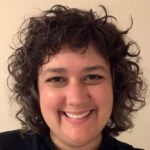
I grew up in suburban Kansas City, MO, as a descendant of the family that built Hallmark. I’m not part of the branch that runs the company, but I did inherit part of its wealth.
I’m the oldest of three siblings; the youngest, Alex, was born with multiple disabilities. In the 1980s, services were even more limited. My parents wanted the best opportunities for Alex; my mother dedicated her life to advocacy. Because society has long devalued people with disabilities, even families with wealth like mine lacked the support that we needed.
My mother recently reflected on both the privileges we had and the limits of what money could offer. “What I didn’t have was emotional support or community,” she told me. “Your dad and I just had to cry to each other, scared of what would happen to our kid.”
My mother immersed herself and Alex in early education and medical interventions—helping them walk, talk, and do things doctors said would be impossible.
Over time, I learned about Disability Justice, a framework that imagines liberation for all people and reaches into every aspect of our lives.
Parenting is already a puzzle of figuring out who your child is and how to support them; I know this now as a parent myself. For my mother, raising a disabled child, it was even more confusing. She had the privilege to be able to support Alex full-time, but only chose to because the system left her no other choice.
As an elementary school student, Alex was put into a classroom with other kids with various disabilities. While school failed to meet many of their needs, it became a powerful space for connection. They learned about every disability they encountered. Alex told me: “Knowing about different disabilities teaches me so much about the world and different experiences.”
Finding My Political Home
After college, I came across Resource Generation, which organizes young people with class privilege to redistribute wealth, land, and power to social justice movements. Discovering them in my early twenties gave me a political home, a place to turn privilege into responsibility. I learned how oppressions connect and share roots in capitalism, patriarchy, and racism—and about principles that can advance liberation for us all.
I was aware of the disability rights movement, but over time I learned about Disability Justice, a framework that imagines liberation for all people and reaches into every aspect of our lives. As writer and artist Naomi Ortiz explained, “Disability Justice is the cross-disability (sensory, intellectual, mental health/psychiatric, neurodiversity, physical/mobility, learning, etc.) framework that values access, self-determination, and an expectation of difference….To be included and part of society is about being able to be our ‘whole self’ (all of our identities together).”
My social justice values taught me that those most affected by injustice hold the deepest insight into dismantling it. So, when I saw activists pushing their organizations to adopt a Disability Justice lens—and the resistance they met—I realized this was a crucial learning edge for movements and myself. Disability Justice invited me to see liberation differently, through the principle of intersectionality, because every struggle is connected.
Disability Justice activist Candace Coleman, who currently works as the community strategy specialist at the service and advocacy organization Access Living, explained it to NPQ this way:
Disability Justice carries with it innovative ideas of how to be inclusive. It draws from many other movements, but Disability Justice is the space that calls it all in. It’s like a soup that has to be made with everyone’s identities—bringing that to the forefront, not leaving folks out, taking time, being anti-capitalist, honoring people’s bodies and the energies they can contribute. Things would often be so fast-paced, and Disability Justice made us slow down. Then you can see differently—you can see the pieces that are missing.
For the next decade, I deepened my political education through Resource Generation. I grew into my identity as a progressive donor, aligning my giving with social justice philanthropy, and developed a self-analysis as a wealthy White person committed to challenging racial capitalism. Each year, I pushed myself to give more, learning along the way.
During this time, I began to find my place within movements—not on the sidelines, but in donor organizing. I learned that my role is to organize my people: progressive, wealthy people who want to move big resources toward movements. Together, we learned how to push past hesitation, setting the groundwork to later give boldly and hit ambitious goals. Supporting Disability Justice groups felt right; work and values began to snap into alignment.
Putting My Inheritance to Work
On November 8, 2016, Donald Trump was elected US president. I woke up devastated. Oppression happens daily, but this felt like a dangerous turning point. Meanwhile, despite my progressive commitments, I was still sitting on millions of dollars of inherited wealth.
General disability funding itself is not large. [And of] that limited pool, 94 percent goes to services, while just 6 percent reaches disability rights and social justice.
Clearly, I had been holding back. I wanted the money in my control out in movement work, building the world I want to live in. I was done with the perfectionism that made me feel I had to have it all figured out before acting.
Sign up for our free newsletters
Subscribe to NPQ's newsletters to have our top stories delivered directly to your inbox.
By signing up, you agree to our privacy policy and terms of use, and to receive messages from NPQ and our partners.
I called a close friend, who was working as a donor advisor, and said I was ready to make big moves. Together, we built a plan: Over five years, I would spend the $25 million in my trust down to $1 million. I had learned that multiyear, unrestricted gifts give organizations stability and the power to plan.
When deciding where to fund, I looked to the learning edges of social justice movements. I knew that Disability Justice would be at the center of my giving.
General disability funding itself is not large—recent research shows it makes up only a tiny fraction of overall foundation giving. Within that limited pool, 94 percent goes to services, while just 6 percent reaches disability rights and social justice, and even that doesn’t necessarily reflect Disability Justice principles. Because the field is emerging and deeply underfunded, especially for BIPOC disabled organizers with intersecting identities, I knew my resources could help fill a critical gap.
Disability touches every life, whether permanently or temporarily, through illness, injury, or aging. So, Disability Justice lifts everyone. The curb cut effect shows how solutions created for disabled people widen access and improve life for entire communities.
Cory Lira, now a program officer at the Disability Frontlines Fund, highlighted their grantee, Long COVID Justice, to illustrate this. “COVID was a moment of reckoning—a reminder that any one of us can be impacted at any time. Measures like masking, clean air, and contact tracing aren’t just individual choices; they’re collective tools for keeping each other safe. And when we centered health equity through ventilated, clean air, it immediately expanded access for everyone, from children to immunocompromised people to elders.”
Once I chose Disability Justice as one of the main focuses of my giving, the next step was deciding which groups to fund. I knew I wanted to support movement work—organizing that changes the conditions creating inequality—not just services that meet urgent needs without shifting systems. I prioritized BIPOC leaders from frontline communities, especially in underrepresented regions and those confronting immigration and carceral systems.
To build a plan, I spent months talking with Disability Justice leaders, activists, writers, and artists I knew or was introduced to through movement relationships. I compensated them for their time and let their knowledge guide where resources could be most useful.
Seeding Infrastructure
At the time, philanthropic infrastructure rooted in Disability Justice was limited. As activist and writer Alice Wong—whose leadership shaped so much of the contemporary Disability Justice movement—explained to NPQ shortly before her death at age 51 in 2025, groups and leaders were doing powerful work, but there wasn’t an intermediary fund led by Disability Justice organizers that could channel resources. A fund like this can pool money and strategically distribute it across groups, strengthening the field.
I took that suggestion to heart, shared it with others I had been consulting, and with their enthusiastic support, decided this was the place I could contribute. I found a home for the fund at Third Wave Fund, a leader in progressive donor organizing and in housing accountable, accessible funds. This was also when I began stretching my donor organizing wings: I invited my siblings to join as seed funders. I introduced them to Third Wave and to a process grown directly from the Disability Justice community. Together, we committed $1.5 million to start the fund.
This experience illustrates how donor organizing often begins at home: I helped my siblings understand the principles behind the fund and they agreed we should begin political education and donor organizing with our wider family to become aligned funders alongside me.
Third Wave Fund hired staff to develop the fund, convened a granting committee of Disability Justice activists and leaders, and launched a two-year learning grant process to gather feedback and refine their approach before launching the fund publicly.
Sandy Ho, who was then helping lead the Disability Inclusion Fund and is now executive director of the Disability and Philanthropy Forum, joined me in developing what became the Disability Frontlines Fund (DFF).
Ho explained why these funds focused entirely are essential: “Just having some grants and parts of funds dedicated to Disability Justice is not enough. If we look at Disability Justice and funding, it’s about shifting power—finding a more equitable balance of access to funding and resources. For disabled communities, especially folks who are also people of color and queer and trans, barriers to funding are already high, and what exists is often piecemeal.”
Donor organizing often begins at home.
These gaps are exactly why the DFF is so important. Disability Justice is still a young field, with frameworks, organizations, and leaders continuing to emerge. Many organizers face barriers to mobility, communication, and access that make traditional movement spaces difficult to navigate. That’s why DFF supports individual organizers as well as groups, providing the training, tools, and resources needed to grow their work. One early example was support for organizer Najma Johnson to develop what became the Liberating Purple Star Collective—a Deaf- and Disabled-led effort uplifting Deaf caregivers of trans and gender-diverse youth. Johnson’s story also illustrates the DFF’s focus on the development of BIPOC Disabled leadership, through recognizing the barriers this intersection of identities creates.
Organizing Wealth for the Long Haul
After redistributing most of my accumulated inheritance, my personal giving has slowed and become simpler. What has grown is my commitment to donor organizing—working with people to deepen their political education, develop analysis about privilege, and find their place in movement work. In recent years, that has included speaking in Disability Justice political education spaces to help donors and funders understand this emerging field. I hope to inspire others to move beyond passive funding, to become active participants in building movements, and to give bigger and more boldly.
One layer of this work is my family. My siblings and I are sharing our support of DFF with our extended family and are inviting them to help sustain it. Much of this work is relational—facilitating honest conversations about privilege, history, and values so our family can move resources with clarity and alignment.
Another layer is within progressive donor networks like Solidaire, where I’m creating more opportunities for member-leaders to set bold giving goals, experiment with creative strategies, and take risks alongside movements. Through the Family Philanthropy Solidarity Circle and other peer-led spaces, I help donors navigate the complexities of family dynamics, develop shared redistribution plans, and build the skills needed to organize their own families toward justice.
The struggle is not easy, but it’s vital. As Imani Barbarin, a disability advocate, writer, and public intellectual, noted in a talk at the Othering and Belonging Institute in 2024, the Disability Justice movement provides an entry point to “understand new ways of belonging, because disabled people have had to make a way in a society that does not even see us as people a lot of the time.”
In a world facing a rising threat of authoritarianism, Disability Justice advocates are showing us that another path—one based on love and belonging—is available to all of us.