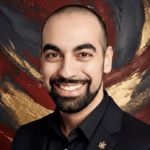

At a campaign rally this October, with the November 3 midterms approaching, Donald Trump explained why he insisted on calling Abdul El-Sayed, the Democratic Senate candidate in Michigan, “Mohammed.” Someone had corrected him and Trump told the crowd, “I’m the president. I can call him whatever the hell I want.” Mohamed is part of El-Sayed’s full name, though Abdul is the name he uses. Trump knew the distinction and made a performance of overruling it. He then called the candidate a “radical jihadist.” There is a disturbing presumption behind the joke: that the powers of Trump’s office extend even to deciding a man’s name and manipulating his reputation without regard for facts or norms. On October 25, Trump went further, comparing the effort to keep El-Sayed out of the Senate to passengers resisting the September 11 hijackers.
I began to wonder how much an election could truly change about American power when those living beneath America’s drones had no vote.
On October 12, federal agents searched the Washington home of Ilhan Omar, the Somali-born congresswoman from Minnesota, who is up for reelection on November 3. The Justice Department confirmed an ongoing criminal investigation; news reports have linked it to her family’s immigration records. Omar, an American citizen since 2000, denies wrongdoing. The search was authorized by a judge; no charge has been brought against her. Eight days later, Trump said she could be deported or sent to jail, adding that she hated America. The president was already speaking of a woman elected to Congress as someone America might expel. Omar has since said she no longer feels safe in her home. When even an elected member of Congress speaks of leaving her home, it is worth asking what shelter citizenship offers today.
Watching Barack Obama debate Mitt Romney 14 years ago, I was dismayed by how readily Romney endorsed the president’s expanded use of drones and how eagerly both men affirmed America’s bond with Israel. Growing up in Egypt, I had learned early to mistrust politicians and to separate politics from people. Yet I had allowed myself to be swept up in Obamania. Obama seemed to me almost more a writer or professor than a politician: a principled, intelligent man who might change something fundamental about the country’s conduct in the world. What troubled me was how far he had traveled from the Hope and Change that first drew me to him. He had tampered with something sacred to me, my dreams for America. I began to wonder how much an election could truly change about American power when those living beneath America’s drones had no vote.
The terrible education of these years has been that visibility and recognition are not the same thing.
On October 18, Trump offered Benjamin Netanyahu his “complete and total endorsement” in Israel’s October 27 election, praising him as a “great warrior prime minister.” I read those words with deep dismay and sickened outrage after three years of Israel’s US-funded genocide of Palestinians, and sadly remembered that debate. According to Gaza’s Health Ministry, more than 74,000 Palestinians have been killed, including more than 1,500 since the October 2025 ceasefire; Netanyahu faces an International Criminal Court arrest warrant. The praise was offered with no apparent difficulty while Palestinian suffering still needs so much explanation before it can be heard.
I thought what had wounded me about Gaza was the indiscriminate murder. Then, slowly, another ache disclosed its shape: the knowledge of how much murder the world could absorb, when the people being murdered were Palestinian. For decades, Palestinians have been told that the problem was insufficient knowledge: If people understood the history and saw the occupation more clearly, if Palestinian voices could finally be heard, then something would shift. Gaza subjected that hope to an almost unbearable experiment. Images arrived in an unending stream, accompanied by the testimony of doctors and the sight of parents holding what remained of their children. Israel has continued to bar independent foreign journalists from entering Gaza, leaving Palestinian reporters to document the devastation from within. Yet for a very long time, much of official Western life continued more or less intact.
I can trace this realization through the poems I was writing at the time, a kind of diary kept under pressure. “How is it that / life carries on,” I asked in one, “as they cry for us, / from under the rubble?” In another, written after waking in the middle of the night, I addressed Gaza directly: “you had to be exterminated / to be seen & remembered.” I believed, or needed to believe, that there was some threshold of suffering beyond which indifference would finally give way. What I did not yet understand was that the threshold could keep moving. The terrible education of these years has been that visibility and recognition are not the same thing. A people can be seen suffering and still remain outside the circle of consequence.
Sign up for our free newsletters
Subscribe to NPQ's newsletters to have our top stories delivered directly to your inbox.
By signing up, you agree to our privacy policy and terms of use, and to receive messages from NPQ and our partners.
For Arabs and Muslims, perhaps Gaza has carried an additional message, one difficult to admit because of its corrosive power: We are learning something about the conditions under which our own lives will be grieved. I remember the years after September 11, when a Muslim name alone could stand as evidence of danger before a word was spoken. That expectation did not disappear with the years. It only waited, gathering into instinct.
Edward Said spent a lifetime teaching us to question how Arabs and Palestinians were represented. Gaza asks the harder question, the one that arrives after the cameras have entered the room and the dead are no longer hidden: What if the stranger has finally been seen clearly, and remains a stranger? Said also taught us how the West learned to recognize the Muslim as a source of danger, someone to be read before he was heard. Gaza raises the inverse question, and it is not a comfortable one. Can the same imagination recognize that same Muslim as someone in danger? Does it know what to do with him then?
An independent UN commission has concluded that Israel committed genocide in Gaza, and the Trump administration has sanctioned the International Criminal Court. In the West Bank, settlers have attacked Palestinians harvesting their olives; UN monitors have documented Israeli soldiers accompanying the attackers and preventing farmers from reaching their own land, as the government continues to expand settlements. We have watched, these last years, how swiftly Israel’s fear can summon the apparatus of Western policy: emergency sessions convened overnight and weapons shipments authorized within days. The vocabulary of solidarity that follows is so rehearsed it no longer needs thought. Some fears are treated as self-evident, requiring no defense; others must first earn belief.
Zohran Mamdani took office as New York City’s first Muslim mayor in January. I take some encouragement from the fact of his election in a city whose voters have plainly refused the assumption that a Muslim must be an outsider to American political life. That does not undo the insults directed at El-Sayed or settle the questions hanging over Omar.
At times, cynicism claims to be the only adult response. Years ago, I described it as “a knowingness that does not know it lacks spiritual stamina.” Its conclusions arrive too early, from shortness of breath and vision. The antidote to numbness, I remind myself, is to care for something, anything. I do not know what Gaza should mean to others who carry some version of this wound.
I know only what I refuse to let it do to me: teach me to weigh a stranger’s grief before I believe it, to ask what someone must first earn before I extend to them what was so long withheld from my own. What I can offer instead is smaller than an answer: a discipline. To refuse the demoralizing calculations of earned and unearned grief, wherever I meet it, including in my own heart.