Halfway into my phone call with Arthur Abayev, a customer walks into his jewelry shop in Williamsburg, Brooklyn, and I can overhear the conversation. The male customer says something in Spanish. Abayev responds, “Sorry, I don’t speak Spanish. Um, what is it? Oh, you’d like to sell this?” he asks, and the customer says yes.
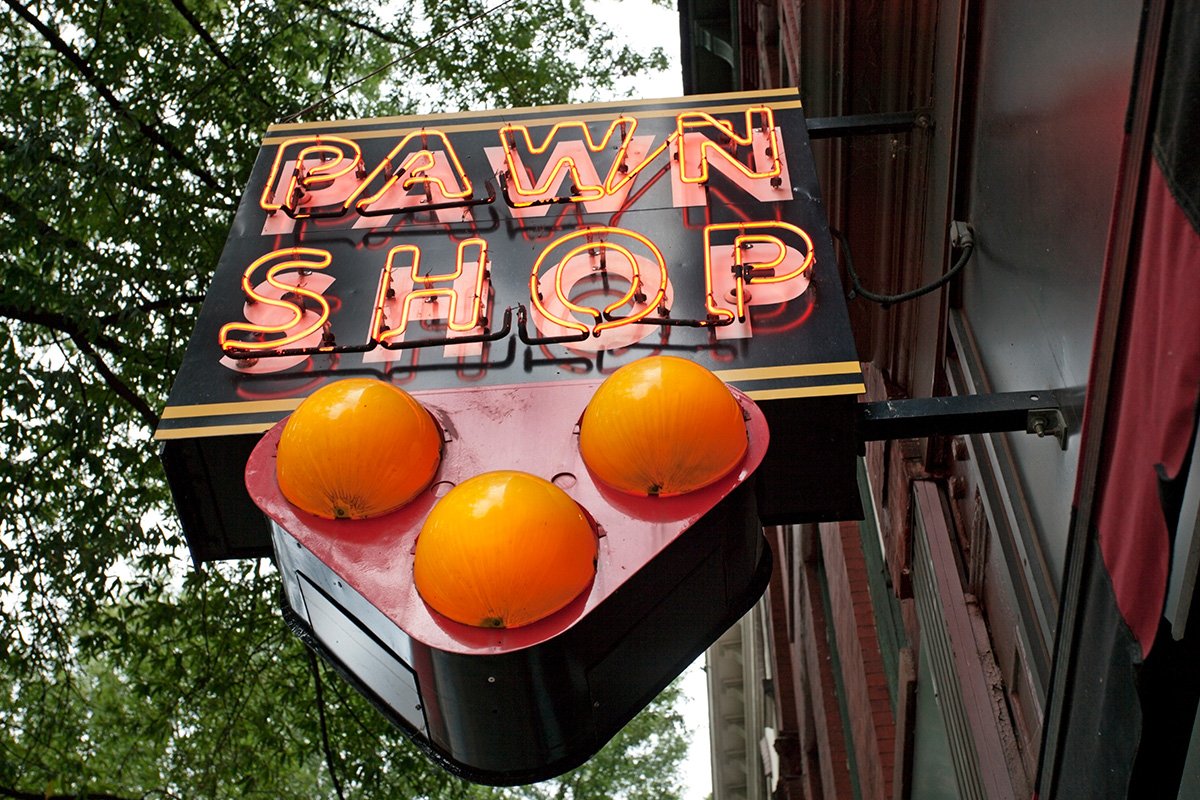
Abayev owns Grand Jewelry Pawn Shop at 791A Grand Street, which has been in business since 2006. It has a long history of serving patrons in and around the neighborhood who have struggled economically. Brooklyn’s Williamsburg, Bushwick, and Bed-Stuy neighborhoods were historically known as low-income or working-class enclaves. Grand Jewelry Pawn Shop is one of the few that still exist in gentrified Williamsburg. Even though the area median income (AMI) has risen in these areas, the continued existence of pawn shops reflects a deeper story of residents who are still struggling under the guise of neighborhood revitalization.
Pawn shops across the United States have been experiencing a surge as Americans grapple with high inflation and increasing costs of living. Shops granting short-term credit to peasants date back 3,000 years in ancient China. Today, pawnshops mostly serve the working class.
“Rents have gone up. People have changed here. A lot of people from the Midwest and from different countries have gone here. A lot of things have gone up in price, and people can’t afford it. It’s nothing to do with Black, White, Hispanic, just regular people,” said Abayev in an interview with NPQ. “People can’t afford the rents, and they come to people like me, which is a jewelry store, where I offer a service of buying gold, silver, diamonds, luxury goods, and some, at one point, pawning, because they couldn’t afford just basic necessities.”
Even though the area median income (AMI) has risen in these areas, the continued existence of pawn shops reflects a deeper story of residents who are still struggling under the guise of neighborhood revitalization.
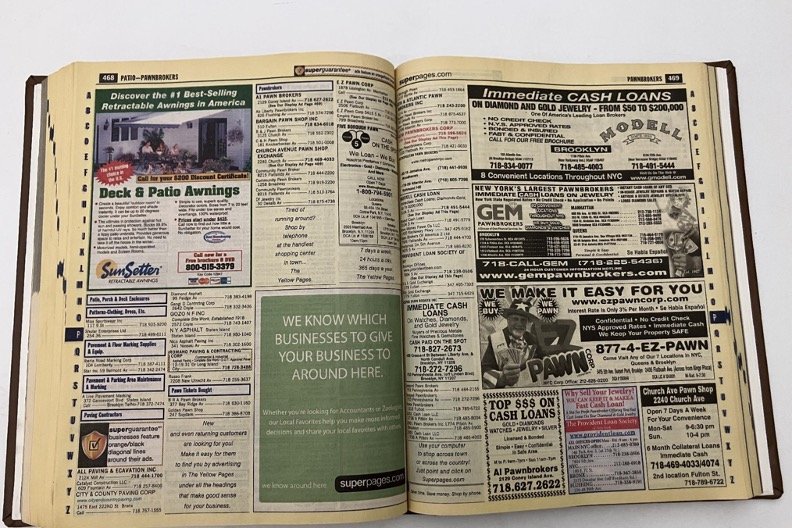
Grand Jewelry Pawn Shop is part of a long lineage of pawn shops in the area that have helped residents over the years by providing loans on items like diamonds, jewelry, musical instruments, televisions, luxury bags, and furs. In archived Yellow Pages directories at the Central Brooklyn Public Library, three pawn shops were advertised in the 1970s on the very street the pawn shop stands on today. They were Acme Dunbar Pawnbrokers and Bruckheimer & Sons—which specifically targeted Williamsburg’s large Lithuanian immigrant community by advertising in one of their most important newspapers, Vienybė Lietuvninkų, at that time. The third and one of the oldest pawn shops was Kleinbaum Chas Estate, a Jewish-owned shop that opened in 1900.
The Changing Communities of Williamsburg
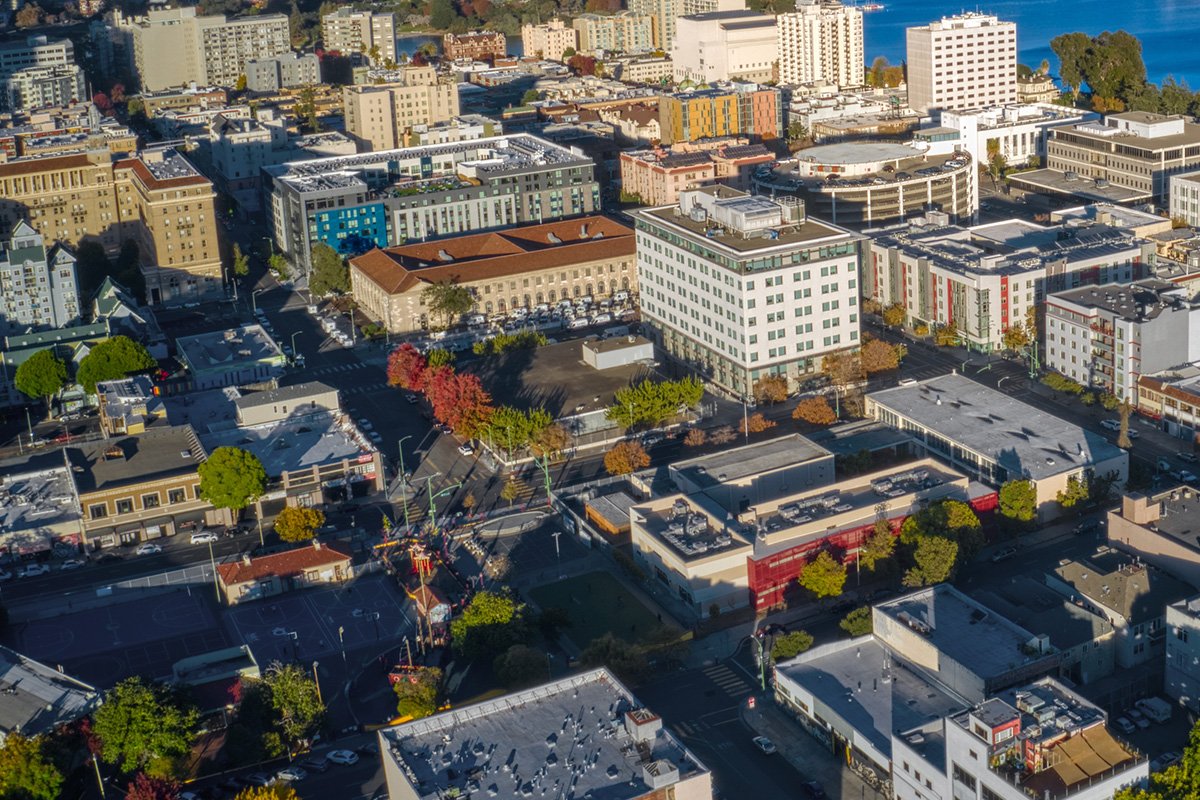
Although census data in the 1970s to 1980s generally did not accurately record ethnic and racial demographics, historically, Williamsburg had a large working-class, immigrant, and low-income community that was segregated in different areas. Puerto Ricans lived in South Williamsburg or Los Sures. South of Grand Street, you could find Dominicans and other growing Latin American immigrant populations. Hasidic Jews lived mostly around Lee Avenue and south of Broadway. Italian Americans were concentrated in eastern and northern Williamsburg and around Graham Avenue, while Polish and other Eastern Europeans were closer to the northern side and the Greenpoint border. An African American population also lived there, though it was smaller than many of the other demographics mentioned. The 1990s saw similar demographics, but with a more established Black community in eastern and southern Williamsburg, a small Asian population, and a growing number of artists and young residents.
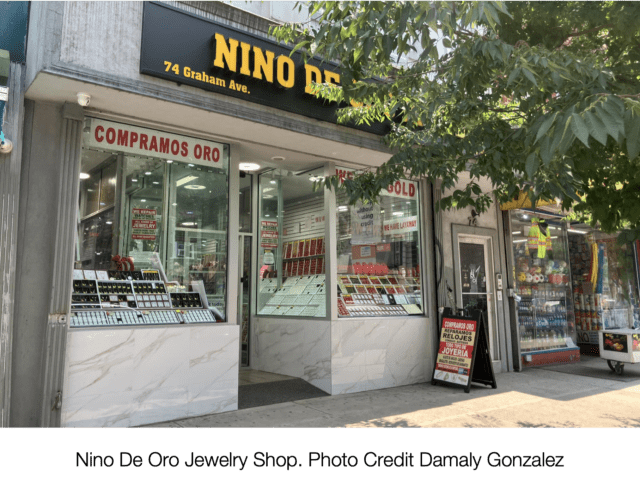
The early 2000s saw accelerated gentrification that rapidly displaced longtime residents in the area. Aside from Abayev’s shop, the two pawn shops that existed during that time were at the border of Williamsburg and Bushwick: Brooklyn Pawn Broker at 799 Broadway and Bushwick Pawn Shop at 826 Flushing Avenue. The push-out of pawn shops over the past two decades is a telling sign of economic displacement. In 2010, Bushwick Pawn Shop changed its name to Empire Pawn Broker, which still exists today. Brooklyn Pawn Broker, which also changed its name, no longer exists. Additionally, an online search cites Crown Pawnbrokers at 74 Graham Avenue as opening in 2011. But it now stands as Niño de Oro, a jewelry shop.
Arguably, pawn shops and these types of jewelry shops can provide valuable information to further understand local socioeconomic issues and where community-based organizations (CBOs) are not filling all the gaps.
Although some pawnshops have closed, Williamsburg still has plenty of jewelry shops that buy gold, silver, platinum, and luxury bags for immediate cash, including Abayev. Although about 85 percent of his customers were able to buy back their items, he decided to stop pawning in 2023.
Sign up for our free newsletters
Subscribe to NPQ's newsletters to have our top stories delivered directly to your inbox.
By signing up, you agree to our privacy policy and terms of use, and to receive messages from NPQ and our partners.
“In the past three years, I haven’t been a pawn shop because a lot of people were defaulting on their loans and I was becoming the bad guy,” said Abayev. I didn’t like it because people were blaming him for their arrests and jail time. “I’m a pawn shop, so I would borrow money from the banks, and the banks charge interest, so, the pawn shops also charge interest. I couldn’t keep up and people were defaulting so badly that I didn’t want to deal with [being a] pawn shop anymore,” Abayev said.
Arguably, pawn shops and these types of jewelry shops can provide valuable information to further understand local socioeconomic issues, and where community-based organizations (CBOs) are not filling all the gaps. The pawn shops mentioned here were located in the area codes 11206, 11211 and 11249, which are covered by five community-based organizations.
Abayev initially opened up as a jewelry shop in 2006, but when he started to see people in need of fast cash who traditionally could not get a loan at a bank, he began the pawning business in 2016.
Who Can Fill the Gaps?
While the five CBO’s all address a variety of complex issues, it can be difficult keep up with the full needs of the community as many of these organizations have limited capacity and a small staff. Serving Williamsburg, Bushwick and Greenpoint, North Brooklyn Angels is a soup kitchen that serves hot meals daily and helps residents navigate affordable housing lotteries. In South Williamsburg, Southside United H.D.F.C advocates for and preserves affordable housing and operates a pantry and senior center. At the very west edge of Williamsburg, North Brooklyn Neighbors advocates for environmental health and public space. St. Nicks Alliance, located in East Williamsburg, provides affordable housing options and home care for seniors and has adult work development and youth services. Build Up Justice provides free civil legal services centered around housing, economic justice, and survivors of domestic violence.
Each of these organizations focuses on a specific socio-economic concern, but none, for example, specifically provides services for people in the criminal legal system, like some of Abayev’s former customers, to reduce recidivism. In 2019, New York State’s Division of Criminal Justice Services reported that 42 percent of New York State residents who were sentenced to probation for a previous charge are rearrested within three years.
Abayev initially opened up as a jewelry shop in 2006, but when he started to see people in need of fast cash who traditionally could not get a loan at a bank, he began the pawning business in 2016. “My whole thinking was to sell luxury items to the neighborhood, and I didn’t open up a pawn shop until much later, when the situation changed, and the people were in dire straits, or they were in a situation where they needed money,” he said.
Mostly men pawned at Abayev’s shop, but racial and ethnic backgrounds varied. He said most of his patrons would sell their jewelry as well as luxury bags or shoes in order to resolve financial payments they couldn’t meet like paying their rent, a car note, or utility bills. Several of the stories Abayev recounted were also about men trying to provide miscellaneous items for their children or family. “They needed money to take care of their children or their cousins or their family members, and it was always for helping them out. It was never for themselves,” he said. He explains that over the past decade, there has been a big uptick in technology, such as Apple products coming through his doors. Many people would buy a product like an iPhone or iPad, use it for a couple of months and when finances were tight, they would come to him to sell it.
While selling these items would produce quick cash, this is a glaring gap in services of the CBOs as none of them have relief programs with emergency funds. Often, people have to turn to the months-long arbitrary city processes of the One Shot Deal (OSD) process that covers rent, gas or electricity or the Home Energy Assistance Program (HEAP) that provides a one-time payment to cover heat. Alongside emergency funds, a dire need is food assistance. While North Brooklyn Angels and Southside United H.D.F.C. are two CBOs that provide hot meals and food staples, the need will increase as the Supplemental Nutrition Assistance Program (SNAP) and other welfare programs, which most of Abayev’s customers receive, continue to be impacted.
The male Spanish-speaking customer who walked into Abayev’s shop while we were talking was looking to get a loan on an instrument. What could he have needed the money for? Perhaps, like the rest of his customers, for basic living necessities.