logo logo
giving banner
Donate
    • Membership
    • Donate
  • Social Justice
    • Racial Justice
    • Climate Justice
    • Disability Justice
    • Economic Justice
    • Food Justice
    • Health Justice
    • Immigration
    • LGBTQ+
  • Civic News
  • Nonprofit Leadership
    • Board Governance
    • Equity-Centered Management
    • Finances
    • Fundraising
    • Human Resources
    • Organizational Culture
    • Philanthropy
    • Power Dynamics
    • Strategic Planning
    • Technology
  • Columns
    • Ask Rhea!
    • Ask a Nonprofit Expert
    • Economy Remix
    • Gathering in Support of Democracy
    • Humans of Nonprofits
    • The Impact Algorithm
    • Living the Question
    • Nonprofit Hiring Trends & Tactics
    • Notes from the Frontlines
    • Parables of Earth
    • Re-imagining Philanthropy
    • State of the Movements
    • We Stood Up
    • The Unexpected Value of Volunteers
  • CONTENT TYPES
  • Leading Edge Membership
  • Newsletters
  • Webinars

Guards at Boston Museum of Fine Arts Protest More “Militarized” Role

Susan Raab
December 18, 2015
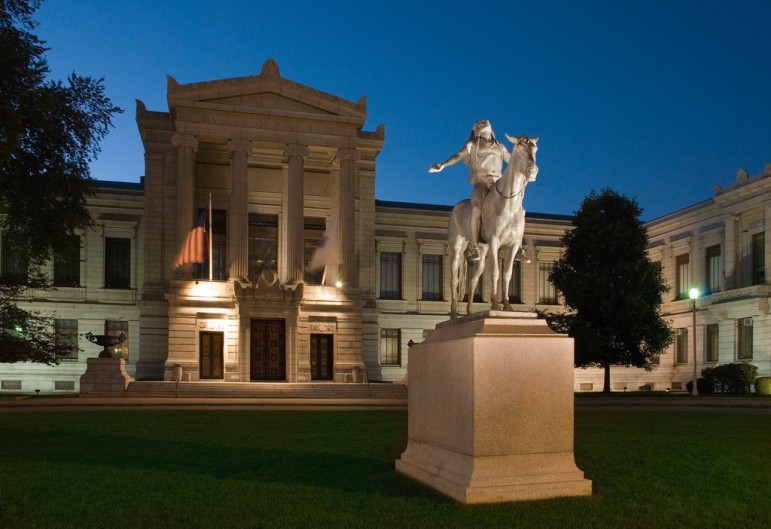
MFA-statues
Museum of Fine Arts – Boston / Massachusetts Office of Travel & Tourism

December 15, 2015; Hyperallergic.com

For the past three weeks, guards who usually serve to protect the treasures of the Boston Museum of Fine Arts (MFA) have instead been walking the pavement outside. Members of the Museum Independent Security Union (MISU) object to changes that museum officials want to make to reduce flexible scheduling and the coverage they’ve provided inside the galleries to assist patrons and protect the art. According to Hyperallergic.com this week, MISU president Evan Henderson explained the guards’ position saying the proposed changes are “pushing guards out of their positions,” and would “reportedly be less focused on providing artwork protection and guest support within the galleries, and require them to cover shifts in areas of the museum like the attic, offices, or outdoors.”

Henderson was quoted in the Boston Globe saying, “They want us to be more like unlicensed cops, in which we’ll be more militarized…. We’ll be doing, like, drills in the morning. They want us to not focus on the artwork and be able to fight things like active shooters.”

Protecting visitors and property in public venues is increasingly complex, and according to R. Michael Kirchner, chairman of the security committee for the American Alliance of Museums, there’s no single template. “It varies worldwide because of the different size of facilities and resources.” Each museum has its own security challenges and priorities.

Boston MFA’s public relations director Karen Frascona explained the museum’s stance: “In today’s environment, it is critical that our security workforce is prepared to protect our staff, students, volunteers, visitors, and the collection in a variety of situations. Industry-standard training in areas such as emergency preparedness, conflict resolution, and security operations is included in the MFA’s current plan.” But Henderson and the nearly 100 guards who are opposing the changes are concerned the new policies would hinder their ability to aid visitors and provide them with a friendly experience.

According to the Globe article, “Frascona declined to describe details of the MFA’s security system, citing its sensitive nature.” But Steve Keller, a museum security consultant, said, “The MFA is in the forefront of a broader trend among museums to adopt technologically advanced security systems.” Keller added, “The museum uses a predictive video monitoring system that incorporates ceiling-mounted cameras and video analytics to sound an alarm before a person actually touches an artwork.”

Sign up for our free newsletters

Subscribe to NPQ's newsletters to have our top stories delivered directly to your inbox.

By signing up, you agree to our privacy policy and terms of use, and to receive messages from NPQ and our partners.

He said the MFA’s system goes “beyond what most museums do,” by enabling the museum to statistically analyze audience movement patterns to determine which artworks (and even which parts of an artwork) are vulnerable to damage.

But Henderson and others are not convinced that even such good technology can do the job well. As one guard put it, people don’t always respond correctly to alarms, even when they hear them. Then there’s the personal touch they feel will be lost. Henderson said, “Customer service was a huge aspect of the job. We all take great appreciation in the artwork that we’re around. We’re very knowledgeable.”

He’s quoted in DigBoston, saying, “With the ‘new security model’ and ‘take it or leave it’ schedules, people are being laid off through attrition,” since many work their schedules around childcare or other jobs.

Currently, according to the Globe, “Guards can work shifts of varying lengths. Frascona said the museum was working to standardize the guards’ schedules, creating regular day, evening, and overnight shifts, starting Jan. 3rd.” According to the guards’ current contract, the museum “retains the right to alter the guards’ schedules independent of negotiations.”

In response, Henderson is considering filing a complaint with the National Labor Relations Board. And this Saturday, December 19, the Massachusetts Jobs with Justice coalition is sponsoring a rally from 12 to 2 p.m. to support the guards. — Susan Raab


Our Voices Are Our Power.

Journalism, nonprofits, and multiracial democracy are under attack. At NPQ, we fight back by sharing stories and essential insights from nonprofit leaders and workers—and we pay every contributor.

Can you help us protect nonprofit voices?

Your support keeps truth alive when it matters most.
Every single dollar makes a difference.

Donate now
logo logo logo logo logo
About the author
Susan Raab

Susan Raab is a journalist, speaker and marketer whose passion is helping artists, businesses and non-profits promote their work in an authentic, meaningful way. She has, for more than twenty-five years, consulted in the literary, arts and education fields and has worked with corporations and associations from around the world. Her company, Raab Associates, is recognized as a source for marketing advice and innovative solutions to meet the challenges of balancing creative work with the need to stay competitive in an ever-changing business environment. She has a regular following as the To Market columnist for the Society of Children’s Book Writers and Illustrators and hosts the blog, ArtstoMarket. Susan’s written for many business publications and has done international interviews for Recess! Radio, a program broadcasted nationally via 500 public radio stations. She’s also the featured host of literary podcasts for the University of Connecticut’s Teacher’s for a New Era program.

More about: Arts and CultureNonprofit News
See comments

Call to action
You might also like
An Artist Stands Up for Jornaleros
Nina R. Salerno
How to Use Art Spaces to Build Civic and Political Power
Tom Tresser
The South’s Got Something to Say: Stories from Black Women in the South
Monica L. Coleman
The Faith of the Dreamer: A Personal Story About Racism, Trauma, and Healing
Gwendolyn Middleton Payton
The End of the NEA
Alison Stine
Rehearsing for the Revolution: Theater as a Tool of Democratic Imagination
Katy Rubin and Liz Morgan

Upcoming Webinars

Group Created with Sketch.
January 29th, 2:00 pm ET

Participatory Decision-making

When & How to Apply Inclusive Decision-making Methods

Register
Group Created with Sketch.
February 26th, 2:00 pm ET

Understanding Reduction in Force (RIF) Law

Clear Guidance for Values-centered Nonprofits

Register

    
You might also like
A red circle overlayed on a yellow background with three multi-colored dots on each side. In the center it reads, " Isaiah Thompson: Staff Picks for 2025"
Staff Picks for 2025: Isaiah Thompson
Isaiah Thompson
Staff Picks for 2025: Steve Dubb
Steve Dubb
A red circle overlayed on a yellow background with three multi-colored dots on each side. In the center it reads, "Alison Stine: Staff Picks for 2025"
Staff Picks for 2025: Alison Stine
Alison Stine

Like what you see?

Subscribe to the NPQ newsletter to have our top stories delivered directly to your inbox.

See our newsletters

By signing up, you agree to our privacy policy and terms of use, and to receive messages from NPQ and our partners.

  • About
  • Advertise
  • Careers
  • Contact
  • Copyright
  • Donate
  • Editorial Policy
  • Funders
  • Submissions

We are using cookies to give you the best experience on our website.


Nonprofit Quarterly | Civic News. Empowering Nonprofits. Advancing Justice.
Powered by  GDPR Cookie Compliance
Privacy Overview

This website uses cookies so that we can provide you with the best user experience possible. Cookie information is stored in your browser and performs functions such as recognising you when you return to our website and helping our team to understand which sections of the website you find most interesting and useful.

Strictly Necessary Cookies

Strictly Necessary Cookie should be enabled at all times so that we can save your preferences for cookie settings.