
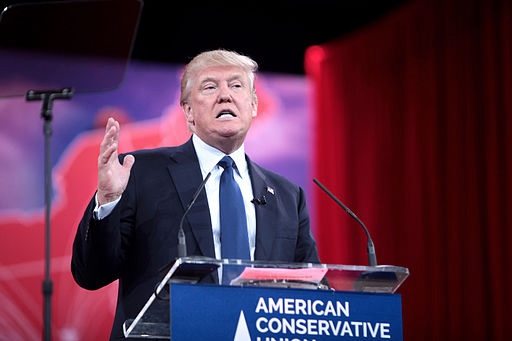
Thursday is the 65th official National Day of Prayer, and President Trump is expected to use the occasion to sign a new executive order mandating more discretion be given to religious organizations as they deal with federal law and regulation. This would include easing a ban on political activity by 501(c)(3) nonprofits, including churches, and “regulatory relief to religious employers that object to contraception” as a component of employer-paid health insurance under the Affordable Care Act, according to a senior White House official as reported by Reuters.
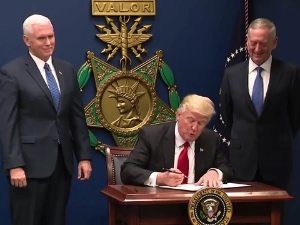
An early draft version of the executive order was leaked, allegedly by Ivanka Trump and Jared Kushner, and published by the Nation on its website, provoking objections which caused the Trump administration to withdraw the document. Politico reports that Vice President Mike Pence “and a small team of conservative allies quickly began working behind the scenes to revise the language, and in recent weeks have ratcheted up the pressure on Trump to sign it.” The revised executive order strips language affecting LGBTQ rights. “This executive order isn’t about discrimination,” said the official, who spoke on condition of anonymity. “Anything currently illegal under current law would still be illegal.”
Readers will recall that Vice President Mike Pence has a passion for these issues, having signed a state-level Religious Freedom Restoration Act in 2015 as the governor of Indiana. The law opened the door to discrimination against the LGBT community and it prompted a widespread boycott of the state by businesses, foundations, and others
Eventually an amendment was added to the Indiana Law preventing anyone from using the law to discriminate against LGBT individuals, but neither the right nor the left was mollified entirely. This was a notable moment in social history because of the rapidity and cross-sectoral nature of the boycott.
Civil liberties groups are ready on this executive order, as they have been on others: “We just got word that President Trump has resurrected his outrageously misnamed ‘religious freedom’ executive order and plans to sign it on Thursday. I promise you—we’re ready to sue,” the American Civil Liberties Union said in an email statement. “We still have time to act before Trump signs the order. So while the ACLU prepares to wage lawfare, we need you to fight this with all you’ve got.”
The expected order doesn’t change current federal laws or regulations, but it does direct government agencies on how to exercise regulatory discretion when applying existing laws. Repealing the Johnson Amendment (dealing with political campaign activity by churches and other 501(c)(3) nonprofits) or Obamacare provisions dealing with essential health coverage like artificial contraception would still require Congressional action.
Sign up for our free newsletters
Subscribe to NPQ's newsletters to have our top stories delivered directly to your inbox.
By signing up, you agree to our privacy policy and terms of use, and to receive messages from NPQ and our partners.
Two subcommittees of the U.S. House Committee on Oversight and Government Reform will meet Thursday to hear testimony on “Examining a Church’s Right to Free Speech.” NPQ has reported (here and here) on the effort to coalesce nonprofit support behind current law and oppose changes. In addition, NPQ has taken an editorial position opposing changes to the Johnson Amendment.
In a prepared statement prompted by the hearing, Tim Delaney, president of the National Council of Nonprofits, reiterates support for the Johnson Amendment and its guarantee of political nonpartisanship in religious and other 501(c)(3) charitable nonprofit activities. Delaney’s statement reads in part, “Our society is better today because 501(c)(3) organizations operate as safe havens from caustic partisanship. Americans don’t want to see any part—not even a de minimis amount—of their charitable donations redirected by someone else towards a partisan campaign. Nor do they want to see more anonymous, and in this case tax deductible, dark money flowing into political campaigns. Less still do they want some of the few remaining places where they can escape—their sacred houses of worship and trusted community gathering places—invaded and plunged into the mire and muck of polarizing partisanship.”
We must admit to being curious about whether a provision in the draft executive order will be included in the anticipated final version. As the Nation reported, the four-page draft…
[C]onstrues religious organizations so broadly that it covers “any organization, including closely held for-profit corporations,” and protects “religious freedom” in every walk of life: “when providing social services, education, or healthcare; earning a living, seeking a job, or employing others; receiving government grants or contracts; or otherwise participating in the marketplace, the public square, or interfacing with Federal, State or local governments.”
If so, this would go well beyond federal Johnson Amendment nonprofit political campaign restrictions or the U.S. Supreme Court’s Hobby Lobby decision on application of the ACA to employers. Reportedly, the final version of the order was still being fine-tuned on Wednesday, so we’ll have to wait for its release to see what the final version looks like and what it may mean. Stay tuned.