

On September 8, 2026, 38-year-old Shalini Thakur was shot and killed outside a Panera Bread in Sacramento, California, by a man authorities say had stalked and harassed her for months.
The warning signs were not hidden. According to court records and law enforcement accounts, Shalini had been followed to work. Her tires had been deflated. An Apple AirTag had been hidden under the hood of her car to track her movements. The man accused of killing her had allegedly obtained a key to her apartment and entered while she slept. He threatened violence.
Perhaps October should become something more ambitious: Survivor Justice Month.
Shalini sought help, obtained a restraining order in May, and reported a subsequent violation. And still, she was killed.
After her daughter’s death, Shalini’s mother, Sudesh Kumari, said what those of us working to end gender-based violence understand all too well: “She could have been saved.”
This Domestic Violence Awareness Month, I believe we need to ask whether “awareness” remains an adequate framework for this moment. After decades of advocacy, we are not suffering from a lack of awareness that domestic violence exists. We are confronting something far more consequential: a failure to build systems capable of responding to the ways violence is evolving and to adequately resource the organizations working every day to interrupt it.
Perhaps October should become something more ambitious: Survivor Justice Month.
For philanthropy, that reframing matters. Because the question before us is no longer simply whether we recognize gender-based violence. The question is whether we are prepared to invest in the infrastructure survivors needed to live safely and freely in a world where the mechanisms of violence are changing rapidly, while many of the systems intended to protect them are simultaneously being weakened.
Violence is evolving faster than our systems
The fundamental dynamics of gender-based violence—power, control, isolation, intimidation and economic dependence—are not new. What is new is the speed, reach, and sophistication with which technology can amplify them.
Shalini’s death demonstrates that convergence with devastating clarity. An inexpensive consumer tracking device allegedly allowed someone seeking t to turn her physical movements into data. Technology did not create the impulse to stalk her. It made stalking easier, more persistent and more difficult to escape.
Artificial intelligence raises the stakes further. AI can facilitate impersonation, sextortion, deepfake sexual imagery, harassment, and increasingly sophisticated surveillance. UN Women reports that studies estimate between 16% and 58% of women worldwide have experienced technology-facilitated violence. It warns that AI is creating new forms of abuse while dramatically accelerating existing ones—and that the distinction between “online” and “offline” violence is increasingly meaningless.
For survivors, digital dangers can have real-life consequences. The phone that connects someone to an advocate can also reveal their location. A social media account can connect someone to a community while giving a partner engaging in harm another mechanism for surveillance. Images can be manipulated, identities impersonated and harassment multiplied at a scale unimaginable to those of us who entered this movement decades ago.
Yet the organizations responding to this violence are being asked to absorb these transformations without anything resembling a corresponding transformation in resources.
That would be troubling under any circumstances. In the current federal policy environment, it is especially dangerous.
Economic security is not adjacent to survivor safety: It is a key mechanism to survivor safety.
Survivors are facing another form of instability: erosion of the safety net
Gender-based violence does not happen in a policy vacuum.
Survivors deciding whether they can leave an abusive household are simultaneously calculating whether they can pay rent, feed their children, access healthcare, maintain immigration status, afford legal representation, and replace the income they may lose by leaving.
Economic security is not adjacent to survivor safety: it is a key mechanism to survivor safety.
Yet federal policy changes are making that equation more precarious.
H.R. 1, known as the One Big Beautiful Bill Act, significantly changed work requirements and eligibility rules across Medicaid and SNAP, with implementation on a phased basis. Federal and state agencies are now expanding requirements that can condition access to essential benefits on employment, education, volunteering or other qualifying activities.
Consider what the administrative complexity of these requirements and changing eligibility means for someone navigating violence. Leaving harm may require missing work, relocating without notice, appearing in court, seeking medical care, finding childcare, changing a child’s school, meeting with attorneys and advocates, or recovering from physical and psychological trauma. A benefits system that assumes stability in a survivor’s employment, documentation or living circumstances can fundamentally misunderstand the conditions under which survival takes place.
Immigrant survivors are confronting another layer of fear.
When people believe accepting food assistance, seeking healthcare or engaging with government systems could jeopardize their immigration status or expose their families, some will disengage before an advocate ever has the opportunity to explain the law.
A new federal public-charge rule took effect on September 18, 2026, expanding the government’s authority to consider an immigrant’s use of public benefits when determining eligibility for admission to the United States or lawful permanent residency. Certain survivors remain exempt from this rule, including qualifying petitioners under the Violence Against Women Act (VAWA), which allows survivors of violence by certain US citizen or lawful permanent resident family members to seek immigration status independently of those engaging in harm. Survivors with qualifying T- or U-visa protections, which provide immigration pathways for those who have experienced human trafficking and certain other crimes, are also exempt. In practical terms, these protections mean that qualifying survivors cannot be denied admission or permanent residency on public-charge grounds simply because they have relied on government assistance.
For immigrants who are subject to the rule, however, the Department of Homeland Security (DHS) now has broader discretion to consider whether someone has applied for, been approved for, or received income-based public benefits, including food assistance, Medicaid, and housing assistance. These benefits may be considered alongside other circumstances, such as income, health, age, and employment, when immigration officials assess whether someone is likely to become dependent on government assistance. While receiving benefits does not automatically disqualify an applicant, advocates have warned that the expanded rule could discourage survivors from seeking essential services out of fear that doing so could jeopardize their immigration status. DHS has disputed these concerns, emphasizing that existing statutory exemptions remain in place.
To those of us working directly with immigrant survivors, policy cannot be understood solely through the technical question of who is legally exempt. Fear has consequences of its own.
When people believe accepting food assistance, seeking healthcare or engaging with government systems could jeopardize their immigration status or expose their families, some will disengage before an advocate ever has the opportunity to explain the law.
Sign up for our free newsletters
Subscribe to NPQ's newsletters to have our top stories delivered directly to your inbox.
By signing up, you agree to our privacy policy and terms of use, and to receive messages from NPQ and our partners.
Federal funding for the gender-based violence movement is also uncertain. Organizations challenged new conditions attached to Office on Violence Against Women grants, and in April, a federal judge granted preliminary relief in litigation brought by 17 domestic and sexual violence organizations. DOJ’s own funding guidance currently notes that several challenged FY2025 and FY2026 funding conditions are stayed and cannot be enforced unless that stay is lifted.
Put these forces together and the contradiction becomes impossible to ignore: The mechanisms available to people who cause harm are becoming more sophisticated while the systems survivors rely upon for safety, economic stability and justice are becoming more difficult to access and navigate.
We are seeing the consequences in real time
At Sakhi for South Asian Survivors, where I serve as executive director, these national debates are not abstract.
From January through August 2026, we worked with nearly 14 percent more survivors than during the same period in 2025. Our Food Justice Program saw an increase of nearly 50 percent, while services provided through our Legal Justice Program increased by more than 1,000 percent as survivors sought help navigating increasingly complicated legal and immigration systems.
Those numbers tell a story about demand. But they also tell us something about the changing nature of survivor needs.
Survivors may come to us because they are experiencing violence, but ending violence cannot be separated into tidy philanthropic categories. They may need an immigration attorney. They may need emergency housing. They may need food. They may need mental health care. They may need help replacing benefits. They may need technology-safety planning because the person causing harm can track her location. They may need economic assistance because leaving has cost them a job.
And increasingly, they may need all of those things at once.
This is where philanthropy must evolve alongside the realities survivors are navigating.
Philanthropy cannot fund yesterday’s response to today’s violence
For Domestic Violence Awareness Month, funders will rightly highlight grantees, publish statistics, attend events and make grants.
But awareness without infrastructure is insufficient.
If philanthropy wants to meaningfully respond to this moment, it should begin by rejecting the idea that gender-based violence can be addressed through narrowly defined, short-term interventions.
First, fund the whole survivor, not a program category. Flexible, multiyear general operating support allows organizations to respond to what survivors actually need rather than forcing their lives into artificial funding silos. Housing, immigration, food security, healthcare, economic justice and safety are interconnected because survivors’ lives are interconnected.
Second, invest in the infrastructure required for the next generation of gender-based violence. Survivor-serving organizations need resources for technology safety, cybersecurity, training, legal expertise and staff capacity to understand rapidly evolving forms of digital and AI-facilitated violence. Technology companies are moving at extraordinary speed. Survivor organizations cannot be expected to catch up on shoestring budgets.
Third, treat public policy and systems change as survivor services. Direct service saves lives, but so does changing the conditions that make people vulnerable to violence. Philanthropy should resource advocacy, legal challenges, research, organizing and policy work alongside crisis intervention.
Fourth, provide capital that allows organizations to withstand federal volatility. When government reimbursements are delayed, grant conditions change, or federal programs become uncertain, organizations still have payroll to meet and survivors still arrive at their doors. Philanthropy can provide bridge funding, reserves, rapid-response funds and long-term unrestricted capital that allow organizations to remain stable when public systems are not.
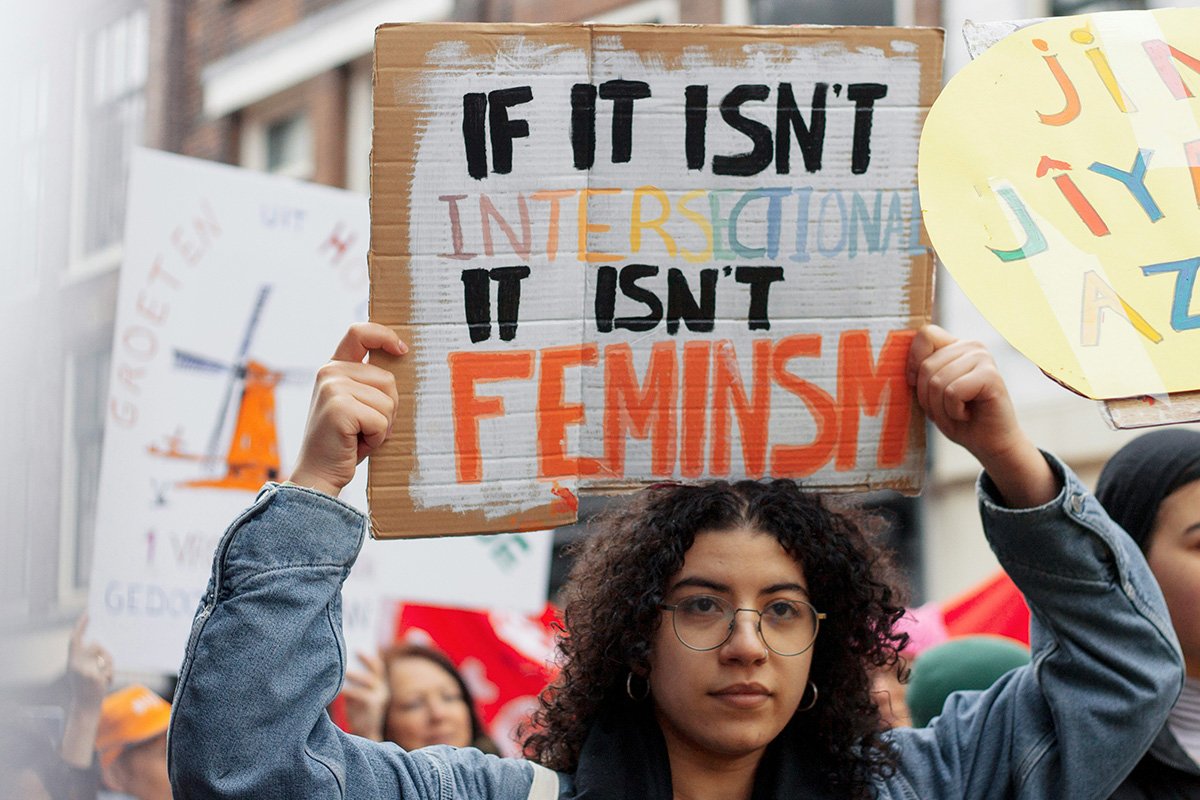
Finally, fund organizations closest to the communities experiencing the greatest barriers to safety. Culturally specific organizations often work at the intersection of gender, immigration, poverty, language, race, and community stigma. That intersectionality is not mission creep. It is what survivor-centered work requires.
From awareness to justice
Shalini Thakur did what we routinely tell survivors to do.
She recognized escalating danger. She documented it. She sought help. She obtained a restraining order. She reported its violation.
Her death should force us to confront an uncomfortable truth: We cannot continue building a movement in which the burden of preventing violence rests primarily on the person experiencing it.
A survivor should not have to become an expert in technology surveillance, immigration law, public benefits, housing systems, criminal law and personal security simply to stay alive.
That responsibility belongs to all of us—to the government, technology companies, law enforcement, philanthropy, and the institutions that shape whether safety is actually possible.
Domestic Violence Awareness Month has helped bring gender-based violence out of the shadows. That mattered enormously.
But awareness was never the destination.
The next chapter must be about survivor justice: building the economic, legal, technological and community infrastructure that allows survivors not merely to escape violence, but to live with safety, dignity and self-determination. To help advance this next chapter, SAKHI is hosting an in-person panel on October 27 to explore healthy relationships, intimate partner violence, how media and politics affect mental health, and support for CSA survivors. More information is here.
For philanthropy, that means moving beyond funding awareness of the problem and investing in the conditions necessary to end it.
Because if we truly believe gender-based violence is preventable, our funding must reflect the urgency of preventing it.