October 12, 2017; Washington Post
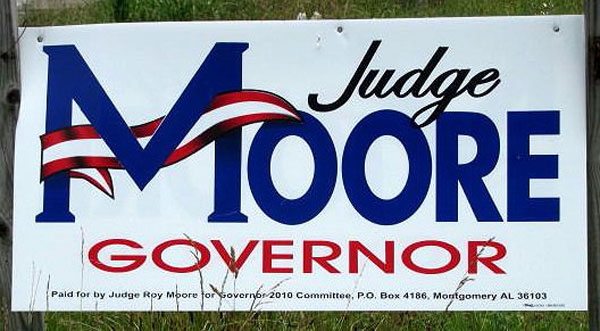
The always potentially sordid combination of politics and nonprofit charities has again reared its head in the case of Judge Roy Moore of Alabama, who is the GOP candidate for the Senate seat formerly occupied by current Attorney General Jeff Sessions.
The charity at the center of the controversy is one established by Moore, the Foundation for Moral Law. The foundation’s stated purpose is to “restore the knowledge of God in law and government and to acknowledge and defend the truth that man is endowed with rights, not by our fellow man, but by God!” Its focus is on education of the public and participation in litigation.
In recent articles, the Washington Post has revealed that Moore has benefited personally, financially, and politically from his relationship with the foundation, raising red flags about the foundation’s nonprofit status. The listing of the foundation’s historic headquarters building for sale served to further the controversy, as Moore stands to benefit substantially if the building is sold.
What’s fueling this fire is not just the financial benefits to Moore—as well as to his wife and two of his children, who have also been on the charity’s payroll—but the political benefits he received via this platform. As president of the board from its founding until he was elected to the Alabama Supreme Court in 2012, Moore served as its chief spokesperson and was able to establish himself as a conservative leader with a large evangelical base, that served him well when he moved into campaigning for elected office. While the legality of this is not the key question, it does make Moore’s monetary benefits and the foundation’s lack of transparency in reporting them seem more glaring.
He collected more than $1 million as president from 2007 to 2012, compensation that far surpassed what the group disclosed in its public tax filings most of those years.
When the charity couldn’t afford the full amount, Moore in 2012 was given a promissory note for back pay eventually worth $540,000 or an equal stake of the charity’s most valuable asset, a historic building in Montgomery, Ala., mortgage records show. He holds that note even now, a charity official said.
While still president of the Foundation for Moral Law, Roy Moore established “Project Jeremiah” in order to reach out to ministers and preachers. At his suggestion, Moore was guaranteed an annual salary of $180,000 per year for this specific work. Those funds would come from his work on this project, and the foundation would make up the difference if he did not bring in that amount. If the foundation did not have funds to cover that difference annually, their debt to Moore would accumulate. Funds raised for Project Jeremiah were separately held, and Moore’s salary from this was not reported to the IRS in tax filings. This is a major area where questions are being raised.
Sign up for our free newsletters
Subscribe to NPQ's newsletters to have our top stories delivered directly to your inbox.
By signing up, you agree to our privacy policy and terms of use, and to receive messages from NPQ and our partners.
In February this year, the IRS concluded its audit of the charity’s 2013 finances, according to the documents provided to the Post. The IRS identified problems that it said could threaten the group’s tax-exempt status if not resolved.
The IRS wrote that the charity “did not identify its special fundraising activities.” It also found that the group’s tax filings contained figures that “did not reflect those recorded on your books of account.” The document does not detail the activities or figures at issue.
In recent weeks, the Campaign Legal Center, a watchdog group in Washington, accused the charity of openly promoting Moore’s Senate campaign through a Facebook page titled “Foundation for Moral Law.” Charities are prohibited by law from supporting or opposing political candidates.
In looking at the work of this foundation, its center has been and continues to be Judge Roy Moore. It has filed numerous legal briefs in cases involving conservative Christian issues. Since 2003, when Moore was ousted from the Alabama Supreme Court for refusing to remove a Ten Commandments monument from the courthouse, his popularity has grown. This aligned him with the goals of the foundation and made Moore the perfect leader/spokesperson. The Washington Post captured this, stating, “At a time when Moore was running for other public offices in Alabama, the charity kept him in the public eye and helped establish a nationwide network of donors while he took on controversial positions against same-sex marriage, Islam and the separation of church and state.”
The anticipated benefits for Moore from the sale of the foundation’s headquarters building have added incentive to the efforts to look further into the foundation’s charitable status. Judge Roy Moore stands to gain over $500,000 if the building is sold. With his wife, Kayla Moore, now serving as president of the board, questions are being raised as to her role in moving forward to put the property on the market.
With watchdog groups, the IRS, and the media giving this situation a great deal of attention, it adds intrigue to the hoopla around Moore’s senate campaign. As each side pushes back, there are multiple lessons and cautions for the nonprofit community. The consequences of commingling the personal goals of a charismatic leader with that of a charity may be the primary unresolved concern. Links between Moore’s political campaign and the charity are also being raised, as his campaign chair is the former executive director of the Foundation for Moral Law, and there are allegations of links between the charity’s website and that of Moore’s campaign.
The importance of transparency in reporting to the IRS for all nonprofits cannot be underestimated. As the nation moves into “election mode,” much hangs in the balance for the nonprofit community. Maintaining a clear distinction between nonprofit charitable work and electioneering may need even higher priority in today’s partisan climate. Judge Roy Moore may be providing the charitable community with a model that needs attention and scrutiny in order to avoid being trapped between a moral vision, personal benefits, and the law.—Carole Levine
Correction: This article has been altered to reflect that the material attributed to the Chicago Tribune was actually material reprinted from the Washington Post.