logo logo
giving banner
Donate
    • Membership
    • Donate
  • Social Justice
    • Racial Justice
    • Climate Justice
    • Disability Justice
    • Economic Justice
    • Food Justice
    • Health Justice
    • Immigration
    • LGBTQ+
  • Civic News
  • Nonprofit Leadership
    • Board Governance
    • Equity-Centered Management
    • Finances
    • Fundraising
    • Human Resources
    • Organizational Culture
    • Philanthropy
    • Power Dynamics
    • Strategic Planning
    • Technology
  • Columns
    • Ask Rhea!
    • Ask a Nonprofit Expert
    • Economy Remix
    • Gathering in Support of Democracy
    • Humans of Nonprofits
    • The Impact Algorithm
    • Living the Question
    • Nonprofit Hiring Trends & Tactics
    • Notes from the Frontlines
    • Parables of Earth
    • Re-imagining Philanthropy
    • State of the Movements
    • We Stood Up
    • The Unexpected Value of Volunteers
  • CONTENT TYPES
  • Leading Edge Membership
  • Newsletters
  • Webinars

Maine Legislature Votes Unanimously to Ban Native Mascots from Public Schools

Steve Dubb
May 21, 2019
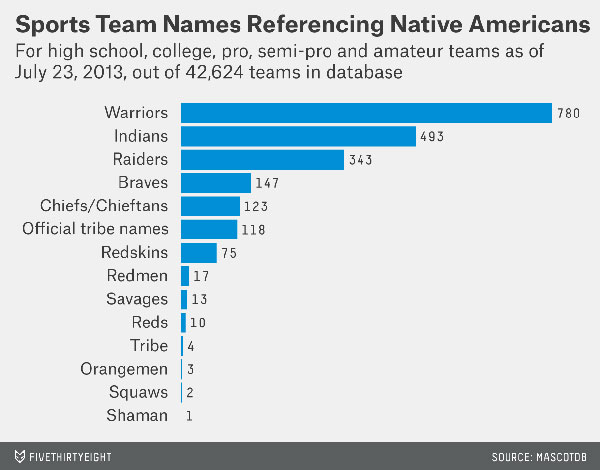
FiveThirtyEight.org

May 17, 2019; Washington Post

Maulian Dana tells Samantha Pell of the Washington Post that she was drawn to activism after attending a high school basketball game between the “Indians” and the “Warriors” 20 years ago, when she was 15. Dana, who’s a member of the Penobscot Nation, remembers feeling angry as she watched students chanting and dancing in fake feathers and war paint, effectively mocking and degrading traditions she held sacred.

Now, Dana is a tribal ambassador of the Penobscot Nation, which spearheaded the drafting of a bill signed into law last Thursday by Democratic Maine Governor Janet Mills that prohibits the use of American Indian mascots in all public schools, colleges, and universities statewide. Maine is the first state to pass such a law. The ban will take effect 90 days after the state legislature adjourns.

The bill, which is only a single sentence long, reads as follows: “A public school may not have or adopt a name, symbol, or image that depicts or refers to a Native American tribe, individual, custom or tradition and that is used as a mascot, nickname, logo, letterhead or team name of the school.”

The vote in the state legislature was unanimous, but the issue has attracted controversy in Maine at the local level. Last March, Pell notes, Maine made headlines when the high school board in Skowhegan, after a years-long debate, voted by a 14–9 margin to retire its “Indians” mascot. Pell says the high school was the last in the state to have such a mascot.

Portland-based state Representative Benjamin Collings, who authored the legislation, said at the signing ceremony, “I am deeply proud of the steps our legislature has taken this session to finally honor Maine’s tribes in the way they should be honored. Our tribal communities laid the foundation of our state. They are people, not mascots.”

Sign up for our free newsletters

Subscribe to NPQ's newsletters to have our top stories delivered directly to your inbox.

By signing up, you agree to our privacy policy and terms of use, and to receive messages from NPQ and our partners.

The move to ban these mascots also comes on the heels of a vote last month by Maine’s legislature to replace Columbus Day with indigenous Peoples’ Day.

The legislation may be simple, but the issues behind it are not. According to a 2013 report from the National Congress of American Indians, nationally nearly 1,000 schools maintain American Indian-related mascots (some estimates are even higher). The American Psychological Association (APA) in 2005 took a position against the use of American Indian mascots, noting that such mascots undermine “the educational experiences of members of all communities—especially those who have had little or no contact with indigenous peoples.” The APA added that:

  • “The symbols, images and mascots teach non-Indian children that it’s acceptable to participate in culturally abusive behavior and perpetuate inaccurate misconceptions about American Indian culture.”
  • “Establishes an unwelcome and often times hostile learning environment for American Indian students that affirms negative images/stereotypes that are promoted in mainstream society.”

The APA also cites the work of psychologist Stephanie Fryberg, now at the University of Washington, whose research has found that, “American Indian mascots are harmful not only because they are often negative, but because they remind American Indians of the limited ways in which others see them. This in turn restricts the number of ways American Indians can see themselves.” (The text of the full APA statement is available here.)

“I think on the federal level something should be done as well,” Collings told Pell. “In Maine, we just realized that it is a distraction, is harmful, and not needed. We wanted to affirm what every town in the state has said so far. It is harmful and there is no place for it.”

Darren Ranco, chair of Native American Programs at the University of Maine, credits a grassroots movement in the state over last two decades for helping lead to the ban’s passage. Ranco and Dana both indicated that they hope Maine’s bill will spur similar legislation in other states.—Steve Dubb


Our Voices Are Our Power.

Journalism, nonprofits, and multiracial democracy are under attack. At NPQ, we fight back by sharing stories and essential insights from nonprofit leaders and workers—and we pay every contributor.

Can you help us protect nonprofit voices?

Your support keeps truth alive when it matters most.
Every single dollar makes a difference.

Donate now
logo logo logo logo logo
About the author
Steve Dubb

Steve Dubb is senior editor of economic justice at NPQ, where he writes articles (including NPQ’s Economy Remix column), moderates Remaking the Economy webinars, and works to cultivate voices from the field and help them reach a broader audience. In particular, he is always looking for stories that illustrate ways to build a more just economy—whether from the labor movement or from cooperatives and other forms of solidarity economy organizing—as well as articles that offer thoughtful and incisive critiques of capitalism. Prior to coming to NPQ in 2017, Steve worked with cooperatives and nonprofits for over two decades, including twelve years at The Democracy Collaborative and three years as executive director of NASCO (North American Students of Cooperation). In his work, Steve has authored, co-authored, and edited numerous reports; participated in and facilitated learning cohorts; designed community building strategies; and helped build the field of community wealth building. Most recently, Steve coedited (with Raymond Foxworth) Invisible No More: Voices from Native America (Island Press, 2023). Steve is also the lead author of Building Wealth: The Asset-Based Approach to Solving Social and Economic Problems (Aspen 2005) and coauthor (with Rita Hodges) of The Road Half Traveled: University Engagement at a Crossroads, published by MSU Press in 2012. In 2016, Steve curated and authored Conversations on Community Wealth Building, a collection of interviews of community builders that Steve had conducted over the previous decade.

More about: BrandingIndigenous CommunitiesNonprofit NewsSocial Movements
See comments

Call to action
You might also like
Organizers at Global Teach-ins Seek Solutions and Envision What Comes Next
April Doner and Deissy Perilla
A Lakota Matriarch Offers Perspective on the Long Struggle for LandBack
Martell Hesketh
How to Reclaim Land Ownership for Black Americans in the South
Dãnia Davy
We The Action: A Free Legal Aid Network for Nonprofits
Isaiah Thompson
A Sacred Responsibility: The Struggle to Restore Native Cultures in the South
Dr. Crystal Cavalier-Keck
An Indigenous Nonprofit Responds to Budget Cuts with a New Strategic Vision
Steve Dubb

Upcoming Webinars

Group Created with Sketch.
January 29th, 2:00 pm ET

Participatory Decision-making

When & How to Apply Inclusive Decision-making Methods

Register
Group Created with Sketch.
February 26th, 2:00 pm ET

Understanding Reduction in Force (RIF) Law

Clear Guidance for Values-centered Nonprofits

Register

    
You might also like
A red circle overlayed on a yellow background with three multi-colored dots on each side. In the center it reads, " Isaiah Thompson: Staff Picks for 2025"
Staff Picks for 2025: Isaiah Thompson
Isaiah Thompson
Staff Picks for 2025: Steve Dubb
Steve Dubb
A red circle overlayed on a yellow background with three multi-colored dots on each side. In the center it reads, "Alison Stine: Staff Picks for 2025"
Staff Picks for 2025: Alison Stine
Alison Stine

Like what you see?

Subscribe to the NPQ newsletter to have our top stories delivered directly to your inbox.

See our newsletters

By signing up, you agree to our privacy policy and terms of use, and to receive messages from NPQ and our partners.

  • About
  • Advertise
  • Careers
  • Contact
  • Copyright
  • Donate
  • Editorial Policy
  • Funders
  • Submissions

We are using cookies to give you the best experience on our website.


Nonprofit Quarterly | Civic News. Empowering Nonprofits. Advancing Justice.
Powered by  GDPR Cookie Compliance
Privacy Overview

This website uses cookies so that we can provide you with the best user experience possible. Cookie information is stored in your browser and performs functions such as recognising you when you return to our website and helping our team to understand which sections of the website you find most interesting and useful.

Strictly Necessary Cookies

Strictly Necessary Cookie should be enabled at all times so that we can save your preferences for cookie settings.