In this column with NPQ, LandBack for the People, NDN Collective builds on their podcast of the same name, sharing stories from Turtle Island and beyond about Indigenous people organizing in community, advocating for social justice, and fighting for the return of Indigenous lands.
In this introductory installment, NPQ Senior Editor Steve Dubb writes about an episode of the podcast that dives into how NDN Collective is responding to major funding cuts.
Nonprofit leaders rarely publicly discuss layoffs at their own organizations. But a recent podcast episode from NDN Collective, titled “Brah…We Aren’t Going Anywhere,” is a refreshing exception.
In that podcast, Nick Tilsen, CEO of NDN Collective, in conversation with two other NDN Collective leaders—Vice President Gaby Strong and President Wizipan Little Elk Garriott—kicked off the conversation by pledging “to dive in full transparency.”
And the episode does not disappoint.
A Movement at Risk
Garriott detailed the basic numbers: “NDN has had to cut our budget by nearly half and has had to reduce the size of our staff by 40. And that’s been hard.” The cuts, reported Amelia Schafer in ICT News amount to “roughly 40 percent of its staff.”
“Federal responsibility to treaty obligations, trust responsibility. All those things are at immediate imminent risk right now because of what is happening.”
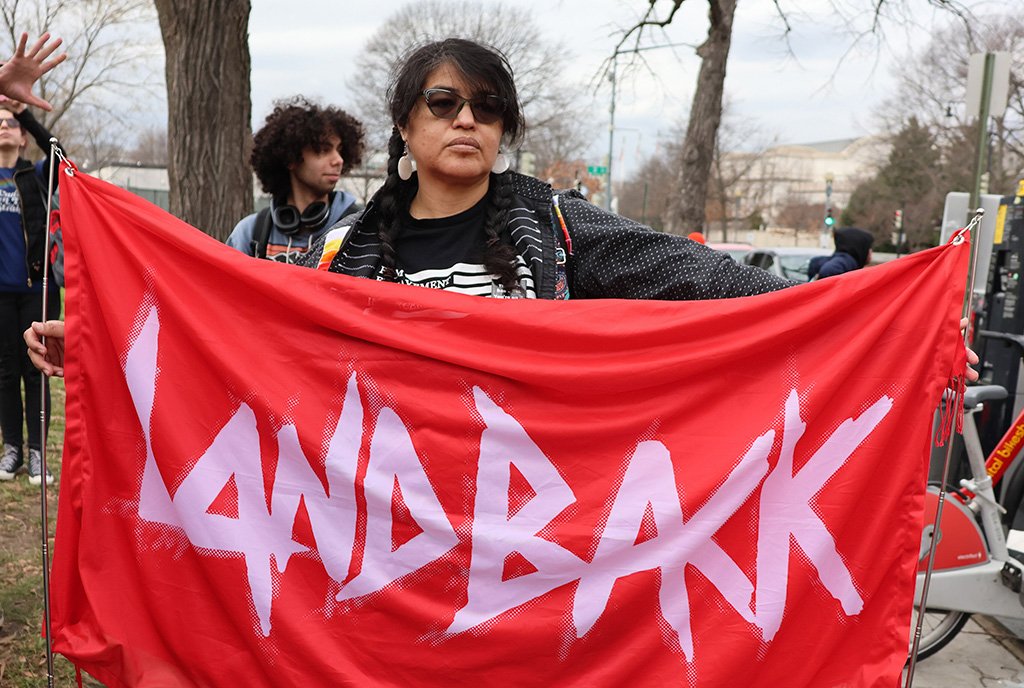
Founded in 2018, NDN Collective has become a leading Indigenous rights group offering grants and loans, and supporting grassroots organizing, narrative change, and political education, including the international LandBack movement.
“NDN has been one of the most well-resourced organizations in Indian Country,” Garriott explained, “and has built up a staff and an infrastructure that probably Indian Country has never seen before.”
NDN, of course, is hardly the only nonprofit to face funding cuts. Tilsen added, “We have seen funding in the philanthropic space decrease in their support to us, but also to everybody across the space.”
The threat is clear—and it is about more than funding.
“We are turning back the clock. The clock has been turned back in terms of policy and rights and funding and federal responsibility to treaty obligations, trust responsibility. All those things are at immediate imminent risk right now because of what is happening,” noted Strong.
Garriott added, “There’s this bigger existential thing that that tribes and Native people are facing and that’s the threats on our very existence and trying not to go back to an era of termination where they wanted to just completely terminate us.”
Tilsen painted an even broader picture: “What’s under attack are ideas. Ideas like liberation, like land back, like justice, like freedom.”
Sign up for our free newsletters
Subscribe to NPQ's newsletters to have our top stories delivered directly to your inbox.
By signing up, you agree to our privacy policy and terms of use, and to receive messages from NPQ and our partners.
Hard Choices
There is no easy path to cut 40 percent of an organization’s staff, and the loss has been deeply felt. As Tilsen noted of the 40 staff who were let go, “These were creatives, these were storytellers, these were organizers, these were leaders, these were entrepreneurs, they were artists, and they gave their energy to this place.”
Facing both funding cuts and policy threats, NDN is making pivots “in real time,” Tilsen said. The situation, he elaborated, “requires us to sharpen our spear.”
“We need to think big and plan big and be big and bold and visionary and to imagine the world that we want.”
To this end, Tilsen noted that NDN is “doubling down on organizing” and on “doing trainings, all across the country, to develop Indigenous organizers.” This includes developing a new Indigenous curriculum.
Programmatically, NDN is focusing on place-based work, especially in He Sapa (the Black Hills in South Dakota) and Mni Luzahan (Rapid City, SD) and on movement building work, especially the buildout of a land back network.
Garriott, who joined NDN after serving as the second-in-command at the Bureau of Indian Affairs in President Joe Biden’s administration, outlined the four main priorities of NDN’s He Sapa work:
- “Protecting what we have right now”—this includes fighting to preserve Lakota sacred sites from mining companies
- Gaining title to the Black Hills and restoring the buffalo
- Affordable housing
- Indigenous language education
Responding to the cuts requires balancing short-term priorities with long-term vision. As Garriott put it, “I think first we need to think big and plan big and be big and bold and visionary and to imagine the world that we want, right? Like our grandchildren’s grandchildren. What kind of world do we want them to live in? And then from there come back and say, ‘What do I need to do tomorrow? What do I need to get done this week? What do I need to get done this year?’”
“We’re going to continue to admit what we don’t know so that we can continue to grow and learn and attract people. That’s the work.”
Rooted in Resilience
Strong reflected that one of the strengths of the Indigenous movement is its “strong spiritual foundation.” She added, “That root is still here….We’re all part of an ancestral intention and hope and dream for us. We’ve been able to achieve things that people have told us would never be able to be done and we did it.”
Garriott, for his part, also sees the potential. The He Sapa work of NDN gets him “really excited about what that is going to be and what it can be.”
Tilsen added that NDN is still pursuing its goals, with a mixture of humility and determination: “We’re going to continue to admit what we don’t know so that we can continue to grow and learn and attract people. That’s the work. I’m not intimidated by some timeline driven by White supremacy or settler colonialism. My timeline is the timeline of the creator. We’re going to continue to do this work.”
You can watch the entire podcast on YouTube.