logo logo
giving banner
Donate
    • Membership
    • Donate
  • Social Justice
    • Racial Justice
    • Climate Justice
    • Disability Justice
    • Economic Justice
    • Food Justice
    • Health Justice
    • Immigration
    • LGBTQ+
  • Civic News
  • Nonprofit Leadership
    • Board Governance
    • Equity-Centered Management
    • Finances
    • Fundraising
    • Human Resources
    • Organizational Culture
    • Philanthropy
    • Power Dynamics
    • Strategic Planning
    • Technology
  • Columns
    • Ask Rhea!
    • Ask a Nonprofit Expert
    • Economy Remix
    • Gathering in Support of Democracy
    • Humans of Nonprofits
    • The Impact Algorithm
    • Living the Question
    • Nonprofit Hiring Trends & Tactics
    • Notes from the Frontlines
    • Parables of Earth
    • Re-imagining Philanthropy
    • State of the Movements
    • We Stood Up
    • The Unexpected Value of Volunteers
  • CONTENT TYPES
  • Leading Edge Membership
  • Newsletters
  • Webinars

MBA Programs Increasingly Incorporate Social Goals

Jennifer Amanda Jones
November 4, 2013


Ox

October 21, 2013; New York Times


Students seeking to “do good” have traditionally sought higher education programs in fields such as nonprofit management, social work, or public policy and administration. Recently, increasing numbers of these students are turning to business schools and, consequently, business schools are adjusting their curriculums to meet the change in demand.

Business schools around the world, such as the Social Enterprise Program at Columbia’s Business School, Esade’s international business school, and the Saïd Business School at Oxford University, are attempting to incorporate social goals into traditional MBA coursework. This is being attempted in many ways, including:

Sign up for our free newsletters

Subscribe to NPQ's newsletters to have our top stories delivered directly to your inbox.

By signing up, you agree to our privacy policy and terms of use, and to receive messages from NPQ and our partners.

  • Courses on, or specialization in, social entrepreneurism
  • Courses on, or specialization in, social enterprise
  • Courses on, or specialization in, international development and emerging markets
  • Acknowledgement of the triple bottom line: people, planet, profit
  • Focus on ethics in business
  • Social innovation fellowships or prize completions
  • Shifts in curriculum and marketing to reflect the fact that students may (eventually) run 501(c)(3) organizations or hybrid institutions, not just the traditional for-profit business models

In many cases, the marketing of the schools reflects a more holistic perspective on business. For example, the Esade website indicates the school is “committed to training individuals who are aware of their responsibilities as citizens and professionals, and who can make a significant contribution in their careers to meeting society’s demands. As an institution, we strive to be increasingly socially responsible and sustainable in all of our activities.”

This type of marketing is not surprising, given the public’s recent, and some would say fetishistic, interest in social entrepreneurism. There is also increasing talk in popular media about social enterprises and forms of new philanthropy, such as impact investing. Indeed, it seems the public is becoming increasingly convinced that, as Mal Warwick and Paul Polak’s book suggests, there is a business solution to poverty.

There are many benefits and drawbacks to this trend in thinking. The primary benefit, of course, is that the for-profit world is now attempting to address the needs of consumers previously considered unprofitable. This means that many people in the world who may not have had access to markets may soon be able to purchase necessary goods and supplies. For example, thanks in part to a program related investment by the Acumen Fund in a for-profit business (A to Z Textile Mills), 68 million people in Africa have access to low-cost, malaria-resistant mosquito nets.

The primary danger of such market-oriented thinking is that we are likely to forget that broad social concerns such as poverty do not have one simple solution. Business alone is not the answer, just as social service, international aid, education, or government policy changes alone are not the answer. We must work together.

It is also important to remember that wanting to do good and actually doing good are two very different things. TOMS Shoes is a perfect example. For every pair of shoes purchased, TOMS donates a pair of shoes to someone in need. The One for One model was heralded as a great example of corporate social responsibility, and helped the company become tremendously popular. It seemed for a while that wearing TOMS shoes was a sign of social status and of social responsibility. However, it appears TOMS may be rethinking their model. Critics continue to ask whether the TOMS model harms economies by displacing local shoemakers or if the model really addresses the root issues of poverty.

As you can see, there is a tremendous ethical responsibility upon anyone seeking to “do good.” This is especially true of people, be they nonprofit organizations or the newest wave of MBA students, attempting to do business in or create change in a developing nation. One must enter such endeavors with a spirit of humility, a commitment to inquiry, and the willingness to learn and change.—Jennifer Amanda Jones


Our Voices Are Our Power.

Journalism, nonprofits, and multiracial democracy are under attack. At NPQ, we fight back by sharing stories and essential insights from nonprofit leaders and workers—and we pay every contributor.

Can you help us protect nonprofit voices?

Your support keeps truth alive when it matters most.
Every single dollar makes a difference.

Donate now
logo logo logo logo logo
About the author
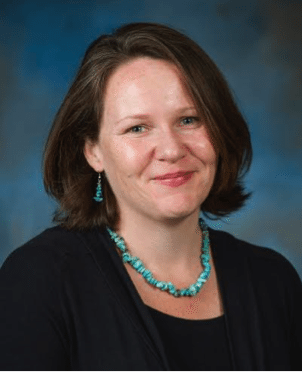
Jennifer Amanda Jones

Jennifer Amanda Jones, Ph.D. is the Assistant Professor of Nonprofit Management and Leadership at the University of Florida. Her research interests include nonprofit management, philanthropic giving, and social enterprise initiatives. She is a member of Nu Lambda Mu, the international honor society for nonprofit scholars. Prior to her academic career, Dr. Jones was involved in research projects benchmarking the nonprofit sector in San Diego and in the State of California. Additionally, Dr. Jones has spent more than 15 years working with nonprofit organizations of various types and sizes. She also served on the board of directors for a community foundation.

More about: EducationEntrepreneurshipHigher EducationNonprofit NewsPolicySocial Enterprise
See comments

You might also like
If Farm School NYC Closes, What Will the City Lose?
Farm School NYC and Iris M. Crawford
Trump Administration’s Gutting of Education Department Will Hurt Nonprofits
Lauren Girardin
How to Build Student Movements That Last
Akin Olla
New Student Loan Forgiveness Rule Threatens Nonprofits, Sparks Two Lawsuits
Marian Conway
School Drop-off and Pickup in the Age of ICE
Alison Stine
When I Was Dissed as an Adjunct Faculty Member, I Spoke Up
Darlene Garalde Intlekofer

Upcoming Webinars

Group Created with Sketch.
December 9th, 2:00 pm ET

Nonprofit Safety & Security: Protecting Our People, Data, and Organizations in a Time of Unprecedented Threat

Register
Group Created with Sketch.
January 29th, 2:00 pm ET

Future is Collective

Register

    
You might also like
Participants growing garlic at the Farm School NYC. 2025.
If Farm School NYC Closes, What Will the City Lose?
Farm School NYC and Iris M. Crawford
Classroom chairs stacked on top of desks, a symbolism of the uncertainty schools, families, and students face with recent funding cuts.
Trump Administration’s Gutting of Education Department...
Lauren Girardin
An American College Campus, where class inequality is growing due to weakening of Statewide Student Associations.
How to Build Student Movements That Last
Akin Olla

Like what you see?

Subscribe to the NPQ newsletter to have our top stories delivered directly to your inbox.

See our newsletters

By signing up, you agree to our privacy policy and terms of use, and to receive messages from NPQ and our partners.

  • About
  • Advertise
  • Careers
  • Contact
  • Copyright
  • Donate
  • Editorial Policy
  • Funders
  • Submissions

We are using cookies to give you the best experience on our website.


Nonprofit Quarterly | Civic News. Empowering Nonprofits. Advancing Justice.
Powered by  GDPR Cookie Compliance
Privacy Overview

This website uses cookies so that we can provide you with the best user experience possible. Cookie information is stored in your browser and performs functions such as recognising you when you return to our website and helping our team to understand which sections of the website you find most interesting and useful.

Strictly Necessary Cookies

Strictly Necessary Cookie should be enabled at all times so that we can save your preferences for cookie settings.