Authoritarian movements seek legitimacy by invoking a “Christian America,” but a growing number of faith leaders and faith-rooted institutions are pushing back.
Voices from the Frontlines of Christian Organizing
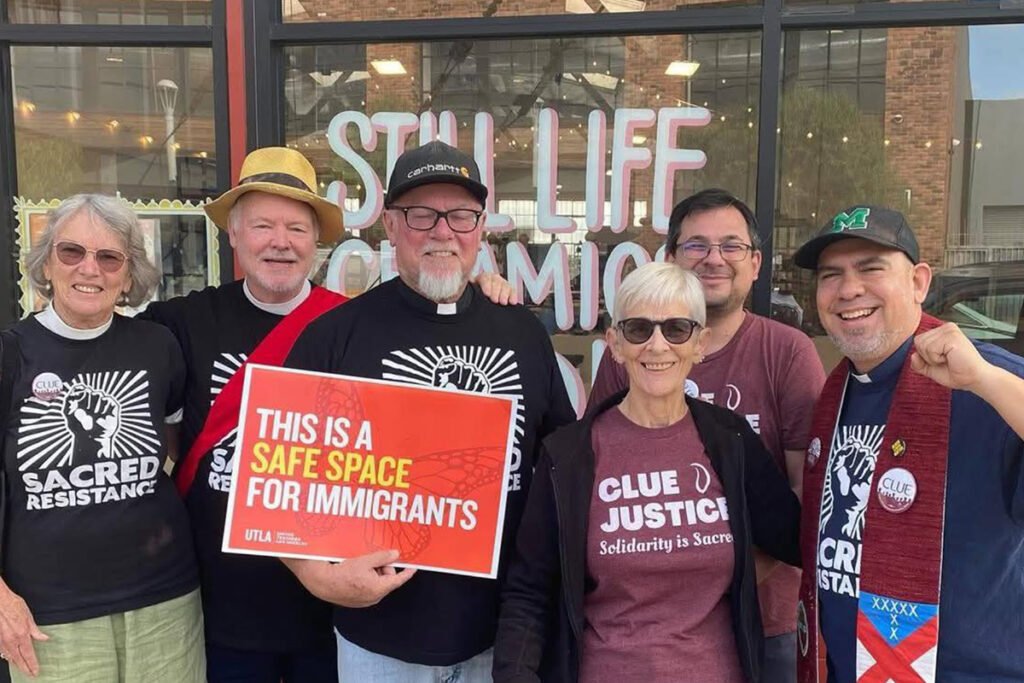


Authoritarian movements seek legitimacy by invoking a “Christian America,” but a growing number of faith leaders and faith-rooted institutions are pushing back.

Laurene Powell Jobs and MacKenzie Scott both call for a reimagining of philanthropy: one that shifts from control and performance to participation and trust, recognizing that true generosity empowers rather than directs.

Nonprofits and philanthropy are falling short in building the relationships, rituals, and alignment infrastructure that movements need today. But that can change.

Artificial intelligence is here. How can nonprofits benefit from the technology without sidelining critical human expertise?

In 2010, a group of US billionaires led by Bill Gates and Warren Buffett pledged to give away half of their assets by the time they die. But not all pledges have been honored.

For many frontline conservation and climate justice groups, whose pressures are intensifying across ecological, political, and personal dimensions, traditional approaches to giving can feel misaligned with present needs.

Owners of US small and midsized businesses are aging. This creates a unique opportunity to reduce economic inequality, but only if we seize it.

The US banking sector has been almost entirely nonunion. But that may be changing as worker organizing efforts gain ground at two of the nation’s largest banks.

Addressing the racial wealth gap in the US South requires a comprehensive approach. While the political winds may not be favorable, the time to build our vision is now.

Movements like the “No Kings” protests are more than events. They’re on-ramps for civic engagement and coalition building.

Marian Urquilla answers a reader’s question about how an outgoing board president can best approach succession planning when it’s not supported from the inside.

Technology and data systems have the potential to transform nonprofit service delivery, but only if nonprofits carefully own, manage, and control its use.