On June 14, the South Lawn of the White House sprouted a 92-foot steel rig nicknamed “The Claw,” built around a fighting cage so President Trump could host the UFC Freedom 250 on his 80th birthday, a date the administration framed as a kickoff to the nation’s 250th anniversary. Just days earlier, SpaceX’s record-breaking IPO, the largest in history, pushed Elon Musk past the trillion-dollar mark, making him the first trillionaire in history, now richer than the combined wealth of the next four richest people on Earth.
That’s the version of America’s birthday the country was shown. But we, the everyday people, know the version most of the country is actually living in. A survey released this spring found that nearly half of American adults are worried they won’t be able to afford the health care they need. Roughly a third of the country have already skipped meals, rationed medications, or fallen behind on utility bills just to cover basic health costs in the past year. While “The Claw” was being assembled in Washington, North Carolina’s state legislature was finishing years of work dismantling the voting power of the very communities whose labor built this country in the first place.
This is a familiar gap: between state-sponsored spectacle and reality. In this case, we see it between the story this administration tells about this national occasion and the reality of who actually gets to participate in its promise.
The View from North Carolina
Over the past 12 months, the North Carolina Legislature has continuously and systemically worked to destroy the voting power of its students, Black communities, immigrant citizens, and rural voters. Since federal voting rights protections were first weakened in 2013, our state legislature has used a ‘death by a thousand cuts’ strategy to steal power from the people while entrenching it for themselves.
In October, North Carolina Republicans pushed through a brand new congressional map in the middle of the decade, something states almost never do outside of court order. Using Senate Bill 249, the legislature redrew Congressional District 1: the historic Black Belt district in the northeast part of the state, which has elected a Black representative to Congress in every election since 1992.
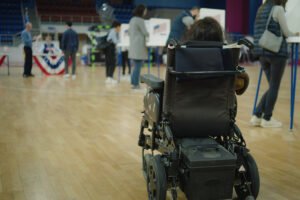
Then came the early voting closures, dealing a huge blow to long standing, community-led voter turnout efforts like Souls to the Polls. In January, North Carolina’s State Board of Elections, newly under Republican control, voted 3-2 along party lines to reject early voting sites at North Carolina A&T, the nation’s largest historically Black university, along with UNC Greensboro, Western Carolina University, and others. Students sued, but a federal judge declined to intervene, citing the closeness of the upcoming primary. This spring, the students did what young changemakers do: they showed up anyway. Thousands of students walked more than a mile in some cases just to reach a polling place that used to be a short walk from their dorms.
This summer, House and Senate Republicans advanced a sweeping, nearly 40-page elections bill, House Bill 958. The following are among its final provisions passed in August:
- Shortens early voting for Primary elections from 17 to 10 days.
- Grants the Republican State Auditor wide discretion to audit records, equipment, county offices, personnel, and “any areas of concern” involved in any election. (Don’t forget, the State Auditor is only newly in charge of elections in the state because of SB382, the power grab bill passed by the General Assembly that was disguised as a disaster relief bill.) Expands citizenship verification requirements by requiring the State Board of Elections to vet voter rolls for citizenship against unreliable federal databases
Their goal? Gerrymander the district, close the polling places serving the students and the HBCU, restrict who can vote and who is trusted, and silence people’s voices. All of this happened in full view, right in the state legislature, this year. We must ask, why do they continue to work to make it harder for American citizens to exercise their right to vote?
Sign up for our free newsletters
Subscribe to NPQ's newsletters to have our top stories delivered directly to your inbox.
By signing up, you agree to our privacy policy and terms of use, and to receive messages from NPQ and our partners.
This Pattern Has a History
North Carolina’s quest to disenfranchise specific groups of voters goes back centuries. In the 1860s and before, North Carolina only disenfranchised persons convicted of “infamous” crimes, not all felonies. Immediately after the Civil War, former rebels engaged in a widespread campaign of convicting African Americans of “infamous” crimes and whipping them as the punishment, with the express goal of preventing African Americans from being able to vote.
In 1870, the 15th amendment guaranteed Black men the right to vote, and in 1877 our state passed a law disenfranchising those convicted of all felonies. In 1898 the state introduced literacy tests and poll taxes. In 1899 the NC legislature passed an amendment requiring that “every person presenting himself for [voter] registration shall be able to read and write any section of the Constitution in the English language.” White voters were exempt from the test due to a “grandfather clause.”
Poll taxes, literacy tests, and widespread violence against voters kept thousands of Black voters away from the polls until the passage of the Voting Rights Act of 1965. Those protections opened access to the ballot for generations of Black people in North Carolina, and across the south, until the 2023 Shelby v. Holder case gutted them. Since then, we have faced a constant deluge of voter suppression bills and policies from officials in almost every branch of this state’s government. The Callais decision opened the door for even more attacks on voters, and our legislators continue to pass laws to strengthen their own power while silencing those they are supposed to represent. HB 958 is the most recent byproduct of that.
The People Are Fighting Back
None of this is going unanswered. The Monday after the bill was introduced, Forward Justice and our partners packed a committee hearing on the bill to show lawmakers that the people are watching. We encouraged community members to submit public comments in opposition to the bill and returned to the General Assembly the Tuesday morning after the bill was introduced for a coalition wide press conference. The following Monday we held a rally at the legislature, bringing together community members, students, advocates, attorneys and voting rights organizations to demand these attacks stop.
This week, we will be at the State Board of Elections meeting to advocate for fair access to early voting for our communities. The Board is poised to vote on 20 early voting plans that did not earn unanimous support at the county level because there is disagreement over where voting sites will be located and how many weekend hours voters will have access to. These votes come after an employee of the State Auditor’s office was exposed for pressuring county election officials to remove early voting access at specific sites that serve students, while advocating to cut Sunday voting access across the state.
North Carolina is one of the places where the answer to what America becomes in the next 250 is being written, bill by bill, map by map, and lawsuit by lawsuit. But we aren’t new to this. In 1960, four NC A&T freshmen sat down at a Whites-only Woolworth’s counter in Greensboro and refused to leave—a small, creative act that lit a sit-in movement across the South in just weeks. That same year, organizers gathered at Shaw University in Raleigh, the same city where HB 958 was moving through committee today, to found what became the Student Nonviolent Coordinating Committee, built on Ella Baker’s conviction that ordinary people, not just charismatic leaders, could be changemakers.
The strategy, the patience, and the stubborn hope baked into that tradition did not stay in the 1960s. They show up today in courtroom filings, packed committee hallways, and students walking together miles to the polls.
The fireworks will fade, but the fight won’t. While officials continue erecting barriers to the ballot, we’ll continue creating systems to protect voters and ensure that we can hold power to account. We will continue to protect our vote in North Carolina and across the South because we know that we are not fighting for the democracy of yesterday or the democracy of today, but for the democracy of tomorrow—a just multiracial democracy that we know must still be realized.