logo logo
giving banner
Donate
    • Membership
    • Donate
  • Social Justice
    • Racial Justice
    • Climate Justice
    • Disability Justice
    • Economic Justice
    • Food Justice
    • Health Justice
    • Immigration
    • LGBTQ+
  • Civic News
  • Nonprofit Leadership
    • Board Governance
    • Equity-Centered Management
    • Finances
    • Fundraising
    • Human Resources
    • Organizational Culture
    • Philanthropy
    • Power Dynamics
    • Strategic Planning
    • Technology
  • Columns
    • Ask Rhea!
    • Ask a Nonprofit Expert
    • Economy Remix
    • Gathering in Support of Democracy
    • Humans of Nonprofits
    • The Impact Algorithm
    • Living the Question
    • Nonprofit Hiring Trends & Tactics
    • Notes from the Frontlines
    • Parables of Earth
    • Re-imagining Philanthropy
    • State of the Movements
    • We Stood Up
    • The Unexpected Value of Volunteers
  • CONTENT TYPES
  • Leading Edge Membership
  • Newsletters
  • Webinars

Your Board Is Not a Fundraising Squad

Simone Joyaux
August 11, 2011

target

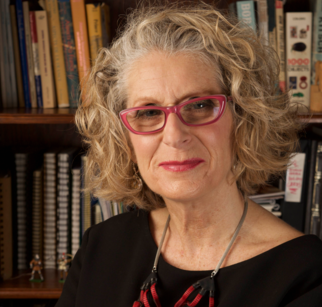
Simone P. Joyaux, ACFRE is recognized internationally as an expert in fund development, board and organizational development, strategic planning, and management. She is the founder and director of Joyaux Associates. Visit her website here.


Stop thinking that the principal focus of your board is fundraising. Please. Stop it right now!

Over and over, I hear staff talking about their boards and fundraising. Staff want the board to give more. To help identify and solicit major donors. To participate in fundraising events. To use their connections to get money. In summary, staff expect the board to focus a lot on fundraising. And that typically means that staff want board members with the capacity to give (and give significantly). And staff want board members with good connections.

But wait. There’s some confusion here.

The board is accountable for corporate governance. Corporate governance is the process whereby a group of individuals (e.g., the board) ensures the health and effectiveness of the organization. Corporate governance is a collective act and only happens when the board members come together for their meetings. Read the Role of the Board, posted in the Free Download Library on my website.

To fulfill its “due diligence obligation” for ensuring corporate health and effectiveness, the board needs people with specific skills and behaviors. Skills like financial expertise and governance expertise, legal and accounting expertise, and more. See the Inventory of Skills for the Board as well as the Composition Policy, both posted in my Free Download Library.

Sign up for our free newsletters

Subscribe to NPQ's newsletters to have our top stories delivered directly to your inbox.

By signing up, you agree to our privacy policy and terms of use, and to receive messages from NPQ and our partners.

To ensure that the due diligence obligation is observed, the board needs to be composed of diverse individuals. Diversity comes from experiencing life differently. Experiencing life differently results from such particulars as gender, generation, class, socioeconomic status, sexual orientation, and more. That diversity of life experience causes people to think differently, to ask different questions, and to challenge assumptions. And that’s what makes a good board.

Stop focusing on fundraising for your board. Your board focuses on corporate governance. Only one part of corporate governance focuses on financing, i.e., ensuring the financial integrity and sustainability of the institution.

How does the board ensure the institution’s financial integrity and sustainability as articulated in its job description? The board adopts a budget and fund development plan. The board reviews the audit. The board talks about fund development results, trends, and implications. The board adopts policies that define the role of board members in fund development. See this outlined in the Due Diligence Plan, posted in my Free Download Library.

And board members—not “the board”—participate in the fund development process. Yes, board members. There’s a big difference between the board and the board member. Please do not confuse the two. See the Board Member Performance Expectations, posted in my Free Download Library.

Every single board member can help with fund development—but only if you, the staff, enable them well. Every single board member can be successful in fund development—but only if you, the staff, understand that fund development is not about money. Rather, fund development focuses on helping donors and prospects fulfill their aspirations.

Create a menu of choices for your board members. Effectively enable your board members. See my bookStrategic Fund Development: Building Profitable Relationships That Last(Third Edition, 2011) for details and for examples of how to enable them.

And stop thinking that your board and/or your board members exist to help fundraise. Stop that right now!


Our Voices Are Our Power.

Journalism, nonprofits, and multiracial democracy are under attack. At NPQ, we fight back by sharing stories and essential insights from nonprofit leaders and workers—and we pay every contributor.

Can you help us protect nonprofit voices?

Your support keeps truth alive when it matters most.
Every single dollar makes a difference.

Donate now
logo logo logo logo logo
About the author
Simone Joyaux

Simone P. Joyaux, ACFRE is recognized internationally as an expert in fund development, board and organizational development, strategic planning, and management. She is the founder and director of Joyaux Associates.

More about: Board DevelopmentBoard GovernanceFundraisingOpinion
See comments

Call to action
You might also like
Making Sense of GivingTuesday 2025
Isaiah Thompson
If Farm School NYC Closes, What Will the City Lose?
Farm School NYC and Iris M. Crawford
Be Bold This GivingTuesday: Lessons from Public Rights Project
Jennifer Johnson
Leading “Against the Current”: A Conversation with Eveline Shen
Isaiah Thompson and Eveline Shen
GivingTuesday: Ride the Wave, Don’t Fight It
Rhea Wong
How to Handle Founder’s Syndrome with Grace
Marian Urquilla

Upcoming Webinars

Group Created with Sketch.
January 29th, 2:00 pm ET

Participatory Decision-making

When & How to Apply Inclusive Decision-making Methods

Register
Group Created with Sketch.
February 26th, 2:00 pm ET

Understanding Reduction in Force (RIF) Law

Clear Guidance for Values-centered Nonprofits

Register

    
You might also like
A group of people standing and smiling together while holding up signs with the Giving Tuesday logo and that say, “I Give Time”
Making Sense of GivingTuesday 2025
Isaiah Thompson
Participants growing garlic at the Farm School NYC. 2025.
If Farm School NYC Closes, What Will the City Lose?
Farm School NYC and Iris M. Crawford
A group of diverse people volunteering by distributing food off of a truck, representing how Nonprofits across the country are ramping up their GivingTuesday campaigns.
Be Bold This GivingTuesday: Lessons from Public Rights...
Jennifer Johnson

Like what you see?

Subscribe to the NPQ newsletter to have our top stories delivered directly to your inbox.

See our newsletters

By signing up, you agree to our privacy policy and terms of use, and to receive messages from NPQ and our partners.

  • About
  • Advertise
  • Careers
  • Contact
  • Copyright
  • Donate
  • Editorial Policy
  • Funders
  • Submissions

We are using cookies to give you the best experience on our website.


Nonprofit Quarterly | Civic News. Empowering Nonprofits. Advancing Justice.
Powered by  GDPR Cookie Compliance
Privacy Overview

This website uses cookies so that we can provide you with the best user experience possible. Cookie information is stored in your browser and performs functions such as recognising you when you return to our website and helping our team to understand which sections of the website you find most interesting and useful.

Strictly Necessary Cookies

Strictly Necessary Cookie should be enabled at all times so that we can save your preferences for cookie settings.