logo logo
Fund the truth. #Wethecivic giving banner
Donate
    • Membership
    • Donate
  • Social Justice
    • Racial Justice
    • Climate Justice
    • Disability Justice
    • Economic Justice
    • Food Justice
    • Health Justice
    • Immigration
    • LGBTQ+
  • Civic News
  • Nonprofit Leadership
    • Board Governance
    • Equity-Centered Management
    • Finances
    • Fundraising
    • Human Resources
    • Organizational Culture
    • Philanthropy
    • Power Dynamics
    • Strategic Planning
    • Technology
  • Columns
    • Ask Rhea!
    • Ask a Nonprofit Expert
    • Gathering in Support of Democracy
    • Humans of Nonprofits
    • The Impact Algorithm
    • Living the Question
    • Nonprofit Hiring Trends & Tactics
    • Notes from the Frontlines
    • Parables of Earth
    • Reimagining Philanthropy
    • State of the Movements
    • We Stood Up
    • The Unexpected Value of Volunteers
  • Newsletters
  • NPQ Online Events
    • Premium Webinars
    • Learn Out Loud
    • Partner Events
    • On Demand
  • Leading Edge Membership

So What If Ghana Did Ban Social Media on Election Day?

Titilope Ajayi
August 15, 2016
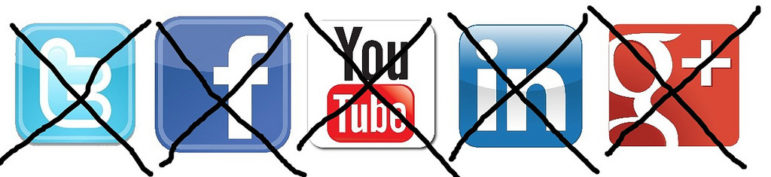
No-Social-Media
NO Social media: the big 5 / thomas lapperre

August 11, 2016; Joy FM (Accra, Ghana)

A maelstrom greeted the announcement by Ghana’s police chief in May 2016 that social media would be banned temporarily during general elections on voting day in November for security reasons. This came on the back of earlier rumors of an impending tax on VOIP (voice over Internet protocol) calls. In a country where freedom of speech has become a given, such moves are unprecedented. Compared to parts of East and North Africa, Internet censorship, at least as official policy, is unheard of in West Africa as a whole—even in countries of dubious political repute. Subsequent to denunciations by the UN and Ghanaian media and civil society, the government recently claimed that its intentions are being misconstrued. Whether this is true or a stealthy retraction over intense blowback, it is worth speculating on the implications of such a ban.

By way of context, Ghana’s has been a relatively tranquil recent democratic voyage compared to several of its neighbors. This is not because the factors of instability in those countries do not exist here—they abound. A key factor to Ghana’s stability has been its arguably quiescent populace. But the latter is increasingly politically alert and activist—which is why the proposed ban and the timing of its announcement are so intriguing. Those responsible must have anticipated the fallout. Yet they went ahead. But is the censure justified?

Sign up for our free newsletters

Subscribe to NPQ's newsletters to have our top stories delivered directly to your inbox.

By signing up, you agree to our privacy policy and terms of use, and to receive messages from NPQ and our partners.

Politically, the ban has been denounced as a human rights violation and a lazy way out of confronting the challenges cited as its raison d’être. On the technical front, there is the whole question of whether an outright ban is feasible and what purpose an only partial ban would serve. But perhaps the most telling consideration in all this is that if the ban proceeds, it will set a dangerous precedent. As blogger Malaka Grant argues, a government that gets away with banning social media (access) once is likely to do it again, maybe for less stringent reasons. The human rights records of those countries with partial-to-total Internet censorship are admittedly dismal.

The import of all this for Ghana’s democracy lies in the answers to several questions: What process led to the decision to ban social media? What conversations have happened since it was announced? How transparent and inclusive have both been? Is banning social media the only way to avert chaos in a charged political environment? What are the odds that the government will effect its plans come November? As NPQ recently reported, banning access to the Internet on Election Day will also affect access to health, banking, and other societal benefits and necessities.   

So far, there are few coherent answers. But if the experiences of countries that have walked this path are anything to go by, Ghanaians and all investors in Ghana’s democracy should be concerned about the mere idea of the proposed ban because of what it represents and potentially portends: dark days ahead for freedom of speech.—Titilope Ajayi


Our Voices Are Our Power.

Journalism, nonprofits, and multiracial democracy are under attack. At NPQ, we fight back by sharing stories and essential insights from nonprofit leaders and workers—and we pay every contributor.

Can you help us protect nonprofit voices?

Your support keeps truth alive when it matters most.
Every single dollar makes a difference.

Donate now
logo logo logo logo logo
About the author
Titilope Ajayi

Titilope is an independent editor, writer, and civil society and gender and security scholar. She is currently a PhD student of international affairs at the University of Ghana, Legon, and also a 2017/8 Social Science Research Council Next Generation Social Sciences in Africa Doctoral Fellow. For more, follow her on Twitter: @MataLope

More about: Civil Society and DemocracyNonprofit News
See comments

Sidebar-WTC
You might also like
IDR Interviews | Flavia Agnes
Smarinita Shetty and Joeanna Rebello Fernandes
The First Indigenous Women in Congress Carry a Legacy Older Than American Democracy Itself
Errin Haines
The Yeses that Surprise You: Organizing Across the Lines of Cis and Trans
Jess St. Louis
A Forgotten 1787 Society Reveals the True Beginnings of US Democracy
Shivank Pandey
Before the State Showed Up: Black Mutual Aid as the Infrastructure of Our Democracy
Ayomide Samuel
When Institutions Win and Justice Loses: The Creek Freedmen Case and What Civil Society Can Learn
Gary L. Cunningham

Upcoming Webinars

Group Created with Sketch.
June 25, 2:00 pm ET

Reframing Organizational Risk

Register
Group Created with Sketch.
July 16, 2:00 pm ET

Readying for the 2026 Midterms

How 501(c)(3)s Can Educate and Advocate During this Election Season

Register

    
You might also like
Illustration of Flavia Agnes
IDR Interviews | Flavia Agnes
Smarinita Shetty and Joeanna Rebello Fernandes
A Black and white collage of Sharice Davids and Deb Haaland speaking and waving, layered over purple and tan graphic shapes.
The First Indigenous Women in Congress Carry a Legacy Older...
Errin Haines
A digital illustration of a blue hand with glitter nails and "YES" written across the fingers, holding a crystal ball filled with a crowd of people, surrounded by pink, yellow, and blue clouds.
The Yeses that Surprise You: Organizing Across the Lines of...
Jess St. Louis

Like what you see?

Subscribe to the NPQ newsletter to have our top stories delivered directly to your inbox.

See our newsletters

By signing up, you agree to our privacy policy and terms of use, and to receive messages from NPQ and our partners.

  • About
  • Advertise
  • Careers
  • Contact
  • Copyright
  • Donate
  • Editorial Policy
  • Funders
  • Media Relations
  • Privacy Policy
  • Submissions

We are using cookies to give you the best experience on our website.


Nonprofit Quarterly | Civic News. Empowering Nonprofits. Advancing Justice.
Powered by  GDPR Cookie Compliance
Privacy Overview

This website uses cookies so that we can provide you with the best user experience possible. Cookie information is stored in your browser and performs functions such as recognising you when you return to our website and helping our team to understand which sections of the website you find most interesting and useful.

Strictly Necessary Cookies

Strictly Necessary Cookie should be enabled at all times so that we can save your preferences for cookie settings.