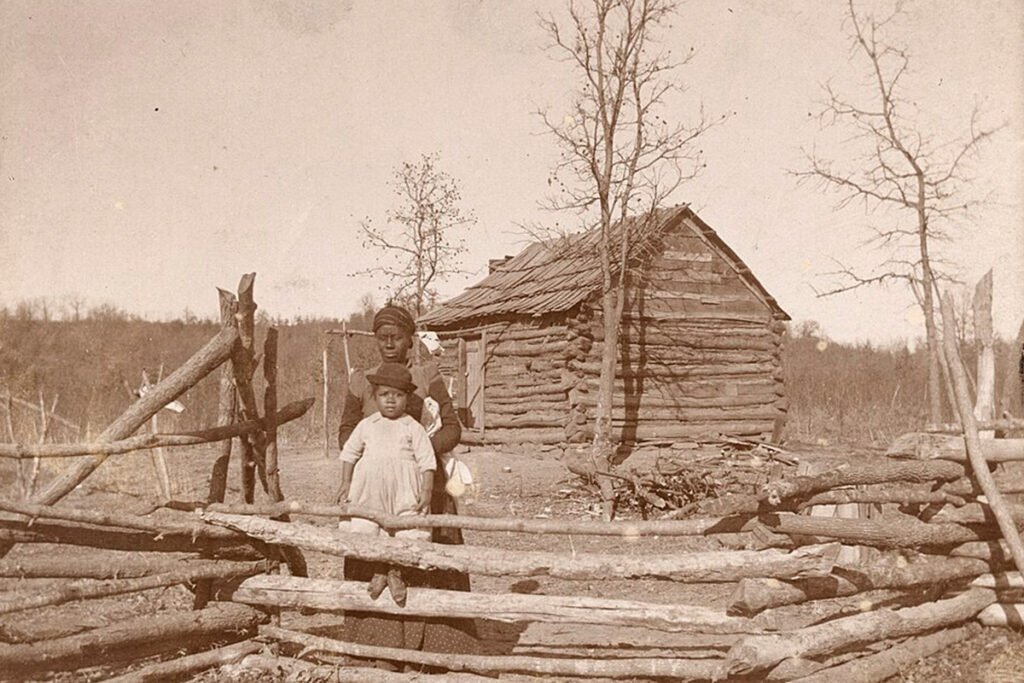
In May 2026, the Muscogee (Creek) Nation Supreme Court closed the Creek Freedmen citizenship case, denying emergency enforcement motions and ruling that questions of implementation belonged to the political branches of the Nation’s government. That decision came after the same court had already held—unanimously—that the Treaty of 1866 requires full tribal citizenship for Creek Freedmen descendants. The Muscogee (Creek) Nation district court had ruled the same way in 2023. Two courts, two clear decisions. Thousands of Black descendants of enslaved Creek people are still waiting.
This is not a story most nonprofit and philanthropic leaders have been following, but it should be. Underneath the treaty language and the tribal governance questions is a problem every civil sector organization knows intimately: What happens when an institution uses its own authority to resist a court order and legal obligations?
Kinship, Shared Removal, and Unfinished Obligations
I come to this question with both personal stake and professional experience. I am a descendant of Jesse Franklin, a Black Creek leader who served as a judge on the Muscogee (Creek) Nation Supreme Court after emancipation. My ancestors walked the Trail of Tears into Indian Territory in bondage. After the Civil War ended slavery, Black Creek people did not stand outside the rebuilding of the Nation. They helped build it. Jesse Franklin served as a minister, a community leader, and a jurist at the Muscogee (Creek) Nation’s most formative moment—part of the civic fabric of a people reconstituting themselves after war and emancipation. The Treaty of 1866 was the legal foundation of that reconstitution and included an article guaranteeing tribal citizenship for people of African descent. It was the promise that Black Creek people, having survived bondage and removal, belonged fully to the Nation going forward. Jesse Franklin’s life was built on that promise. His descendants are still waiting for it to be kept.
I also spent nearly eight years doing Indian Country work at the Northwest Area Foundation, and those years changed me in ways I did not fully understand until later. The work took me from Native communities in the Pacific Northwest across Blackfeet country and Rocky Boy, through Lakota and Dakota lands, and into Ojibwe communities in Minnesota. The foundation was moving toward a commitment that at least 40 percent of its resources should support Native-led work, and that commitment required those of us doing the work to show up differently—to listen before speaking, to understand sovereignty not as a legal abstraction but as a daily reality that shaped every conversation about resources, relationships, and trust.
I learned so much from Native leaders, whose moral seriousness about history and obligation was unlike anything I had encountered in the mainstream civil sector. What I did not expect was that those years would lead me back to my own history. It was in Indian Country that I began to understand that the story of Black people and Tribal Nations is not only a story of oppression—it is also a story of kinship, shared removal, and unfinished obligations. That understanding is what eventually brought me to the Creek Freedmen question, and to Jesse Franklin, and to the recognition that this had never been someone else’s story.
A Brief History of the Muscogee (Creek) Nation Court Rulings
Before going further, there is one important clarification: This case has nothing to do with diversity, equity, and inclusion (DEI) programs or the executive orders targeting them. This is not an administrative policy or an organizational commitment that a new administration can rescind. The Treaty of 1866 is a binding federal treaty—a legal covenant with the force of law, affirmed repeatedly by US courts, including the US Supreme Court in McGirt v. Oklahoma in 2020. When institutions or commentators frame Creek Freedmen citizenship as an “equity” issue, they obscure something more fundamental. This is a matter of treaty law, human rights, and the basic promise that legal obligations will be honored regardless of political inconvenience. That confusion is precisely what enables delay.
Now, here is what happened: In 2023, Muscogee (Creek) Nation District Court Judge Denette Mouser ruled that Creek Freedmen descendants Rhonda Grayson and Jeffrey Kennedy were entitled to Muscogee (Creek) citizenship under Article 2 of the 1866 treaty between the Muscogee (Creek) Nation and the United States. That same article abolished slavery in the Nation and promised that people of African descent among the Creeks, and their descendants, would be citizens with the same rights and privileges as other Creek citizens, including a share in the Nation’s land and funds. In July 2025, the Muscogee (Creek) Nation Supreme Court unanimously affirmed Judge Mouser’s ruling and held that “by blood” restrictions used to deny tribal citizenship were unlawful and void from the beginning because they conflicted with those treaty guarantees.
That should have settled the matter. Instead, Principal Chief David W. Hill issued an executive order creating the Mvskoke Citizenship Integrity Protection Commission, tasked with studying how to implement the ruling consistent with what the order calls “citizenship integrity.” Days later, the Muscogee (Creek) National Council issued a vote of no confidence in the justices who ruled in the Freedmen’s favor. When Grayson and Kennedy sought enforcement, the Muscogee (Creek) Nation Supreme Court closed the case. Freedmen descendants now possess a recognized legal right with no institutional mechanism to enforce it. The court declared justice. The political branches declined to deliver it.
The international human rights framework speaks directly to what is at stake here. The United Nations Declaration on the Rights of Indigenous Peoples (UNDRIP), adopted in 2007, affirms that Indigenous peoples have the right to the recognition, observance, and enforcement of treaties concluded with states. UNDRIP also affirms the rights of all individuals to full enjoyment of human rights, to nondiscrimination, and to nationality.
The Muscogee (Creek) Nation cannot invoke UNDRIP’s protections for its own sovereignty—as it rightly should—while refusing to honor the treaty enforcement that UNDRIP equally requires. Sovereignty and human rights are not in conflict here. They point in the same direction. The Nation is simply choosing not to follow where they lead. That selective invocation of human rights principles—claiming the protections while resisting the obligations—is a pattern civil sector organizations will recognize. It is what happens when institutions treat rights frameworks as shields rather than as binding commitments that run in both directions.
Choices and Patterns of the Civil Sector
The legal parallel that should sharpen this for every civil sector reader is Worcester v. Georgia. In 1832, the US Supreme Court held that Georgia could not impose its laws inside Cherokee territory—a clear legal victory for tribal sovereignty. President Andrew Jackson reportedly said, “John Marshall has made his decision; now let him enforce it.” What followed was the Trail of Tears, my own ancestors among those driven west in bondage. A legal right, unimplemented, became a catastrophe. The people who won in court lost everything because the political branches chose defiance over compliance, and no institution with the power to act was willing to force the issue. That history is not a metaphor. It is a direct warning about what happens when political branches refuse to honor what courts have decided—and about what it costs the people who were supposed to be protected when everyone else decides the fight is not worth having.
There is also a forward-looking risk that the broader community development field should understand. The same Treaty of 1866 that underlies the Freedmen tribal citizenship claim also stood at the center of McGirt v. Oklahoma, in which the US Supreme Court reaffirmed that treaty promises remain binding law unless Congress explicitly abrogates them. That ruling secured the legal foundations of tribal sovereignty across much of eastern Oklahoma—with direct implications for Native-led CDFIs (Community Development Financial Institutions), tribal economic development, and community investments across the region. If this dispute is forced back into federal court, it gives opponents of tribal sovereignty an opening to attack the same treaty logic on which McGirt rests. The Muscogee (Creek) Nation’s resistance to implementation is not only a moral failure. It is a strategic risk to the very sovereignty the Nation claims to be protecting.
Every nonprofit leader, philanthropist, and movement worker reading this has seen some version of this pattern. An institution takes on a legal or moral obligation. Its own processes—a task force, an audit, an internal review, a court ruling—produce a clear outcome. Then political pressure arrives from a board, from a major funder, from a vocal constituency, from leadership that calculates the cost of delivery and decides the price is too high. And the obligation that was on the books quietly becomes theoretical. The language of commitment stays in the mission statement. The annual report invokes the values, but the people with the power to act have made their calculations, and the people the commitment was meant to serve are left holding a promise that everyone agrees exists and no one will enforce.
Sign up for our free newsletters
Subscribe to NPQ's newsletters to have our top stories delivered directly to your inbox.
By signing up, you agree to our privacy policy and terms of use, and to receive messages from NPQ and our partners.
A legal right, unimplemented, became a catastrophe. The people who won in court lost everything because the political branches chose defiance over compliance, and no institution with the power to act was willing to force the issue. That history is not a metaphor.
That is not an unusual story in civil society—rather, it is a common one. What is unusual about the Creek Freedmen case is that it happened in public, through formal legal proceedings, with a paper trail that leaves no room for ambiguity about what occurred.
What makes the Creek Freedmen case instructive is how visible the gap is. There is no ambiguity here about what the law requires. The Muscogee (Creek) Nation’s own courts have said so twice. The ambiguity is entirely about institutional will and whether the people holding political power inside the institution are willing to act on what their own processes have determined. The Muscogee (Creek) Nation’s own Supreme Court grounded its ruling not only in law but also in traditional Mvskoke values: integrity, responsibility, humility, and wisdom. It said those values are not decorative. Integrity means keeping promises when they are difficult. Responsibility means recognizing that institutional authority carries obligations, not only powers.
And yet, the Cherokee Nation offers a direct answer to what the alternative looks like. Its own Freedmen controversy was long and hard-fought, resolved only after federal court intervention—but ultimately in a way that recognized tribal citizenship rights with dignity.
When former Interior Secretary Deb Haaland approved the Cherokee Nation’s amended constitution reflecting that resolution, she praised it publicly and called on other tribes to meet their legal and moral obligations to Freedmen. That resolution did not weaken Cherokee sovereignty. It demonstrated that a Tribal Nation can honor both its treaty obligations and its sovereign identity at once. The Muscogee (Creek) Nation has the same choice available to it.
The civil sector organizations that stay silent…are quietly establishing the precedent that will be used against them next.
What Are You Going to Do?
Civil society leaders who think this story belongs to someone else should think again. We are living through a moment when legal and moral obligations across every sector—from federal civil rights enforcement to philanthropic commitments to community investment covenants—are being tested by the same logic the Muscogee (Creek) Nation’s political branches are using right now: the logic that says a promise made under different conditions, at a different political moment, does not have to be kept when keeping it becomes costly. That logic does not stop at tribal boundaries. It travels. And the civil sector organizations that stay silent while it plays out in the Creek Freedmen case are quietly establishing the precedent that will be used against them next.
Silence is not caution. It is a choice about whose rights they will defend when defense requires something.
The organizations best positioned to understand this are those working at the intersection of community development and racial justice—CDFIs, philanthropies funding Native-led economic development, nonprofits whose own missions depend on the proposition that legal and moral covenants are binding. They have direct institutional stake in whether treaty logic holds under McGirt. They have standing to say publicly that what is happening to Creek Freedmen descendants is not a peripheral governance dispute—it is a live test of whether treaty promises survive political pressure. That means filing public statements, engaging their networks, and making clear to the Muscogee (Creek) Nation’s leadership that the civil sector is watching and that the community development field has a stake in the outcome. Silence is not caution. It is a choice about whose rights they will defend when defense requires something.
The descendants of Creek Freedmen are not asking for a new program or a voluntary pledge. They are asking that a binding legal promise—confirmed by two courts, rooted in a federal treaty, recognized under international human rights law—finally be honored. Jesse Franklin stood on the Muscogee (Creek) Nation Supreme Court after emancipation. He helped write decisions. He helped build the civic foundations of a nation that is now refusing to extend full membership to his descendants. That is not an abstraction. That is a family. That is a community of people who have done everything the law asked of them, won every legal argument put before them, and are still being told to wait by the same institution their ancestors helped build.
There is a word for that. It is not complexity. It is not governance. It is injustice—the specific, preventable kind that happens not because no one knows what justice requires, but because the people with the power to deliver it have decided the political cost is too high. The Muscogee (Creek) Nation’s leadership knows what the Treaty of 1866 says—its own Supreme Court told them, and its own district court told them before that. They are choosing, deliberately and publicly, to look away.
Nonprofit leaders, philanthropists, CDFI executives, and community development organizations cannot look away with them. Not if treaty rights and sovereignty mean anything. Not if the covenants we ask communities to trust us with are real. You work every day on the proposition that legal and moral promises are binding—that institutions can be held to what they have committed to. That proposition is being tested right now, in public, with a paper trail that leaves no room for ambiguity. The Creek Freedmen are still here. They are still fighting. And the question for every organization in this field is simple: When an inherited promise is being broken in plain sight, and you have standing to say something, what are you going to do?