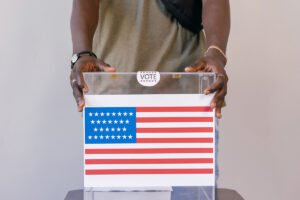
In the dominant story people tell about US democracy, political life begins in government buildings. Democracy lives in constitutions, in elections, in court decisions, and in presidential speeches. Civic participation is often imagined as something formal and institutional: voting in November, attending town halls, writing legislators, joining political parties.
But for many Black communities, democratic life has historically been built elsewhere.
It was built in church basements, where women organized food drives for families excluded from public relief. It was built in benevolent societies that pooled money for funerals, housing, and healthcare when White institutions refused to provide basic services. It was built in freedom schools, tenant unions, burial associations, breakfast programs, and mutual aid circles that transformed collective survival into a form of political practice.
Long before the modern nonprofit sector became professionalized, Black communities across the United States developed systems of care that were deeply civic in nature. These organizations did not simply respond to emergencies. They cultivated leadership, political consciousness, accountability, and shared responsibility. In many ways, they practiced democracy more consistently than the nation itself.
As the United States approaches its 250th anniversary, public conversations about democracy will likely focus on founding fathers, landmark legislation, and national institutions. Yet these commemorations often flatten the reality of who actually has sustained democratic life in this country. They rarely center the people who created civic structures in the absence of state protection. They rarely acknowledge the communities that treated survival itself as a collective political responsibility.
Long before the modern nonprofit sector became professionalized, Black communities across the United States developed systems of care that were deeply civic in nature.
Black mutual aid traditions deserve a central place in the story of US democracy because they reveal something essential: democracy is not only about representation inside institutions. It is also about the everyday labor of keeping people alive, connected, and politically engaged.
Democracy Outside the State
Mutual aid has always emerged most visibly where systems fail.
For Black people, exclusion from formal institutions was not an occasional disruption but a defining feature of life in the United States. Throughout slavery, Reconstruction, Jim Crow, and the twentieth century, Black communities routinely faced exclusion from healthcare, housing, education, insurance systems, banking networks, and public welfare programs.
In response, they built parallel systems.
During the nineteenth century, free Black communities built mutual aid societies across cities such as Philadelphia, New Orleans, Charleston, and Baltimore. Organizations like the Free African Society, founded in 1787 by Richard Allen and Absalom Jones, collected dues from members and redistributed resources to widows, sick residents, unemployed workers, and formerly enslaved people trying to build stable lives. Burial societies ensured Black families could mourn their dead with dignity at a time when segregation shaped even funeral practices. Other associations funded schools, supported apprenticeships, and provided emergency loans in communities largely excluded from White banks and public institutions.
These groups were not simply charitable networks filling temporary gaps. Many operated through elected leadership structures, membership constitutions, disciplinary rules, and collective treasuries. In practice, they functioned as parallel civic institutions, creating forms of democratic participation long before Blacks were fully recognized within the nation’s political system.
Black churches also played a foundational role. Beyond their religious functions, churches became some of the most important civic institutions in Black people’s lives. They organized educational programs, distributed aid, funded legal challenges, and served as centers of political organizing. During segregation, many Black churches operated as de facto social service institutions because White-led governments either neglected Black communities or actively harmed them.
The United States has often imagined freedom through the language of individualism. Mutual aid traditions proposed something different. They insisted that people cannot meaningfully participate in civic life when abandoned by the systems around them.
This tradition continued during the , when millions of Black Southerners moved to Northern and Midwestern cities carrying little more than personal networks and community knowledge. In Chicago, Detroit, and Harlem, Black churches frequently became the first stop for new arrivals searching for housing, employment information, childcare, or emergency financial support. Women’s auxiliaries organized meal programs and clothing drives, while neighborhood associations helped newly arrived migrants navigate hostile housing markets and racial violence in unfamiliar cities.
What emerged across generations was more than a survival strategy. It was a democratic ethic rooted in interdependence, one that treated collective responsibility not as charity but as a condition for political survival.
The core principle of mutual aid is simple: communities have obligations to one another. Yet, in practice, this principle challenged dominant ideas about citizenship.
The United States has often imagined freedom through the language of individualism. Mutual aid traditions proposed something different. They insisted that people cannot meaningfully participate in civic life when abandoned by the systems around them. Housing insecurity, hunger, lack of healthcare, and economic exclusion were not separate from democracy; they shaped who could access it.
Black mutual aid organizations understood this long before policymakers did.
The Politics of Care
By the mid-twentieth century, Black mutual aid traditions became increasingly tied to active political movements.
The Civil Rights Movement depended heavily on networks of collective care. Organizing required transportation systems, housing arrangements, childcare support, fundraising structures, and food distribution networks. Churches, women’s organizations, student groups, and local associations created the logistical backbone that made mass protest possible.
These efforts are often overshadowed by images of charismatic leaders and national speeches. But movements are sustained through infrastructure.
During the Montgomery Bus Boycott, Black residents built an elaborate carpool network after city officials attempted to economically pressure boycott participants back onto segregated buses. Volunteers used personal vehicles to transport thousands of domestic workers, students, and laborers across Montgomery each day, transforming ordinary logistical coordination into a form of collective political resistance. During voter registration campaigns throughout the South, churches and local organizations also provided activists with food, shelter, legal assistance, and protection from White vigilante violence.
Mutual aid transformed ordinary people into civic participants. Individuals excluded from formal political power became organizers, strategists, fundraisers, educators, and community leaders. The work of caring for one another became inseparable from the work of reshaping society.
Few organizations embodied the relationship between care and political struggle more visibly than the Black Panther Party. Public memory often reduces the Panthers to images of armed patrols and confrontations with police, but the organization’s community survival programs were among its most expansive political interventions.
Sign up for our free newsletters
Subscribe to NPQ's newsletters to have our top stories delivered directly to your inbox.
By signing up, you agree to our privacy policy and terms of use, and to receive messages from NPQ and our partners.
By the early 1970s, the Panthers’ Free Breakfast for Children Program was feeding thousands of children before school each week across dozens of cities. The organization also established free medical clinics, sickle cell anemia testing initiatives, liberation schools, ambulance programs, and food distribution efforts. These projects were not designed simply to relieve suffering. They were meant to expose the failures of the government while demonstrating that communities could organize collectively to meet material needs.
These programs exposed a contradiction at the heart of US democracy. If a grassroots political organization, with their scant resources, could provide services that governments refused to guarantee, what did that reveal about the state’s relationship to marginalized communities?
The Panthers understood mutual aid as political education. Their programs demonstrated that inequality was not inevitable. Communities could organize collectively to meet human needs, while also demanding structural transformation.
This pattern appears repeatedly throughout US history: marginalized communities build survival systems that eventually reshape the broader social contract.
Yet these contributions are rarely treated as foundational democratic work. Instead, nonprofit labor and mutual aid are often framed as secondary to “real” politics. The people distributing food, organizing tenants, supporting migrants, and sustaining neighborhoods are imagined as outside the central story of democracy rather than at its core.
But democracy has never survived on elections alone. It survives because people continually create structures that allow communities to endure political abandonment.
Mutual aid offers an alternative model of democratic participation grounded not in symbolic belonging but in material solidarity. People learn democracy by practicing interdependence.
The Nonprofit Sector and the Limits of Recognition
Today, mutual aid occupies a complicated place within the nonprofit landscape.
The professionalization of the nonprofit sector has created new funding opportunities and institutional visibility for some community organizations, but it has also transformed the language and structure of civic work. Grassroots survival programs that once depended on neighborhood relationships and political solidarity are now often filtered through grant requirements, donor expectations, performance metrics, and branding strategies.
This shift has created tensions within contemporary organizing spaces. Mutual aid traditions historically emerged from urgency and shared vulnerability, not institutional management. Some organizers worry that nonprofit structures can depoliticize collective care by framing systemic inequality as a technical problem to be managed rather than a political condition to be transformed. Others note that dependence on philanthropic funding can limit how aggressively organizations challenge the very systems producing inequality in the first place.
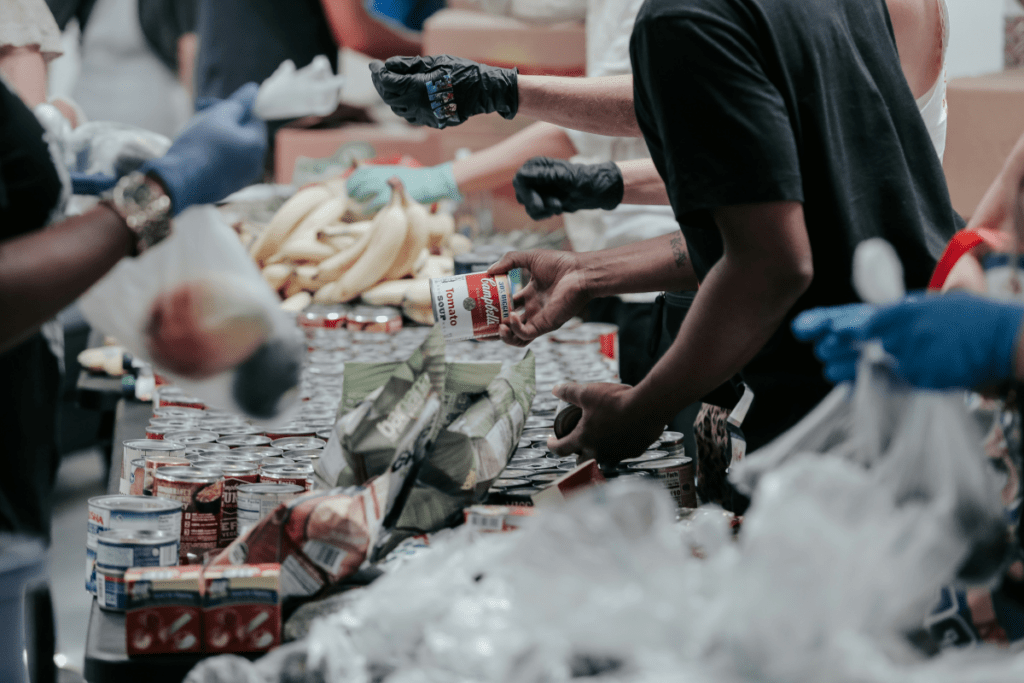
This tension became especially visible during the COVID-19 pandemic. As public systems struggled during the pandemic, mutual aid networks expanded rapidly across the country. Volunteers organized grocery deliveries for immunocompromised residents, raised emergency rent funds, distributed masks and medication, coordinated transportation, and created online spreadsheets connecting neighbors to food and childcare support. In many cities, these decentralized community networks moved faster than formal government relief systems, particularly in neighborhoods already shaped by racial and economic inequality.
Black organizers were central to many of these efforts. The pandemic also exposed a persistent reality: communities most vulnerable to systemic neglect often possess the strongest traditions of collective survival.
Yet public narratives about democracy still struggle to recognize this labor as political. When people in the United States discuss democratic participation, they often focus narrowly on electoral engagement. But what about the people who organize eviction defense networks? What about the church volunteers who provide transportation for elders? What about neighborhood groups distributing meals during environmental disasters or supporting undocumented families excluded from government relief?
Black mutual aid traditions reveal that care itself can function as democratic infrastructure by building trust, shared responsibility, and the relationships necessary for broader political mobilization. This is especially important in places where distrust in institutions runs deep.
Under these conditions, mutual aid offers an alternative model of democratic participation grounded not in symbolic belonging but in material solidarity. People learn democracy by practicing interdependence.
Rethinking the Story of the United States at 250
National anniversaries are often exercises in selective memory. They invite countries to tell stories about themselves: stories about progress, freedom, innovation, and national identity. But commemorations also reveal whose experiences are treated as central and whose are considered peripheral.
As the United States marks 250 years, Black mutual aid traditions remind us that democracy has never depended solely on the promises of the state. It has depended on the capacity of ordinary people to build structures of survival when institutions failed. This history complicates celebratory national myths because it reveals how often marginalized communities were forced to create democratic possibilities on their own.
But it also offers a more expansive vision of civic life. Mutual aid teaches a version of citizenship rooted not simply in rights but in obligations to one another. That idea feels especially urgent today as widening inequality, housing instability, political polarization, and public distrust in institutions have intensified feelings of civic exhaustion.
This is so not because mutual aid can replace structural reform. It cannot. Communities should not be forced to compensate indefinitely for government abandonment. Mutual aid works best when paired with broader struggles for institutional transformation and public investment.
But mutual aid does demonstrate that democracy becomes meaningful when people experience themselves as connected to one another’s survival. The logic of mutual aid feels newly urgent because it reconnects political participation to the practical work of sustaining one another.
Democracy is not sustained only by constitutions or elections. It is sustained by relationships, obligations, and collective acts of care that allow communities to remain politically alive even during periods of exclusion.
Black mutual aid organizations have practiced this form of democracy for generations.
The question facing the United States at 250 is whether the nation is finally willing to recognize them not as footnotes to democracy, but as some of its most enduring architects.