logo logo
giving banner
Donate
    • Membership
    • Donate
  • Social Justice
    • Racial Justice
    • Climate Justice
    • Disability Justice
    • Economic Justice
    • Food Justice
    • Health Justice
    • Immigration
    • LGBTQ+
  • Civic News
  • Nonprofit Leadership
    • Board Governance
    • Equity-Centered Management
    • Finances
    • Fundraising
    • Human Resources
    • Organizational Culture
    • Philanthropy
    • Power Dynamics
    • Strategic Planning
    • Technology
  • Columns
    • Ask Rhea!
    • Ask a Nonprofit Expert
    • Gathering in Support of Democracy
    • Humans of Nonprofits
    • The Impact Algorithm
    • Living the Question
    • Nonprofit Hiring Trends & Tactics
    • Notes from the Frontlines
    • Parables of Earth
    • Reimagining Philanthropy
    • State of the Movements
    • We Stood Up
    • The Unexpected Value of Volunteers
  • Leading Edge Membership
  • Newsletters
  • Online Events
  • CONTENT TYPES

Not Feeling the Board: A Little Berkshire Backstory

Ruth McCambridge
June 7, 2018

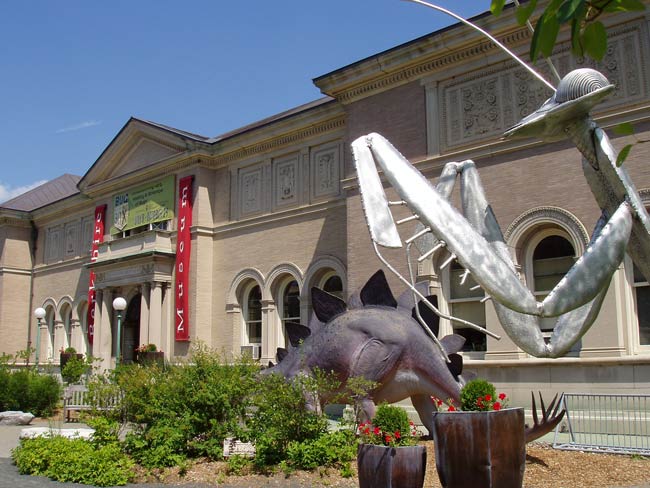
Daderot [GFDL or CC-BY-SA-3.0], from Wikimedia Commons
June 5, 2018; The Berkshire Eagle

An article in the Berkshire Eagle the other day revealed the views of two trustees of the Berkshire Museum, Carol Riordan and Nancy Edman Feldman, who dissented in the decision to sell artworks to fund a “transformation” of the museum. The description characterized the discussion among trustees as a snowballing of handleable financial concerns that turned excessive in its solution. The “transformation” included replenishing the endowment and installing interactive exhibits, for which Riordan and Feldman suggested the evidence of community interest was pretty thin.

Riordan, who was the former treasurer of the board, and Feldman both quit the board in protest after the vote to sell last year. They believe that trustees and Executive Director Van Shields could have done much more to avoid the quick cash option of selling the art.

In auctions and private sales in April and May, the museum raised more than $42 million.

Riordan says she is confounded by Massachusetts Attorney General Maura Healey’s decision to allow sales of the art to proceed. “I don’t understand how the attorney general came to the conclusion that the museum needed $55 million to be viable. I feel it can keep its doors open for much less,” Riordan said. “I find the outcome of that incomprehensible. I don’t understand where they came up with that being needed.” Then she launched into a description of a process which may be all too recognizable for nonprofits who have been through a visioning process funneled toward a preferred outcome.

The Berkshire Eagle’s Stephanie Zollshan reports,

Looking back, Riordan takes issue with many steps the museum took on its way to art sales. They include initial work on a master plan, what she sees as gaps in its community outreach and the “party line” eventually reached about a proposed “new vision.”

As the process of pondering the museum’s future advanced behind closed doors, Riordan said the idea of pursuing a “transformative” change gained steam.

Sign up for our free newsletters

Subscribe to NPQ's newsletters to have our top stories delivered directly to your inbox.

By signing up, you agree to our privacy policy and terms of use, and to receive messages from NPQ and our partners.

In October 2016, trustees gathered at a retreat reviewed their options, as presented by a consultant.

Securing $25.6 million, an option labeled “opening bid,” would allow the museum to close its recurring deficit, address key needs and provide “baseline” renovations.

But the “silver” option, achieved through finding $69.7 million, would allow the museum to tackle a major building renovation, including creation of a new atrium and entrance.

The consultants’ scenarios were eventually reviewed by the court.

“I didn’t see something ‘transformational.’ That was the jargon used,” she said, adding that the discussion was framed as dire—a last-ditch attempt to avoid closing. “That was the management line—that we can’t tweak things at the edges. I didn’t agree with how the museum wanted to reposition itself…I thought a lot of the process was words that don’t mean a lot.”

“The board was convinced that there was no future in continuing to do what we were doing.”

As treasurer, Riordan said that there were other, more incremental ways to address the problems that undeniably existed. Instead, a capital campaign was suspended and the director of advancement was let go. Feldman, who had raised money for public television, said she volunteered to raise money from people from New York and Boston who own second homes in the Berkshires, but her suggestions went nowhere.

It is to be expected, of course, that in a time of radical change in the institution, some disagreements would exist on the board even to the point of sparking resignations. These kinds of peeks at what the process felt like may help us all think about how to approach what we have in front of our own boards.—Ruth McCambridge


Our Voices Are Our Power.

Journalism, nonprofits, and multiracial democracy are under attack. At NPQ, we fight back by sharing stories and essential insights from nonprofit leaders and workers—and we pay every contributor.

Can you help us protect nonprofit voices?

Your support keeps truth alive when it matters most.
Every single dollar makes a difference.

Donate now
logo logo logo logo logo
About the author
Ruth McCambridge

Ruth is Editor Emerita of the Nonprofit Quarterly. Her background includes forty-five years of experience in nonprofits, primarily in organizations that mix grassroots community work with policy change. Beginning in the mid-1980s, Ruth spent a decade at the Boston Foundation, developing and implementing capacity building programs and advocating for grantmaking attention to constituent involvement.

More about: Arts and CultureBoard GovernanceNonprofit News
See comments

You might also like
The Meaningful Reset: Designing Nonprofits to Survive Board-Staff Conflict
Kristin Lincoln
Using AI for Fundraising Still Requires Human Strategy
Rochelle Jerry
AI in the Nonprofit Sector Is a Question of Governance, Not Just Technology
James A. Lomastro
Seat at the Table, No Vote in the Box: Finding the Governance “Sweet Spot”
Cheretta Clerkley
Does the Executive Director Belong in Board Executive Committee Meetings?
Jan Masaoka
Why It Matters that Renee Nicole Macklin Good Was a Poet
Alison Stine

Upcoming Webinars

Group Created with Sketch.
April 23, 2:00 pm ET

Receiving & Giving Feedback

Essential Practices for Healthy Organizations and Communities

Register
Group Created with Sketch.
May 14, 2:00 pm ET

Equitable Compensation in Practice

A New Values-Aligned Toolkit & Discussion Guide

Register
Group Created with Sketch.
May 28, 2:00 pm ET

Learn Out Loud

Revisiting Maurice Mitchell's "Building Resilient Organizations"

Register

    
You might also like
An illustration of a woman blowing out a lit match, but an illustration of the earth is peeaking out from under the flames.
The planet is overheating. Why is the news looking away?
Grist
Two women stand in front of each other and face away from the camera. Between them, they press their hands together against a yellow frame.
The Meaningful Reset: Designing Nonprofits to Survive...
Kristin Lincoln
An illustration of a robot hand holding up and supporting a floating human brain.
Using AI for Fundraising Still Requires Human Strategy
Rochelle Jerry

Like what you see?

Subscribe to the NPQ newsletter to have our top stories delivered directly to your inbox.

See our newsletters

By signing up, you agree to our privacy policy and terms of use, and to receive messages from NPQ and our partners.

  • About
  • Advertise
  • Careers
  • Contact
  • Copyright
  • Donate
  • Editorial Policy
  • Privacy Policy
  • Funders
  • Submissions

We are using cookies to give you the best experience on our website.


Nonprofit Quarterly | Civic News. Empowering Nonprofits. Advancing Justice.
Powered by  GDPR Cookie Compliance
Privacy Overview

This website uses cookies so that we can provide you with the best user experience possible. Cookie information is stored in your browser and performs functions such as recognising you when you return to our website and helping our team to understand which sections of the website you find most interesting and useful.

Strictly Necessary Cookies

Strictly Necessary Cookie should be enabled at all times so that we can save your preferences for cookie settings.