logo logo
giving banner
Donate
    • Membership
    • Donate
  • Social Justice
    • Racial Justice
    • Climate Justice
    • Disability Justice
    • Economic Justice
    • Food Justice
    • Health Justice
    • Immigration
    • LGBTQ+
  • Civic News
  • Nonprofit Leadership
    • Board Governance
    • Equity-Centered Management
    • Finances
    • Fundraising
    • Human Resources
    • Organizational Culture
    • Philanthropy
    • Power Dynamics
    • Strategic Planning
    • Technology
  • Columns
    • Ask Rhea!
    • Ask a Nonprofit Expert
    • Economy Remix
    • Gathering in Support of Democracy
    • Humans of Nonprofits
    • The Impact Algorithm
    • Living the Question
    • Nonprofit Hiring Trends & Tactics
    • Notes from the Frontlines
    • Parables of Earth
    • Re-imagining Philanthropy
    • State of the Movements
    • We Stood Up
    • The Unexpected Value of Volunteers
  • CONTENT TYPES
  • Leading Edge Membership
  • Newsletters
  • Webinars

The Philanthropy We Need: Ford Foundation President Calls for Transformation

Ruth McCambridge
January 10, 2019
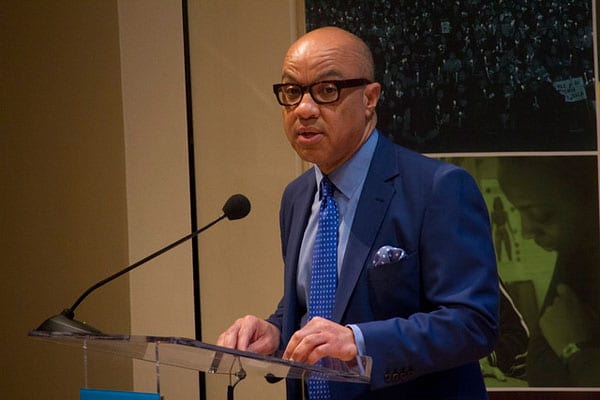
“Ford Foundation President Darren Walker.” Image: Melissa Bunni Elian

January 9, 2019; Equals Change (Ford Foundation)

Darren Walker, the president of the Ford Foundation, sometimes hits it out of the park in his public letters. So it is with the one he sent yesterday. While expressing faith in hope and a collective longing for shared peace and prosperity, he succinctly names the problem that challenges us all.

Millions of people feel frustrated with, and excluded by, an out-of-balance global economic system they are decreasingly willing to tolerate. In the United States and globally, we see the evidence and urgency mounting: Grassroots movements objecting to fundamental inequalities in our society are mobilizing, calling out for fairness and justice. They are naming causes of our current plight—among them, global capitalism that produces outsize wealth for owners and increased insecurity for workers; authoritarian leaders who foment division, discord, and dysfunction; fast-moving technological innovation, with consequences citizens are only now beginning to understand; and the long-standing evils of racism, classism, ableism, homophobia, and patriarchy. And although this is our society’s truth, it—like all truth—is under constant assault as the fidelity of facts, and our faith in them, is undermined.

Make no mistake, the exploitation of our democratic-capitalist system is intentional. Too often, the powerful and privileged who might stem the callousness and corruption seem largely to ignore it, avoid it, minimize it or, worst of all, maximize it for their own gain.

Sign up for our free newsletters

Subscribe to NPQ's newsletters to have our top stories delivered directly to your inbox.

By signing up, you agree to our privacy policy and terms of use, and to receive messages from NPQ and our partners.

He goes on to own that philanthropy is part and parcel of that system, naming some of the most substantive critiques of the last year, critiques that “pointed to the ways philanthropy replicates the worst dynamics and inequalities of our broader society.” Among those he names are Edgar Villanueva’s Decolonizing Wealth. Our favorite quote from Villanueva is “Philanthropy, honey, it’s time for an intervention.”

And then he gets to the point, one we will soon come back to in an article about Ford’s BUILD program. “Placing meaningful resources in the hands of those closest to the problems, backing their visionary efforts over time, listening and learning at every step of the journey—this is the philanthropy we need today.” He later returns to this idea:

We must trust those we fund, and fund them adequately to do what they believe is best, not what we think is best. This means putting ourselves in the shoes of prospective grantees and communities, treating them like partners rather than contractors, and entrusting organizations with long-term general support funding and project grants that provide adequate overhead. It means acknowledging the power imbalance that often makes our grantees reluctant to engage honestly and authentically.

We end where Walker starts, with a quote of Maya Angelou. He writes, “With the pause in our individual pursuits and the joy of shared celebration, with the retrenchment of the night and the rewinding of the calendar, there visits, as Angelou wrote, ‘a halting of hate time.’ In such a moment, ‘We, Baptist and Buddhist, Methodist and Muslim…We, the Jew and the Jainist, the Catholic and the Confucian…We shout with glorious tongues at the coming of hope. All the earth’s tribes loosen their voices to celebrate the promise of peace.’”—Ruth McCambridge


Our Voices Are Our Power.

Journalism, nonprofits, and multiracial democracy are under attack. At NPQ, we fight back by sharing stories and essential insights from nonprofit leaders and workers—and we pay every contributor.

Can you help us protect nonprofit voices?

Your support keeps truth alive when it matters most.
Every single dollar makes a difference.

Donate now
logo logo logo logo logo
About the author
Ruth McCambridge

Ruth is Editor Emerita of the Nonprofit Quarterly. Her background includes forty-five years of experience in nonprofits, primarily in organizations that mix grassroots community work with policy change. Beginning in the mid-1980s, Ruth spent a decade at the Boston Foundation, developing and implementing capacity building programs and advocating for grantmaking attention to constituent involvement.

More about: ActivismNonprofit NewsPhilanthropy
See comments

You might also like
Who Holds Narrative Authority? Reflections from “Reframing Resistance”
Shilpi Chhotray
Giving Bigger, Organizing More Boldly: Centering Disability Justice
Katrina Schaffer
Philanthropy Must Defend the Right to Bear Witness
Vina Kay and Melissa Rudnick
Funders Need to Get Dollars Out the Door for 2026 Midterms
Joe Goldman
Resistance and Redistribution in Alaska
Margi Dashevsky
This Is Not a Retreat
Nwamaka Agbo

Upcoming Webinars

Group Created with Sketch.
February 26th, 2:00 pm ET

Understanding Reduction in Force (RIF) Law

Clear Guidance for Values-centered Nonprofits

Register
Group Created with Sketch.
March 19th, 2:00 pm ET

Open Board Search

How Casting a Wide Net Transforms Nonprofit Governance

Register

    
You might also like
Who Holds Narrative Authority? Reflections from “Reframing...
Shilpi Chhotray
A silhouette of a person in a wheelchair with outstretched arms overlooking a picturesque mountainous view, symbolizing bold and big vision for disability justice.
Giving Bigger, Organizing More Boldly: Centering Disability...
Katrina Schaffer
Philanthropy Must Defend the Right to Bear Witness
Vina Kay and Melissa Rudnick

Like what you see?

Subscribe to the NPQ newsletter to have our top stories delivered directly to your inbox.

See our newsletters

By signing up, you agree to our privacy policy and terms of use, and to receive messages from NPQ and our partners.

  • About
  • Advertise
  • Careers
  • Contact
  • Copyright
  • Donate
  • Editorial Policy
  • Funders
  • Submissions

We are using cookies to give you the best experience on our website.


Nonprofit Quarterly | Civic News. Empowering Nonprofits. Advancing Justice.
Powered by  GDPR Cookie Compliance
Privacy Overview

This website uses cookies so that we can provide you with the best user experience possible. Cookie information is stored in your browser and performs functions such as recognising you when you return to our website and helping our team to understand which sections of the website you find most interesting and useful.

Strictly Necessary Cookies

Strictly Necessary Cookie should be enabled at all times so that we can save your preferences for cookie settings.