logo logo
giving banner
Donate
    • Membership
    • Donate
  • Social Justice
    • Racial Justice
    • Climate Justice
    • Disability Justice
    • Economic Justice
    • Food Justice
    • Health Justice
    • Immigration
    • LGBTQ+
  • Civic News
  • Nonprofit Leadership
    • Board Governance
    • Equity-Centered Management
    • Finances
    • Fundraising
    • Human Resources
    • Organizational Culture
    • Philanthropy
    • Power Dynamics
    • Strategic Planning
    • Technology
  • Columns
    • Ask Rhea!
    • Ask a Nonprofit Expert
    • Economy Remix
    • Gathering in Support of Democracy
    • Humans of Nonprofits
    • The Impact Algorithm
    • Living the Question
    • Nonprofit Hiring Trends & Tactics
    • Notes from the Frontlines
    • Parables of Earth
    • Re-imagining Philanthropy
    • State of the Movements
    • We Stood Up
    • The Unexpected Value of Volunteers
  • CONTENT TYPES
  • Leading Edge Membership
  • Newsletters
  • Webinars

Could Universal Basic Income Make Its US Debut in Hawaii?

Cyndi Suarez
June 20, 2017
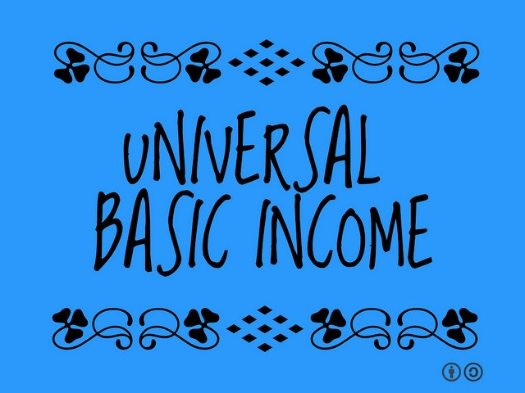
“Universal Basic Income” by Ron Mader

June 19, 2017; Honolulu Civil Beat

Last session, Hawaii passed a bill to explore a universal basic income for the state. The bill passed unanimously in both the houses of the state legislature. The move has received a lot of attention. State Rep. Chris Lee, who sponsored the bill, said, “I’m definitely glad to see a lot of people out there looking at this and asking the same questions.”

The bill has two provisions: It asserts that all families in Hawaii are entitled to basic financial security and it establishes government offices to analyze the Hawaiian economy and other universal basic income programs and propose a pathway for Hawaii.

The context articulated in the resolution is one where the automation of jobs has moved from the manufacturing sector to the services sector: “Self-driving Ubers are starting to replace taxis in some places; IBM’s Watson computer can provide basic legal advice faster and more accurately than a human lawyer; and self-checkout lines are replacing human cashiers at stores.”

Rep. Lee said Hawaii has to consider this context because cost of living is very high there and residents often turn to side jobs in the service industry to make ends meet.

In fact, a joint study by Oxford University and the Oxford Martin School in 2013 found that over the next 20 years, “47 percent of jobs in the U.S. are ‘at risk’ of being automated.” Dr. Martin Osborne, one of the co-authors of the study’s report, said, “We identified several key bottlenecks currently preventing occupations being automated. As big data helps to overcome these obstacles, a great number of jobs will be put at risk.” Their research highlighted jobs in “transportation, logistics, as well as office and administrative support.”

Sign up for our free newsletters

Subscribe to NPQ's newsletters to have our top stories delivered directly to your inbox.

By signing up, you agree to our privacy policy and terms of use, and to receive messages from NPQ and our partners.

Finland began a two-year trial run in 2016 with 2,000 citizens who will each receive the equivalent of $587 a month, tax-free. The pilot is only for people already receiving an income subsidy or unemployment benefits. Incidental earnings, such as from odd jobs or self-employment, will not affect the UBI payment.

The Netherlands also launched a two-year test this year with 250 Dutch citizens in Utrecht and nearby cities. The participants are placed in six different test groups receiving slightly different stipend amounts under slightly different conditions. One group will receive about $1,100 a month without obligation. Another test group has the option to receive an additional $150 at the end of the month for any volunteer service, and another will receive the $150 at the beginning of the month but would have to return it if they didn’t volunteer. The fourth test group is made up of welfare recipients who will simply continue receiving their benefit, but without any work requirements. A fifth has welfare recipients who expressed interest in the $1,100 but will instead continue to receive their standard benefit. Finally, the sixth group is a control group of welfare recipients who simply want to continue receiving their standard benefit.

Loek Groot, an associate professor at the Utrecht University School of Economics, who is working on the program, notes, “The Netherlands’ current welfare system wastes too much money and doesn’t do enough to help its beneficiaries.” Further, “Human behavior is always unpredictable. We want to know what motivates people, what people respond to.”

According to the online news outlet Futurism, which calls 2017 “The Year of UBI,” Germany also has a two-year UBI pilot, Canada and Uganda each plan to start one, and India is debating the merits. eBay founder Pierre Omidyar is currently financing a UBI experiment in Kenya.

According to the Basic Income Earth Network, the idea of a minimum income first appeared in the 16th century; by the 19th century, the idea had evolved into unconditional basic income. In 1969, President Nixon proposed the Family Assistance Plan in the U.S. to replace the AFDC, the aid program to poor families, but it was eventually rejected.

Opponents of UBI worry that it will make people lazy. But Sam Altman, the president of the incubator Y Combinator, which is funding research on inverse basic incomes, said, “Maybe 90 percent of people will go smoke pot and play video games. But if 10 percent of the people go create new products and services and new wealth, that’s a huge net win.”—Cyndi Suarez


Our Voices Are Our Power.

Journalism, nonprofits, and multiracial democracy are under attack. At NPQ, we fight back by sharing stories and essential insights from nonprofit leaders and workers—and we pay every contributor.

Can you help us protect nonprofit voices?

Your support keeps truth alive when it matters most.
Every single dollar makes a difference.

Donate now
logo logo logo logo logo
About the author
Cyndi Suarez

Cyndi Suarez is the former president and editor-in-chief of NPQ (Nonprofit Quarterly). She is author of "The Power Manual: How to Master Complex Power Dynamics", in which she outlines a new theory and practice of liberatory power. Suarez has worked as a strategy and innovation consultant with a focus on networks and platforms for social movements. She has 20 years of experience in the nonprofit sector—in community-based, advocacy, organizing, consulting, infrastructure, and philanthropic organizations. She is passionate about elegant design and designing for power. Her studies were in feminist theory and organizational development for social change.

More about: Nonprofit NewsPolicyUniversal Basic Income
See comments

You might also like
Social Enterprise: Lessons from Down Under
Vicki Pozzebon
If Farm School NYC Closes, What Will the City Lose?
Farm School NYC and Iris M. Crawford
How Black Women in the South Are Protecting Each Other in a Time of Crisis
Aisha Nyandoro
The New COVID Vaccine Rules Leave Parents with More Questions Than Answers
Barbara Rodriquez
The Protective Visas That May Never Come
Mel Leonor Barclay
Moving Beyond a Buzzword: Making “Resilience” Real
Laurie Mazur

Upcoming Webinars

Group Created with Sketch.
January 29th, 2:00 pm ET

Participatory Decision-making

When & How to Apply Inclusive Decision-making Methods

Register
Group Created with Sketch.
February 26th, 2:00 pm ET

Understanding Reduction in Force (RIF) Law

Clear Guidance for Values-centered Nonprofits

Register

    
You might also like
A protest sign reading, “No Business on a dead planet”, emphasizing how the wellbeing of our planet is more important than profit.
Social Enterprise: Lessons from Down Under
Vicki Pozzebon
Participants growing garlic at the Farm School NYC. 2025.
If Farm School NYC Closes, What Will the City Lose?
Farm School NYC and Iris M. Crawford
An illustration of three multiethnic women holding each other’s waists in support and looking over their shoulder toward the viewer. A sun rises above them.
How Black Women in the South Are Protecting Each Other in a...
Aisha Nyandoro

Like what you see?

Subscribe to the NPQ newsletter to have our top stories delivered directly to your inbox.

See our newsletters

By signing up, you agree to our privacy policy and terms of use, and to receive messages from NPQ and our partners.

  • About
  • Advertise
  • Careers
  • Contact
  • Copyright
  • Donate
  • Editorial Policy
  • Funders
  • Submissions

We are using cookies to give you the best experience on our website.


Nonprofit Quarterly | Civic News. Empowering Nonprofits. Advancing Justice.
Powered by  GDPR Cookie Compliance
Privacy Overview

This website uses cookies so that we can provide you with the best user experience possible. Cookie information is stored in your browser and performs functions such as recognising you when you return to our website and helping our team to understand which sections of the website you find most interesting and useful.

Strictly Necessary Cookies

Strictly Necessary Cookie should be enabled at all times so that we can save your preferences for cookie settings.