logo logo
Fund the truth. #Wethecivic giving banner
Donate
    • Membership
    • Donate
  • Social Justice
    • Racial Justice
    • Climate Justice
    • Disability Justice
    • Economic Justice
    • Food Justice
    • Health Justice
    • Immigration
    • LGBTQ+
  • Civic News
  • Nonprofit Leadership
    • Board Governance
    • Equity-Centered Management
    • Finances
    • Fundraising
    • Human Resources
    • Organizational Culture
    • Philanthropy
    • Power Dynamics
    • Strategic Planning
    • Technology
  • Columns
    • Ask Rhea!
    • Ask a Nonprofit Expert
    • Gathering in Support of Democracy
    • Hope in the Dark
    • Humans of Nonprofits
    • Inside the States
    • In Defense of Civil Society
    • The Myth of Heroic Leadership
    • The New Harvest Project
    • Notes from the Frontlines
    • Notes from the Long Arc
    • Reimagining Philanthropy
    • The Unexpected Value of Volunteers
    • We Stood Up
  • Newsletters
  • NPQ Online Events
    • Premium Webinars
    • Learn Out Loud
    • Partner Events
    • On Demand
  • Leading Edge Membership

Another Government Advisory Committee Dismantled—This One on Climate Change

Carole Levine
August 22, 2017

August 20, 2017; Washington Post and The Hill

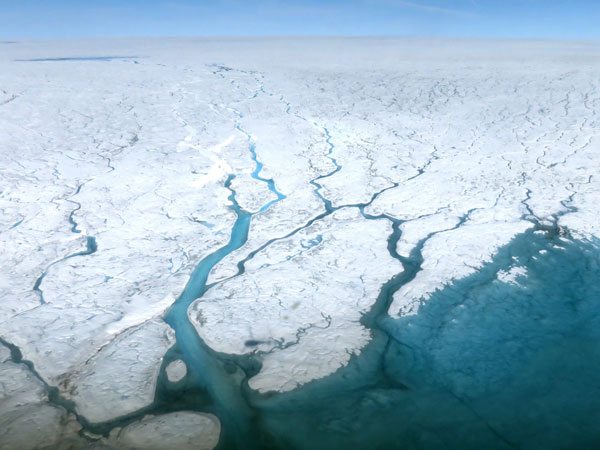
Following the leak of a draft of a major government report on climate change, the Trump administration announced they will disband the federal advisory panel that reports on climate change. Scientists had expressed concern that the content of this report might be suppressed, so this action did not come as a surprise.

Add this to the list of actions and activities being used to undermine science and existing policy and “debunk” accepted scientific principles, including the plan for a “red-team/blue-team” review of climate change science recently reported on in NPQ. But, while these actions are not unexpected, those being dismissed are not leaving quietly.

The 15-member Advisory Committee for the Sustained National Climate Assessment was initiated to help policymakers and private sector and industry officials incorporate the government’s climate analysis into their longterm planning. The committee includes academics, corporate representatives, and local officials. Their role has been to issue an assessment every four years. The next assessment is due to be released in spring 2018 and is described in the Washington Post as follows:

Known as the Climate Science Special Report, it was produced by scientists from 13 different federal agencies and estimates that human activities were responsible for an increase in global temperatures of 1.1 to 1.3 degrees Fahrenheit from 1951 to 2010.

The committee was established to help translate findings from the National Climate Assessment into concrete guidance for both public and private-sector officials. Its members have been writing a report to inform federal officials on the data sets and approaches that would best be included, and chair Richard Moss said in an interview Saturday that ending the group’s work was shortsighted.

Sign up for our free newsletters

Subscribe to NPQ's newsletters to have our top stories delivered directly to your inbox.

By signing up, you agree to our privacy policy and terms of use, and to receive messages from NPQ and our partners.

“It doesn’t seem to be the best course of action,” said Moss, an adjunct professor in the University of Maryland’s Department of Geographical Sciences, and he warned of consequences for the decisions that state and local authorities must make on a range of issues from building road projects to maintaining adequate hydropower supplies. “We’re going to be running huge risks here and possibly end up hurting the next generation’s economic prospects.”

Members of this board thought that they would be staying on. Their appointments were up for renewal, and precedent on such committees is to renew. But precedent does not seem to hold sway in this case, and this change could reference a new precedent set this spring when, in June 2018, the Trump administration did not renew the appointments of those serving on the EPA’s Board of Scientific Counselors (BOSC).

Speaking to the Washington Post in June, Robert Richardson, an ecological economist and associate professor in Michigan State University’s Department of Community Sustainability, who co-chaired one of the BOSC subcommittees and was let go earlier this spring, said, “This gives me a great deal of concern about the erosion of science in this administration. It’s hard to understand the rationale behind a decision like this. I understand they might simply want to repopulate [the board] with people of their own choosing. However, this could also be a way of just weakening advisory boards, of diminishing their role by not replacing members.”

Members of the Advisory Committee for the Sustained National Climate Assessment intend to keep working on their report without reappointment. The report is due in the spring of 2018. As former chair Moss stated to the Washington Post, “It won’t have the same weight as if we were issuing it as a federal advisory committee.”

A continuing concern is that the report and its contents will be suppressed by the current administration. The preliminary report, as leaked, concludes that Americans are already feeling the effects of climate change and says it is “extremely likely” that the majority of global temperature increases in the past 60 years are partially due to human influence. The report also details how the warming trends of more than 1.6 degree Fahrenheit from 1880 to 2015 are likely linked to human activity.

“Many lines of evidence demonstrate that human activities, especially emissions of greenhouse gases, are primarily responsible for observed climate changes in the industrial era,” one portion of the report reads. “There are no alternative explanations, and no natural cycles are found in the observational record that can explain the observed changes in climate.”

What will come of the scientific work on this report? Will its purpose of informing policymakers, industry leaders and local officials so that they can plan, make decisions and create policies that will address climate change issues be sidelined? As climate scientists across the country speak out, the question remains as to whether their voices will be heard.—Carole Levine


Our Voices Are Our Power.

Journalism, nonprofits, and multiracial democracy are under attack. At NPQ, we fight back by sharing stories and essential insights from nonprofit leaders and workers—and we pay every contributor.

Can you help us protect nonprofit voices?

Your support keeps truth alive when it matters most.
Every single dollar makes a difference.

Donate now
logo logo logo logo logo
About the author
Carole Levine

Carole Levine is a principal consultant at Levine Partners, providing consulting services to small and medium-sized nonprofit organizations. She has held senior management positions in four national nonprofits: The National PTA (Deputy Executive Director); Communities in Schools (Vice President of Expansion and Technical Assistance); The Family Resource Coalition (Director of Technical Assistance); and National Lekotek Center (Director of Development). Carole holds a BA in education and political science from Washington University, and an M.Ed. in Early Childhood Leadership and Advocacy from National Louis University. Carole has served on the boards of numerous organizations, holding national positions on the board of National Council of Jewish Women and on the International Council of Jewish Women. She is currently the Chair of Courts Matter Illinois, serves on the board of Chicago Women Take Action and is active on the Promote the Vote Illinois Coalition. Carole is passionate about purposeful work, justice for all, advocacy and her family (which includes 6 amazing grandchildren!).

More about: Climate ChangeNonprofit NewsPolicy
See comments

Sidebar-WTC
You might also like
We Did Not Come Here to Celebrate, We Came to Build
Linda Sarsour, Carmen Perez-Jordan and Saru Jayaraman
Thousands of Species Wait for Protection as Delays Grow Under Endangered Species Act
Rajeev Tyagi
Community Benefit Agreements: A Tool for Building Stronger Democracies
Sameera Fazili, Pronita Gupta and Doug Bloch
Custodians
Yahia Lababidi
The New Counterterrorism State
Darakshan Raja
As Surveillance of Immigrant Communities Expands, How Can Nonprofits Respond?
María Constanza Costa

Upcoming Webinars

Group Created with Sketch.
July 16, 2:00 pm ET

Readying for the 2026 Midterms

How 501(c)(3)s Can Educate and Advocate During this Election Season

Register
Group Created with Sketch.
August 13, 2:00 pm ET

Building Narrative Power for Equity and Solidarity

Register

    
You might also like
A stenciled graffiti reading, “What Next?” on a textured gray surface.
We Did Not Come Here to Celebrate, We Came to Build
Linda Sarsour, Carmen Perez-Jordan and Saru Jayaraman
Close-up of a red wolf lying still on wood chips, head down, gaze turned away from the camera.
Thousands of Species Wait for Protection as Delays Grow...
Rajeev Tyagi
Community members seated at a public meeting, one attendee holding an open notebook and pen on their lap, ready to take notes.
Community Benefit Agreements: A Tool for Building Stronger...
Sameera Fazili, Pronita Gupta and Doug Bloch

Like what you see?

Subscribe to the NPQ newsletter to have our top stories delivered directly to your inbox.

See our newsletters

By signing up, you agree to our privacy policy and terms of use, and to receive messages from NPQ and our partners.

  • About
  • Advertise
  • Careers
  • Contact
  • Copyright
  • Donate
  • Funders
  • Editorial Policy
  • Media Relations
  • Privacy Policy
  • Submissions

We are using cookies to give you the best experience on our website.


Nonprofit Quarterly | Civic News. Empowering Nonprofits. Advancing Justice.
Powered by  GDPR Cookie Compliance
Privacy Overview

This website uses cookies so that we can provide you with the best user experience possible. Cookie information is stored in your browser and performs functions such as recognising you when you return to our website and helping our team to understand which sections of the website you find most interesting and useful.

Strictly Necessary Cookies

Strictly Necessary Cookie should be enabled at all times so that we can save your preferences for cookie settings.