logo logo
giving banner
Donate
    • Membership
    • Donate
  • Social Justice
    • Racial Justice
    • Climate Justice
    • Disability Justice
    • Economic Justice
    • Food Justice
    • Health Justice
    • Immigration
    • LGBTQ+
  • Civic News
  • Nonprofit Leadership
    • Board Governance
    • Equity-Centered Management
    • Finances
    • Fundraising
    • Human Resources
    • Organizational Culture
    • Philanthropy
    • Power Dynamics
    • Strategic Planning
    • Technology
  • Columns
    • Ask Rhea!
    • Ask a Nonprofit Expert
    • Economy Remix
    • Gathering in Support of Democracy
    • Humans of Nonprofits
    • The Impact Algorithm
    • Living the Question
    • Nonprofit Hiring Trends & Tactics
    • Notes from the Frontlines
    • Parables of Earth
    • Re-imagining Philanthropy
    • State of the Movements
    • We Stood Up
    • The Unexpected Value of Volunteers
  • CONTENT TYPES
  • Leading Edge Membership
  • Newsletters
  • Webinars

Amsterdam Museum Walks Fine Line by Altering Offensive Art Titles

Aine Creedon
December 17, 2015
Rijksmuseum
Rijksmuseum, Amsterdam / erich2448

December 15, 2015; The Daily Beast

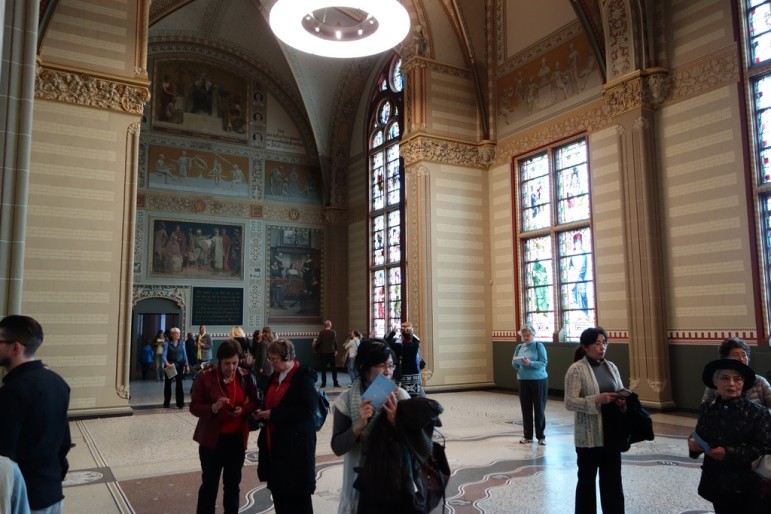
A new “Adjustment of Colonial Terminology” program at the Rijksmuseum in Amsterdam seeks to remove outdated racist terminology from its artwork titles to avoid offending museum-goers. Terms associated with racial stereotypes such as “Indian,” “negro,” “dwarf,” and “Mohammedan’’ (a term once associated with Muslims) are being replaced by more politically correct words. The Rijksmuseum has already altered more than 200 names. For example, a 1900 painting originally titled “Young Negro-Girl” has been renamed “Young Girl Holding a Fan.”

Sign up for our free newsletters

Subscribe to NPQ's newsletters to have our top stories delivered directly to your inbox.

By signing up, you agree to our privacy policy and terms of use, and to receive messages from NPQ and our partners.

Although these original titles will still remain on labels, some art historians are critical of the changes, calling it censorship. Martine Gosselink, head of the Department of History at the Rijksmuseum, who initiated the project, explains that instead of rewriting history, “The point is not to use names given by whites to others.” Artworks were generally not named until the late 18th century and were usually named by exhibition curators, not the artists who created the art.

Initiatives to refrain from racially insensitive terminology are commendable (NFL Washington franchise owner Dan Snyder clearly hasn’t gotten the memo), but they also raise numerous other questions. Should the same standard now extend to literature and other forms of art and history? Where do we draw the line, and are we then omitting historical context? While it’s important not to erase our history, we also need to acknowledge and move away from sensitive terminology that could be perceived as racially offensive to members of our various communities. Could the Rijksmuseum set a new precedent for political correctness in museum institutions? — Aine Creedon


Our Voices Are Our Power.

Journalism, nonprofits, and multiracial democracy are under attack. At NPQ, we fight back by sharing stories and essential insights from nonprofit leaders and workers—and we pay every contributor.

Can you help us protect nonprofit voices?

Your support keeps truth alive when it matters most.
Every single dollar makes a difference.

Donate now
logo logo logo logo logo
About the author
Aine Creedon

Aine Creedon is Nonprofit Quarterly's Director of Digital Operations and has worn many hats at NPQ since 2011. She has extensive experience with social media, communications and outreach in the nonprofit sector, and spent two years in Americorps programs serving with a handful of nonprofits across the nation as well as a community organization in Dorchester, Boston. Aine currently resides in Denver, Colorado where she enjoys volunteering, seeing live music, and hiking with her pups Frida and Tucker.

More about: Anti-RacismArts and CultureNonprofit News
See comments

Call to action
You might also like
An Artist Stands Up for Jornaleros
Nina R. Salerno
How to Use Art Spaces to Build Civic and Political Power
Tom Tresser
The South’s Got Something to Say: Stories from Black Women in the South
Monica L. Coleman
The Faith of the Dreamer: A Personal Story About Racism, Trauma, and Healing
Gwendolyn Middleton Payton
The End of the NEA
Alison Stine
Rehearsing for the Revolution: Theater as a Tool of Democratic Imagination
Katy Rubin and Liz Morgan

Upcoming Webinars

Group Created with Sketch.
January 29th, 2:00 pm ET

Participatory Decision-making

When & How to Apply Inclusive Decision-making Methods

Register
Group Created with Sketch.
February 26th, 2:00 pm ET

Understanding Reduction in Force (RIF) Law

Clear Guidance for Values-centered Nonprofits

Register

    
You might also like
A red circle overlayed on a yellow background with three multi-colored dots on each side. In the center it reads, " Isaiah Thompson: Staff Picks for 2025"
Staff Picks for 2025: Isaiah Thompson
Isaiah Thompson
Staff Picks for 2025: Steve Dubb
Steve Dubb
A red circle overlayed on a yellow background with three multi-colored dots on each side. In the center it reads, "Alison Stine: Staff Picks for 2025"
Staff Picks for 2025: Alison Stine
Alison Stine

Like what you see?

Subscribe to the NPQ newsletter to have our top stories delivered directly to your inbox.

See our newsletters

By signing up, you agree to our privacy policy and terms of use, and to receive messages from NPQ and our partners.

  • About
  • Advertise
  • Careers
  • Contact
  • Copyright
  • Donate
  • Editorial Policy
  • Funders
  • Submissions

We are using cookies to give you the best experience on our website.


Nonprofit Quarterly | Civic News. Empowering Nonprofits. Advancing Justice.
Powered by  GDPR Cookie Compliance
Privacy Overview

This website uses cookies so that we can provide you with the best user experience possible. Cookie information is stored in your browser and performs functions such as recognising you when you return to our website and helping our team to understand which sections of the website you find most interesting and useful.

Strictly Necessary Cookies

Strictly Necessary Cookie should be enabled at all times so that we can save your preferences for cookie settings.