logo logo
giving banner
Donate
    • Membership
    • Donate
  • Social Justice
    • Racial Justice
    • Climate Justice
    • Disability Justice
    • Economic Justice
    • Food Justice
    • Health Justice
    • Immigration
    • LGBTQ+
  • Civic News
  • Nonprofit Leadership
    • Board Governance
    • Equity-Centered Management
    • Finances
    • Fundraising
    • Human Resources
    • Organizational Culture
    • Philanthropy
    • Power Dynamics
    • Strategic Planning
    • Technology
  • Columns
    • Ask Rhea!
    • Ask a Nonprofit Expert
    • Economy Remix
    • Gathering in Support of Democracy
    • Humans of Nonprofits
    • The Impact Algorithm
    • Living the Question
    • Nonprofit Hiring Trends & Tactics
    • Notes from the Frontlines
    • Parables of Earth
    • Re-imagining Philanthropy
    • State of the Movements
    • We Stood Up
    • The Unexpected Value of Volunteers
  • CONTENT TYPES
  • Leading Edge Membership
  • Newsletters
  • Webinars

The 2014 World Giving Index Findings Ranks US in 9th Place for Donations

Ruth McCambridge
November 19, 2014

CAF Giving Index

Yesterday, the new World Giving Index was released. There are two notable aspects of this report, as compared to other reports on charity:

  1. It provides comparative data country by country across the globe.
  2. It measures giving in three ways—donations, volunteering, and helping a stranger.

The report’s findings are based upon data from the Gallup’s WorldView World Poll, which surveys people in more than 140 countries that represent approximately 94 percent of the world’s population. And while the report may have some limitations, it provides food for thought.

This year, the top line finding is that the United States and Myanmar are tied for first place. The United States ranks high across all three “giving” categories while Myanmar ranks high primarily because of its very high rate (91 percent) of making cash donations. The explanation, according to the report, lies in the religious traditions of the country.

“Nine out of ten people within Myanmar follow the Theravada school of Buddhism,under which the lives of the Sangha (ordained monks and nuns) are supported by dana (charitable giving) by lay followers of the religion. This clearly translates into a strong culture of charity, with Myanmar ranked first for donating money and 13 percentage points ahead of the second placed country. Sri Lanka, another country with a strong Theravada Buddhist community,also ranked within the Top 10 of the World Giving Index (placed 9th).”

Sign up for our free newsletters

Subscribe to NPQ's newsletters to have our top stories delivered directly to your inbox.

By signing up, you agree to our privacy policy and terms of use, and to receive messages from NPQ and our partners.

This is interesting in light of the fact that it appears that, according to the Giving USA report this year, which reported giving to religion as relatively flat, and a more recent report on giving by women, wherein younger women without a religious affiliation gave significantly more than women who did have such an affiliation, one might surmise that the traditional strong connection between giving and religiosity may be getting less intense in the United States, although this may be a momentary blip. At the very least, we can say that the slice of the giving pie devoted to religion in 2014 was proportionately less than it has been, although it is still a very healthy slice at 31 percent.

Here are some other interesting facts from this survey:

  • Eight countries ranked ahead of the United States in the percentage of people who donated money.
  • Five countries rated higher than the United States for the proportion of people who volunteer.
  • The only area in which the United States ranked first was in “helping a stranger,” which is the most vague of the three metrics.

Above, we talked a bit about the effects of culture and religion on donating, but the report also points to the impact of events upon giving. This year, Malaysia experienced a major uptick in giving across all three scales after Typhoon Haiyan, raising its rating on the overall giving scale from 71st to 7th, tied with the United Kingdom.  This change is unlikely to be maintained for long, but some parts of it may have a “tail.” For instance, since giving increased overall in Japan in 2011, donations have declined but volunteering has stayed elevated.

The report has also found that in higher income countries, women are more likely to donate money than men despite the structural income gaps; this changes when countries are middle- or lower-income. We will leave readers to draw their own conclusions about these findings—please share them with us!


 

Our Voices Are Our Power.

Journalism, nonprofits, and multiracial democracy are under attack. At NPQ, we fight back by sharing stories and essential insights from nonprofit leaders and workers—and we pay every contributor.

Can you help us protect nonprofit voices?

Your support keeps truth alive when it matters most.
Every single dollar makes a difference.

Donate now
logo logo logo logo logo
About the author
Ruth McCambridge

Ruth is Editor Emerita of the Nonprofit Quarterly. Her background includes forty-five years of experience in nonprofits, primarily in organizations that mix grassroots community work with policy change. Beginning in the mid-1980s, Ruth spent a decade at the Boston Foundation, developing and implementing capacity building programs and advocating for grantmaking attention to constituent involvement.

More about: Case StudiesGlobal IssuesPhilanthropy
See comments

Call to action
You might also like
How the Next Set of UN Sustainability Goals Can Center the Solidarity Economy
Ilcheong Yi, Christina Clamp, Michael A. Peck, Zhen Lee, Ibon Zugasti and Yukyong Jung Yun Choe
Making Sense of GivingTuesday 2025
Isaiah Thompson
Blocking Authoritarianism: Steps Nonprofits and Foundations Must Take
Saqib Bhatti
The Power of Direct Community Funding
Ana Valéria Araújo
Equitable Intermediaries: Power, Protection, Partnership
Frank Gargione and Andrea Granda
Whose Solidarity? Race, Colonialism, Economy, and the Global South
Omar Freilla

Upcoming Webinars

Group Created with Sketch.
January 29th, 2:00 pm ET

Participatory Decision-making

When & How to Apply Inclusive Decision-making Methods

Register
Group Created with Sketch.
February 26th, 2:00 pm ET

Understanding Reduction in Force (RIF) Law

Clear Guidance for Values-centered Nonprofits

Register

    
You might also like
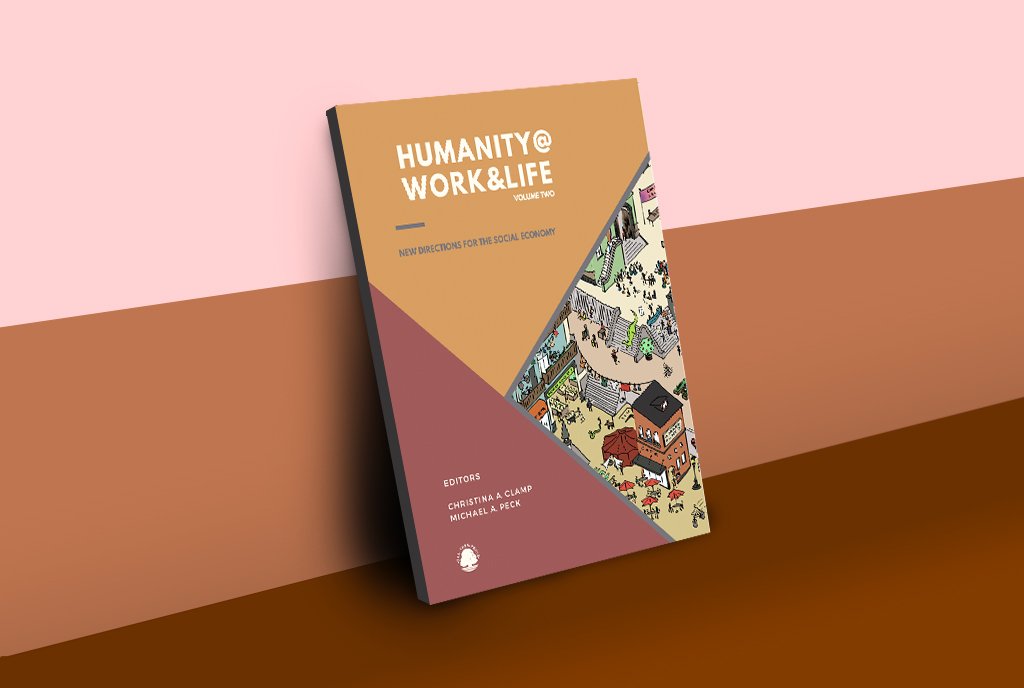
Humanity@Work&Life: Volume Two: New Directions for the Social Economy
How the Next Set of UN Sustainability Goals Can Center the...
Ilcheong Yi, Christina Clamp, Michael A. Peck, Zhen Lee, Ibon Zugasti and Yukyong Jung Yun Choe
A group of people standing and smiling together while holding up signs with the Giving Tuesday logo and that say, “I Give Time”
Making Sense of GivingTuesday 2025
Isaiah Thompson
In 2013, I was working with local Detroit organizers to protect essential community services during the city’s bankruptcy. When we sat down with the organizers, one of my mentors asked them, “Who are the people that can pick up the phone, call the governor, and know that, nine times out of ten, he will do whatever they ask?” A man in the background controlling strings attached to a pair of hands in the foreground, symbolizing the puppet-like control that billionaires have over President Trump.
Blocking Authoritarianism: Steps Nonprofits and Foundations...
Saqib Bhatti

Like what you see?

Subscribe to the NPQ newsletter to have our top stories delivered directly to your inbox.

See our newsletters

By signing up, you agree to our privacy policy and terms of use, and to receive messages from NPQ and our partners.

  • About
  • Advertise
  • Careers
  • Contact
  • Copyright
  • Donate
  • Editorial Policy
  • Funders
  • Submissions

We are using cookies to give you the best experience on our website.


Nonprofit Quarterly | Civic News. Empowering Nonprofits. Advancing Justice.
Powered by  GDPR Cookie Compliance
Privacy Overview

This website uses cookies so that we can provide you with the best user experience possible. Cookie information is stored in your browser and performs functions such as recognising you when you return to our website and helping our team to understand which sections of the website you find most interesting and useful.

Strictly Necessary Cookies

Strictly Necessary Cookie should be enabled at all times so that we can save your preferences for cookie settings.