logo logo
Donate
    • Membership
    • Donate
  • Social Justice
    • Racial Justice
    • Climate Justice
    • Disability Justice
    • Economic Justice
    • Food Justice
    • Health Justice
    • Immigration
    • LGBTQ+
  • Civic News
  • Nonprofit Leadership
    • Board Governance
    • Equity-Centered Management
    • Finances
    • Fundraising
    • Human Resources
    • Organizational Culture
    • Philanthropy
    • Power Dynamics
    • Strategic Planning
    • Technology
  • Columns
    • Ask Rhea!
    • Ask a Nonprofit Expert
    • Gathering in Support of Democracy
    • Hope in the Dark
    • Humans of Nonprofits
    • Inside the States
    • In Defense of Civil Society
    • The Myth of Heroic Leadership
    • Notes from the Frontlines
    • Notes from the Long Arc
    • Reimagining Philanthropy
    • The Unexpected Value of Volunteers
    • We Stood Up
  • Newsletters
  • NPQ Online Events
    • Learn Out Loud
    • Premium Webinars
    • Partner Events
    • On Demand
  • Leading Edge Membership

When Florence Struck, Some Churches Stepped Up

Kelly Phipps
September 19, 2018
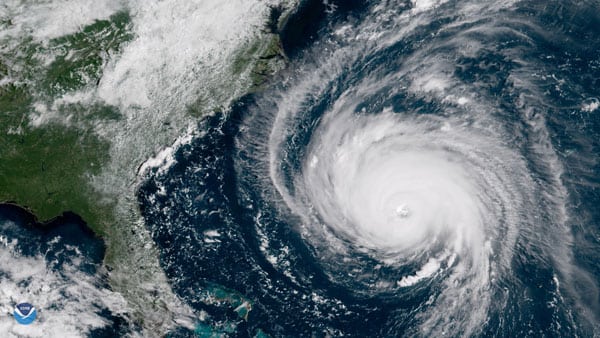
NOAA Environmental Visualization Laboratory.

September 16, 2018; New York Times

In North Carolina, places of worship have stepped up in a big way to the recent storm damage from Hurricane Florence. According to the New York Times:

  • Manna Church, the largest church in Fayetteville, became the city’s eighth official storm shelter.
  • The only mosque in Burlington, N.C., joined with others across the region to serve as a shelter, handing out food, water, and blankets.
  • Southern Baptists cooked tens of thousands of meals and had volunteers with chainsaws and shower units helping across the coast.
  • Temple Church in New Bern worked with a local community member who owned a boat to help pull people out of the water.

According to Fortune, Florence is expected to cause $18 billion in damage. While Florence started out as a hurricane and eventually was downgraded to a tropical depression, the water damage from flooding still created a crisis for countless families. It’s hard to imagine local religious groups not being involved.

After the public relations crisis Joel Osteen faced in 2017 in the aftermath of Hurricane Harvey, the community perception that religious organizations should open their doors during crisis rings true. A fast and organized response to disaster is in some ways a test for religious communities to show their belief is translating into something important—action. While Lakewood Church did eventually operate as a shelter, Osteen faced criticism for what many saw as a slow response, given the fact that the church can hold 16,000 people.

Sign up for our free newsletters

Subscribe to NPQ's newsletters to have our top stories delivered directly to your inbox.

By signing up, you agree to our privacy policy and terms of use, and to receive messages from NPQ and our partners.

It’s also interesting to note that FEMA recently expanded funding to go directly to houses of worship that are damaged during natural disasters.

The expectation from communities that religious institutions should be actively involved in crisis help comes down to belief and mission. As many churches plan sermons and outreach, it seems emergency response plans also need to be in the mix.

But that community responsibility doesn’t simply fall to churches. While many nonprofits have no religious affiliation, the belief in a calling is the same. Even if a nonprofit’s scope of services doesn’t include natural disaster response, in the eyes of a community, stepping up during disaster is simply the right thing to do.

When disaster strikes, how are we responding in a way that reinforces our belief in a mission and our commitment to community? Has your nonprofit taken the time to identify what resources and shelter you can offer during natural disasters?—Kelly Phipps


Our Voices Are Our Power.

Journalism, nonprofits, and multiracial democracy are under attack. At NPQ, we fight back by sharing stories and essential insights from nonprofit leaders and workers—and we pay every contributor.

Can you help us protect nonprofit voices?

Your support keeps truth alive when it matters most.
Every single dollar makes a difference.

Donate now
logo logo logo logo logo
About the author
Kelly Phipps

Kelly Phipps is a fundraising manager for a nonprofit in California. Kelly has worked extensively on fundraising events, community donations, annual giving and strategic planning. She is passionate about empowering young women of color to make a difference in the nonprofit sector and analyzing the impacts of social justice topics on nonprofit leadership.

More about: Disasters and RecoveryNonprofit NewsPhilanthropy
See comments

Sidebar-WTC
You might also like
Black Women Are Redefining Wealth. Is Philanthropy Ready to Invest Differently?
Gabrielle Wyatt
The Names We Carry
Sadé Dozan
To Build a Healthier Future for All, Funders Must Stand with Black-Led Organizations
Karla Walker
What the Black Social Economy Teaches Philanthropy About Collective Care
Jamye Wooten
Lessons from the Fight For $15 Movement for Philanthropic Donors
Mary Kay Henry
How Deaconess Foundation Is Investing in Narrative Infrastructure and Black Futurity
Shantell Hinton and Constance Harper

Upcoming Webinars

Group Created with Sketch.
September 17, 2:00 pm ET

Collaborating with the Enemy

How to Work with People You Don't Agree with or Like or Trust

Register
Group Created with Sketch.
September 22, 2:00 pm ET

Modernizing Your Nonprofit Accounting System

Building Infrastructure That Supports Mission and Financial Sustainability

Register
Group Created with Sketch.
October 29, 2:00 pm ET

Fundraising Trends and Emerging Practices

Register

    
You might also like
A Black woman with a rose and baby’s breath flower crown sits before a body of water and looks into the camera with a relaxed look on her face.
Black Women Are Redefining Wealth. Is Philanthropy Ready to...
Gabrielle Wyatt
A Black woman with braids and a serious expression holds up her hands to the camera, as if to frame something in front of her.
The Names We Carry
Sadé Dozan
A close-up of two pairs of hands holding onto each other, one pair of hands belongs to a Black woman wearing a stethescope and blue scrubs. The other hand belongs to a Black man with a watch.
To Build a Healthier Future for All, Funders Must Stand with...
Karla Walker

Like what you see?

Subscribe to the NPQ newsletter to have our top stories delivered directly to your inbox.

See our newsletters

By signing up, you agree to our privacy policy and terms of use, and to receive messages from NPQ and our partners.

  • About
  • Advertise
  • Careers
  • Contact
  • Copyright
  • Donate
  • Funders
  • Editorial Policy
  • Media Relations
  • Privacy Policy
  • Submissions

We are using cookies to give you the best experience on our website.


Nonprofit Quarterly | Civic News. Empowering Nonprofits. Advancing Justice.
Powered by  GDPR Cookie Compliance
Privacy Overview

This website uses cookies so that we can provide you with the best user experience possible. Cookie information is stored in your browser and performs functions such as recognising you when you return to our website and helping our team to understand which sections of the website you find most interesting and useful.

Strictly Necessary Cookies

Strictly Necessary Cookie should be enabled at all times so that we can save your preferences for cookie settings.