logo logo
giving banner
Donate
    • Membership
    • Donate
  • Social Justice
    • Racial Justice
    • Climate Justice
    • Disability Justice
    • Economic Justice
    • Food Justice
    • Health Justice
    • Immigration
    • LGBTQ+
  • Civic News
  • Nonprofit Leadership
    • Board Governance
    • Equity-Centered Management
    • Finances
    • Fundraising
    • Human Resources
    • Organizational Culture
    • Philanthropy
    • Power Dynamics
    • Strategic Planning
    • Technology
  • Columns
    • Ask Rhea!
    • Ask a Nonprofit Expert
    • Economy Remix
    • Gathering in Support of Democracy
    • Humans of Nonprofits
    • The Impact Algorithm
    • Living the Question
    • Nonprofit Hiring Trends & Tactics
    • Notes from the Frontlines
    • Parables of Earth
    • Re-imagining Philanthropy
    • State of the Movements
    • We Stood Up
    • The Unexpected Value of Volunteers
  • CONTENT TYPES
  • Leading Edge Membership
  • Newsletters
  • Webinars

Study Confirms Artists in US Museum Collections Overwhelmingly Male and White

Ruth McCambridge
March 21, 2019
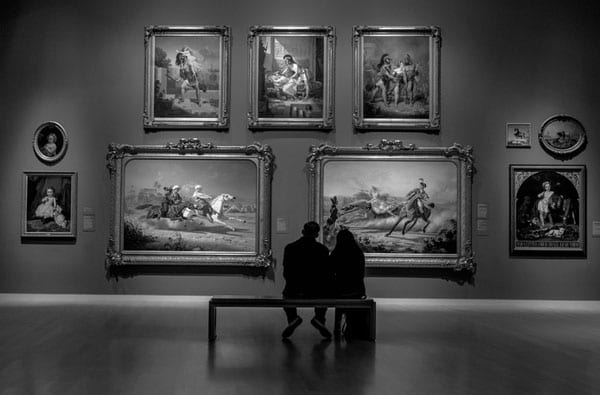
Pixabay. CC Public Domain.

March 20, 2019; Guardian

Over the last few years, NPQ has given a lot of coverage to the lack of diversity in the governance and staff leadership of museums in the US. This lack of diversity extends to curatorial staff, a problem which is now on the front burner of some arts-related philanthropies. Maybe after they see this first-of-its-kind study, they will turn up the heat a bit higher.

A large-scale study of the artists exhibited in major US art museums has found that 85 percent of those artists are white, and 87 percent of them male. Researchers at Williams College examined the collections of 18 major US museums, then researched the gender demographics of the artists. The institutions studied included New York’s Metropolitan Museum of Art, the Art Institute of Chicago, and the Los Angeles County Museum of Art.

Chad Topaz, a professor of mathematics, spearheaded the study.

Sign up for our free newsletters

Subscribe to NPQ's newsletters to have our top stories delivered directly to your inbox.

By signing up, you agree to our privacy policy and terms of use, and to receive messages from NPQ and our partners.

Our overall pool of individual, identifiable artists across all museums consists of 12.6 percent women. With respect to ethnicity, the pool is 85.4 percent white, 9.0 percent Asian, 2.8 percent Hispanic, 1.2 percent African American, and 1.5 percent other ethnicities. The four largest groups represented across all 18 museums in terms of gender and ethnicity are white men (75.7 percent), white women (10.8 percent), Asian men (7.5 percent), and Hispanic men (2.6 percent). All other groups are represented in proportions less than 1 percent.

There are outliers, of course. Pacific Standard points out that “Ironically, the two museums with the highest percentages of white artists in the collection are in predominantly black cities: the Detroit Institute of Arts (94.7 percent), and the National Gallery of Art in Washington, DC (97.4 percent). Talk about a disconnect between a public institution and its community.”

This contrast is perhaps particularly striking in the case of the DIA, whose survival was placed as a linchpin in the “Grand Bargain” to rescue Detroit from bankruptcy. Maybe the foundations involved can take note and consider over what fire the institution’s feet need to be held?—Ruth McCambridge


Our Voices Are Our Power.

Journalism, nonprofits, and multiracial democracy are under attack. At NPQ, we fight back by sharing stories and essential insights from nonprofit leaders and workers—and we pay every contributor.

Can you help us protect nonprofit voices?

Your support keeps truth alive when it matters most.
Every single dollar makes a difference.

Donate now
logo logo logo logo logo
About the author
Ruth McCambridge

Ruth is Editor Emerita of the Nonprofit Quarterly. Her background includes forty-five years of experience in nonprofits, primarily in organizations that mix grassroots community work with policy change. Beginning in the mid-1980s, Ruth spent a decade at the Boston Foundation, developing and implementing capacity building programs and advocating for grantmaking attention to constituent involvement.

More about: Arts and CultureEquity-Centered ManagementNonprofit News
See comments

Call to action
You might also like
An Artist Stands Up for Jornaleros
Nina R. Salerno
How to Use Art Spaces to Build Civic and Political Power
Tom Tresser
The South’s Got Something to Say: Stories from Black Women in the South
Monica L. Coleman
The Faith of the Dreamer: A Personal Story About Racism, Trauma, and Healing
Gwendolyn Middleton Payton
The End of the NEA
Alison Stine
Rethinking Nonprofit Survival: Why Partnership Is the New Leadership
Michael Anderson, Rumbidzai Mufuka and Adelaide Rohrssen

Upcoming Webinars

Group Created with Sketch.
January 29th, 2:00 pm ET

Participatory Decision-making

When & How to Apply Inclusive Decision-making Methods

Register
Group Created with Sketch.
February 26th, 2:00 pm ET

Understanding Reduction in Force (RIF) Law

Clear Guidance for Values-centered Nonprofits

Register

    
You might also like
A black and white paste-up image of a day-laborer wearing a sun hat and looking away from the camera. The image is surrounded by missing posters of day laborers. Guadalajara, Jalisco, México.
An Artist Stands Up for Jornaleros
Nina R. Salerno
People listen intently at a community forum held at in at art space with paintings on the wall.
How to Use Art Spaces to Build Civic and Political Power
Tom Tresser
An illustration of four Black woman with different natural hairstyles sitting together on the ground and wearing converses. Behind them, a dripping, golden sun is spray painted on a wall, and a spray paint can sits next to them.
The South’s Got Something to Say: Stories from Black Women...
Monica L. Coleman

Like what you see?

Subscribe to the NPQ newsletter to have our top stories delivered directly to your inbox.

See our newsletters

By signing up, you agree to our privacy policy and terms of use, and to receive messages from NPQ and our partners.

  • About
  • Advertise
  • Careers
  • Contact
  • Copyright
  • Donate
  • Editorial Policy
  • Funders
  • Submissions

We are using cookies to give you the best experience on our website.


Nonprofit Quarterly | Civic News. Empowering Nonprofits. Advancing Justice.
Powered by  GDPR Cookie Compliance
Privacy Overview

This website uses cookies so that we can provide you with the best user experience possible. Cookie information is stored in your browser and performs functions such as recognising you when you return to our website and helping our team to understand which sections of the website you find most interesting and useful.

Strictly Necessary Cookies

Strictly Necessary Cookie should be enabled at all times so that we can save your preferences for cookie settings.