logo logo
Donate
    • Membership
    • Donate
  • Social Justice
    • Racial Justice
    • Climate Justice
    • Disability Justice
    • Economic Justice
    • Food Justice
    • Health Justice
    • Immigration
    • LGBTQ+
  • Civic News
  • Nonprofit Leadership
    • Board Governance
    • Equity-Centered Management
    • Finances
    • Fundraising
    • Human Resources
    • Organizational Culture
    • Philanthropy
    • Power Dynamics
    • Strategic Planning
    • Technology
  • Columns
    • Ask Rhea!
    • Ask a Nonprofit Expert
    • Gathering in Support of Democracy
    • Hope in the Dark
    • Humans of Nonprofits
    • Inside the States
    • In Defense of Civil Society
    • The Myth of Heroic Leadership
    • Notes from the Frontlines
    • Notes from the Long Arc
    • Reimagining Philanthropy
    • The Unexpected Value of Volunteers
    • We Stood Up
  • Newsletters
  • NPQ Online Events
    • Learn Out Loud
    • Leading Edge Webinars
    • Partner Events
    • On Demand
  • Leading Edge Membership

World Literature Luminaries Gather to Promote Human Rights

Erin Rubin
May 7, 2019

May 2, 2019; New York Times

No one has ever promised that all attendees at a conference must be agreeable to one another. Certainly, it’s an unrealistic promise when a conference’s attendees are all world-famous writers, opinionated and brilliant, varied in their origins but united in their talent. But as the arguing and collaborating at PEN America has evolved over the years, the commitment to literature as a vehicle for social change and democratic preservation remains steadfast.

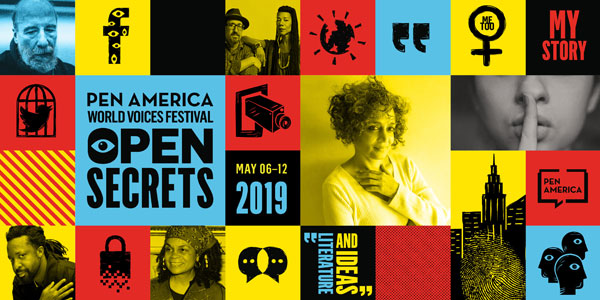
This week, writers will gather for the PEN World Voices conference in New York around the theme, “Open Secrets.” They will discuss the surveillance, governmental and otherwise, that has become a daily fact of life for so many people. The attendee list includes multiple luminaries of world literature: Jamaican author Marlon James (2015’s Booker prize winner), Newark mayor Ras Baraka (son of poet Amiri Baraka), Dave Eggers, Masha Gessen, Tommy Orange, Colm Tóibín, and keynote speaker Arundhati Roy.

PEN itself is nearly 100 years old, but the World Voices festival was begun in 2005 when Salman Rushdie was president of PEN America. He remembered an experience from 1986, when the Congress of International PEN did not quite live up to the name. While the attendee roster was luminous and varied, it seems the experiences of writers outside the dominant culture had not been considered when assembling the guest list; there were very few women, and Rushdie was the only South Asian. As he described it, the invitation of then-Secretary of State George Schultz to speak “prompted howls of protest by the South African writers Nadine Gordimer, J. M. Coetzee, and Sipho Sepamla, who accused Schultz of supporting apartheid.”

Sign up for our free newsletters

Subscribe to NPQ's newsletters to have our top stories delivered directly to your inbox.

By signing up, you agree to our privacy policy and terms of use, and to receive messages from NPQ and our partners.

Given PEN’s mission of promoting freedom of speech and expression, and how many of its members and honorees (Gabriel García Márquez, Ngugi Wa Thiong’o, Gessen, Ai Weiwei, Rushdie himself) have suffered at the hands of repressive governments, it seems more surprising that PEN should have invited Schultz than that the South African delegation should have been upset. Norman Mailer ran the PEN American Center at the time, and occasionally worked with the State Department to bring in writers whose relationships with their home governments were…difficult.

In response to this dissatisfaction, Rushdie launched the PEN World Voices festival, and it is this event that purports to use literature as a vehicle for worldwide conversation about various forms of isolation and repression. “We felt that that kind of distance between America and the world was not good for America, and not good for the rest of the world either,” Rushdie said.

Many in both media and the nonprofit sector will be familiar with calls to “stay in your lane” and “keep out the politics” to avoid an “agenda.” To those on the ground, of course, this often sounds like nonsense; it is often not possible to participate in the civic sector on value-neutral ground. PEN America is an excellent argument for this camp and has actually sued the Trump administration for restricting freedom of speech. Some of PEN’s more publicly vocal members, such as Rushdie or the Somali-born, Dutch-American writer Ayaan Hirsi Ali, have openly taken controversial positions on religious and political issues.

Gordimer said in 2007, “Everyone is influenced by the framework in which they live, so that politics comes into everything. It’s not expressed by us in a didactic way, but comes through our creation of characters who are indeed made up of the kind of world and the kind of reactions that people have toward that world.”

PEN’s reaction is to fight for the place of storytelling as a vehicle for protest and for preserving identity and culture in its multifarious forms. Notably, this year’s event will feature organizers from around the world: not only Arundhati Roy, but also Ma Jian, a protestor who survived China’s Tiananmen Square.—Erin Rubin


The work isn’t done. Neither is our commitment.

The challenges facing nonprofits aren’t going away. Neither can the journalism that informs, connects, and amplifies the sector.

Help NPQ keep this work free and accessible.

Give Today
logo logo logo logo logo
About the author
Erin Rubin

Erin Rubin was an assistant editor at the Nonprofit Quarterly, where she was in charge of online editorial coordination and community building. Before joining NPQ, in 2016, Erin worked as an administrator at Harvard Business School and as an editorial project manager at Pearson Education, where she helped develop a digital resource library for remedial learners. Erin has also worked with David R. Godine, Publishers, and the Association of Literary Scholars, Critics, and Writers. As a creative lead with the TEDxBeaconStreet organizing team, she worked to help innovators and changemakers share their groundbreaking ideas and turn them into action.

More about: Case StudiesDemocratic Practices (Economic Justice)Human RightsNarrative PowerNonprofit News
See comments

Stuffing-1
You might also like
Progress brings hope in No More 24—a movement for NYC’s home care workers
Megan McGee
Beyond survival: Gaza’s children with disabilities need a chance to recover
Hassan Herzallah
In Gaza, Aid Still Means Survival—Not Recovery
Hassan Herzallah
When Philanthropy Bails on the Trans-led Movement, Where Does that Leave Us?
Shelby Chestnut
250 Years of Justice Denied: Puerto Rico’s Demand for Energy Sovereignty
Arturo Massol Deyá and Emily Teitsworth
This Is an All-Hands on Deck Moment for LGBTQ+ Rights: an Interview with San Francisco Community Leaders
Breonna McCree

Upcoming Webinars

Group Created with Sketch.
December 3, 2:00 pm ET

After the Midterms

What’s Next for Nonprofits?

Register
Group Created with Sketch.
January 28, 2:00 pm ET

Democratic Staff Structures

Weaving Shared Leadership and Union Practice in Nonprofits

Register
You might also like
A Black woman with cornrows wraps her arms around an elderly white woman with cropped gray hair. They laugh together.
Progress brings hope in No More 24—a movement for NYC’s...
Megan McGee
A Palestianian child waving a Palestinian flag against a rocky terrain.
Beyond survival: Gaza’s children with disabilities need a...
Hassan Herzallah
A person sitting in a tree and wearing a Robin Hood costume, where his face is turned down away from the camera, and shielded by his hood. He holds a bow and arrow is his hands.
AI nationalization is a bailout wearing a populist costume
Samuel Peters

Like what you see?

Subscribe to the NPQ newsletter to have our top stories delivered directly to your inbox.

See our newsletters

By signing up, you agree to our privacy policy and terms of use, and to receive messages from NPQ and our partners.

  • About
  • Advertise
  • Careers
  • Contact
  • Copyright
  • Donate
  • Funders
  • Editorial Policy
  • Media Relations
  • Privacy Policy
  • Submissions

We are using cookies to give you the best experience on our website.


Nonprofit Quarterly | Civic News. Empowering Nonprofits. Advancing Justice.
Powered by  GDPR Cookie Compliance
Privacy Overview

This website uses cookies so that we can provide you with the best user experience possible. Cookie information is stored in your browser and performs functions such as recognising you when you return to our website and helping our team to understand which sections of the website you find most interesting and useful.

Strictly Necessary Cookies

Strictly Necessary Cookie should be enabled at all times so that we can save your preferences for cookie settings.