
I never met my immigrant ancestors, but I know my great-grandfather, Martin Huppert, would likely have been deported under President Trump.
Immigrating to America from Hungary at the age of 18 in 1900, Huppert settled in Jersey City and made his living both distilling and selling liquors. When alcohol became illegal with the passage of the Eighteenth Amendment in 1919, Huppert’s vocation transformed into a criminal enterprise, and thus Huppert became a bootlegger—at least until Prohibition ended in 1933 and Huppert’s livelihood became legal again.
I suspect Huppert would say he had no choice; he had a large family to provide for, including my great-grandmother, my grandmother, and her siblings. I even found a newspaper clipping showing he was busted for running a speakeasy just days before my grandmother was born in 1923.

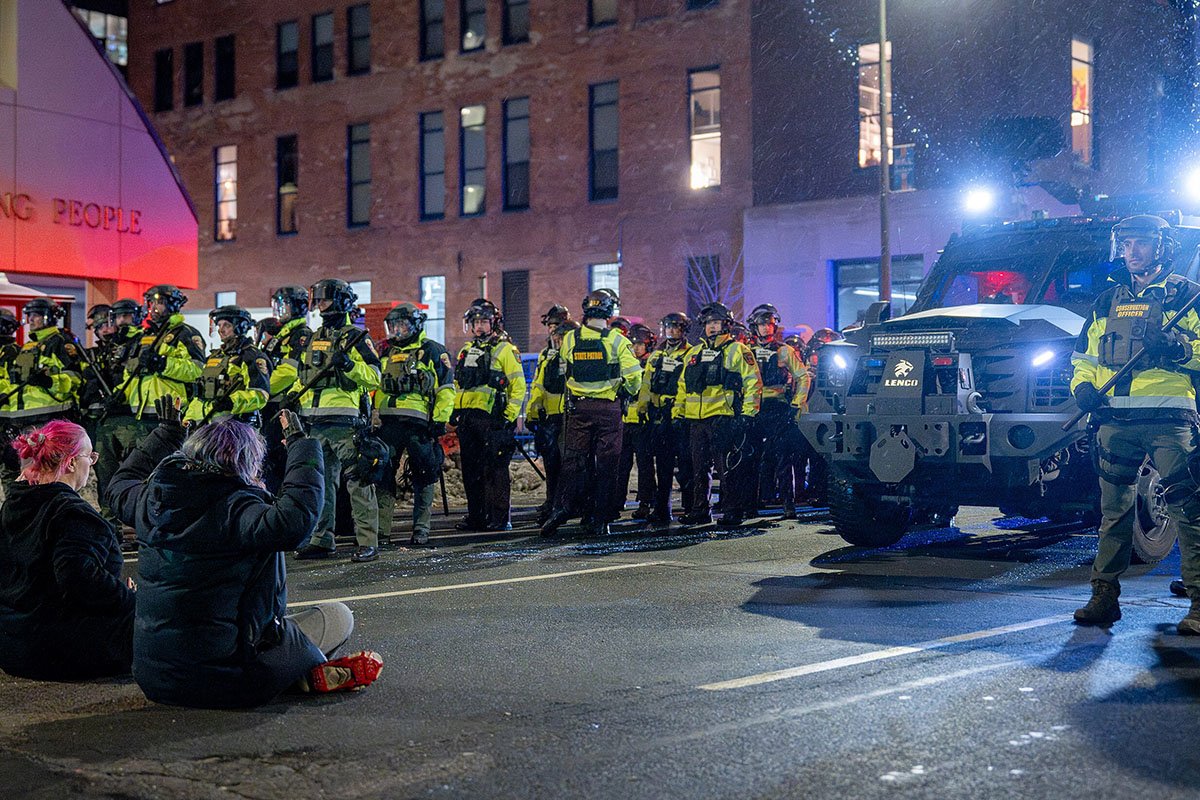
As Trump singled out Minneapolis for his most recent push for mass deportations…ordinary Minnesotans worked with nonprofits to successfully pressure the president to walk back the operation.
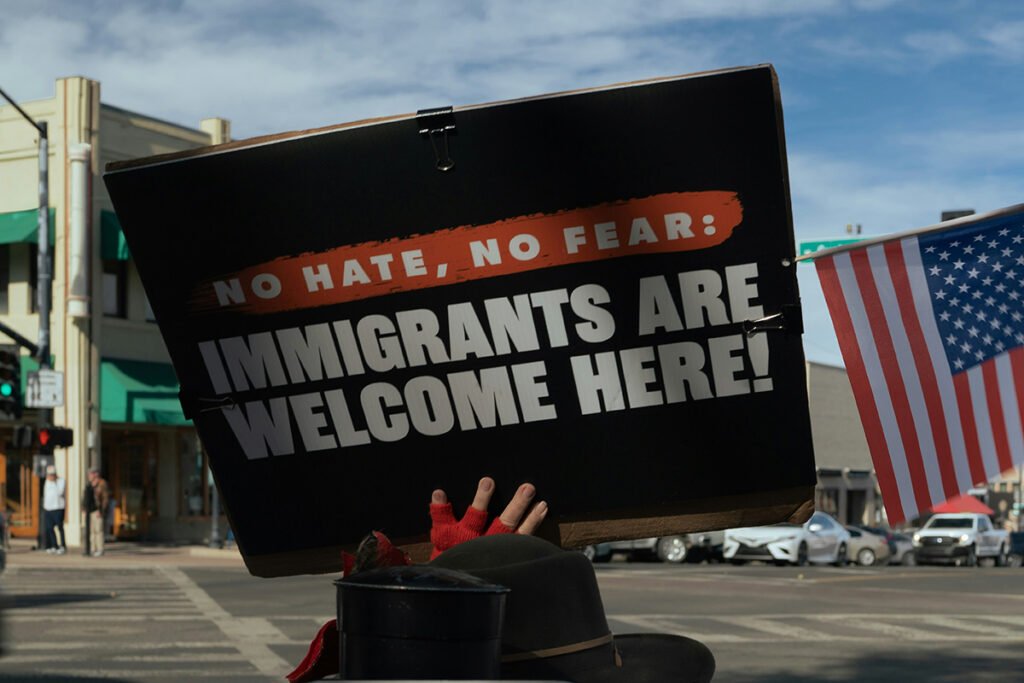
When I see immigrants treated cruelly and deported under Trump, I think of Huppert’s humanity and feel despair and rage. Millions of my fellow Americans are likewise horrified by Trump’s persecution of immigrants, either because they appreciate their own immigrant roots or simply out of instinctive empathy. Yet with Trump solidifying his control over the media, the courts, academia, and the military, we also worry that we are powerless to change anything.
This is a rational feeling, but not accurate, as we have powerful means at our disposal: Nonprofits are critical tools that empower ordinary people to legally and effectively fight back against Trump’s immigration policies. Indeed, even as Trump singled out Minneapolis for his most recent push for mass deportations, resulting in the killings of Renee Good and Alex Pretti by ICE agents, ordinary Minnesotans worked with nonprofits to successfully pressure the president to walk back the operation.
Power of the People (and Nonprofits)
“Nonprofits in the Twin Cities have been on the forefront of efforts to protect immigrants, their families, and their workplaces and communities,” explained Laura Hermer, a law professor at Mitchell Hamline School of Law in Saint Paul, MN. Hermer specializes in healthcare access and legal issues for economically underserved communities—including, disproportionately, the immigrant populations targeted by Trump.
Hermer points to how nonprofits offer meaningful solutions to the issues facing these communities.
“Monarca, an offshoot of Unidos MN, has trained possibly the most community ‘upstanders’—basically, constitutional observers,” Hermer said. “It also organizes rapid response networks of trained upstanders who observe ICE movements in their local communities and respond to ICE raids to observe and record them.”
Hermer also identified the West Side Community Organization as another successful nonprofit, helping people in Saint Paul through the Hummingbird Initiative “to train and organize constitutional observers who are local to the West Side.” Another local organization, Neighborhood House, “organized an ongoing food drive for families that feel they must shelter in place…in partnership with a local grocery store, El Burrito Mercado.”
Martin O’Malley, who had a strong pro-immigrant record as Maryland governor from 2007 to 2015, has condemned Trump turning ICE into “his own secret police force,” arguing that this specifically is a problem that nonprofits are well-equipped to solve.
Through nonprofits, people can [speak up], whether by “calling out” officials through mass protests or by providing legal, medical, and other survival aid to persecuted people.
“The continued operation of ICE on the streets of the nation is, every day, destroying the trust necessary for democracy to survive,” O’Malley told NPQ. “Who can tell when enough Americans will demand that this end? But it is pretty clear where it is headed—more abductions and kidnappings, more brutality and murder. Perhaps Alex Pretti’s murder will change our hearts in ways the prior killings and kidnappings have not.”
In 2019, when O’Malley encountered Trump’s then-acting Secretary of Homeland Security Ken Cucinelli at a Washington, DC, bar, he openly called him out for oppressing immigrants. At the time, O’Malley said that “the biggest threat to our American freedom is not dictatorship. It’s our own public passivity and acceptance of cruelty and institutional violence practiced in our name and with our permission. We all have an obligation to speak out, to call it like it is.”
Through nonprofits, people can do the same thing, whether by “calling out” officials through mass protests or by providing legal, medical, and other survival aid to persecuted people.
“Each of us has power, and each of us is needed if we are going to defend and restore the civil society that is the core of America’s greatness,” O’Malley said, echoing his 2019 sentiments in 2026. “Today we are governed by a murderous criminal enterprise, exercising every power with which we have entrusted them to destroy the very principles that make a republic worth keeping.”
Sign up for our free newsletters
Subscribe to NPQ's newsletters to have our top stories delivered directly to your inbox.
By signing up, you agree to our privacy policy and terms of use, and to receive messages from NPQ and our partners.
Jim Hilbert, like Hermer a professor at Mitchell Hamline School of Law, shared O’Malley’s dire view of Trump’s immigration policies.
“We now have a significant number of sworn statements from witnesses, and we obviously have a lot of video evidence; I think that when you look through those materials, it’s hard not to conclude that we have several violations of the law,” Hilbert said.
He elaborated: “We have constitutional concerns about retaliatory behavior by the federal government against the state. We have concerns about suppression of the First Amendment, concerns about the Fourth Amendment and excessive force. We have concerns about violations of [Homeland Security] policies—how interactions with people are being executed, whether officers are intervening when others behave improperly, whether medical care is being rendered.”
Hilbert strongly agreed with Hermer’s assessment that nonprofits are uniquely positioned to help concerned citizens stand up for justice.
When the entire apparatus of government and society is otherwise arrayed against a group, nonprofits become even more indispensable.
“Nonprofits play a special role because, unlike for-profit or governmental organizations, they are often rooted in a broad base of citizens, organizers, or community members,” Hilbert said. “Those people animate the nonprofit with a shared, mission-driven understanding that allows a wide range of voices to be heard.”
He added, “In our normal free-market system, we often lack the capacity to hear from people who are suffering, oppressed, or in difficult circumstances. Politically, we also lack effective systems to hear from them because of distorted and broken aspects of our political structure. That’s where nonprofits step in. Many nonprofits exist specifically to represent people who otherwise lack a voice.”
The Understated Role of Nonprofits
When the entire apparatus of government and society is otherwise arrayed against a group, nonprofits become even more indispensable precisely because of these structural shortcomings.
“Society maintains strength and resilience because of a range of necessary institutions,” Hilbert said. “The justice system relies on government actors—officers, lawyers, judges, corrections workers, and so on. But we also rely on institutions that are mission-driven, grounded in relationships, and often built from the ground up.”
Nonprofits, he emphasized, “fill gaps left by other institutions and bring forward the perspectives of those excluded by existing structures. That advocacy function is one of the nonprofit sector’s most important powers and responsibilities.”
Hermer connected this back to the on-the-ground activities in Minnesota.
“[Nonprofits are] not only helping to support community families in need, but [they are] also a pillar of the West Side’s business community,” Hermer said. “These nonprofits are strengthening their communities not just by responding to need, but by organizing neighbors and bringing them together with a purpose.”
Certainly, this needs to happen. During the first year of his presidency, Trump deported roughly half a million people either from inside the country or at the border. The vast majority are men, women, and children simply seeking better lives. They shouldn’t have to be perfect to warrant our compassion; my great-grandfather, after all, was arguably “wrong” for breaking the law by selling alcohol after it had been banned. Does that mean that he, his wife, and his three children should have been rounded up and sent to Hungary? If that had happened, neither I nor hundreds of his other descendants would exist today.
My life happened because an immigrant stayed in America. This does not make me unusual or special. It makes me like the vast majority of other Americans—the immigrants, those who support immigrants, and those who persecute them, too.