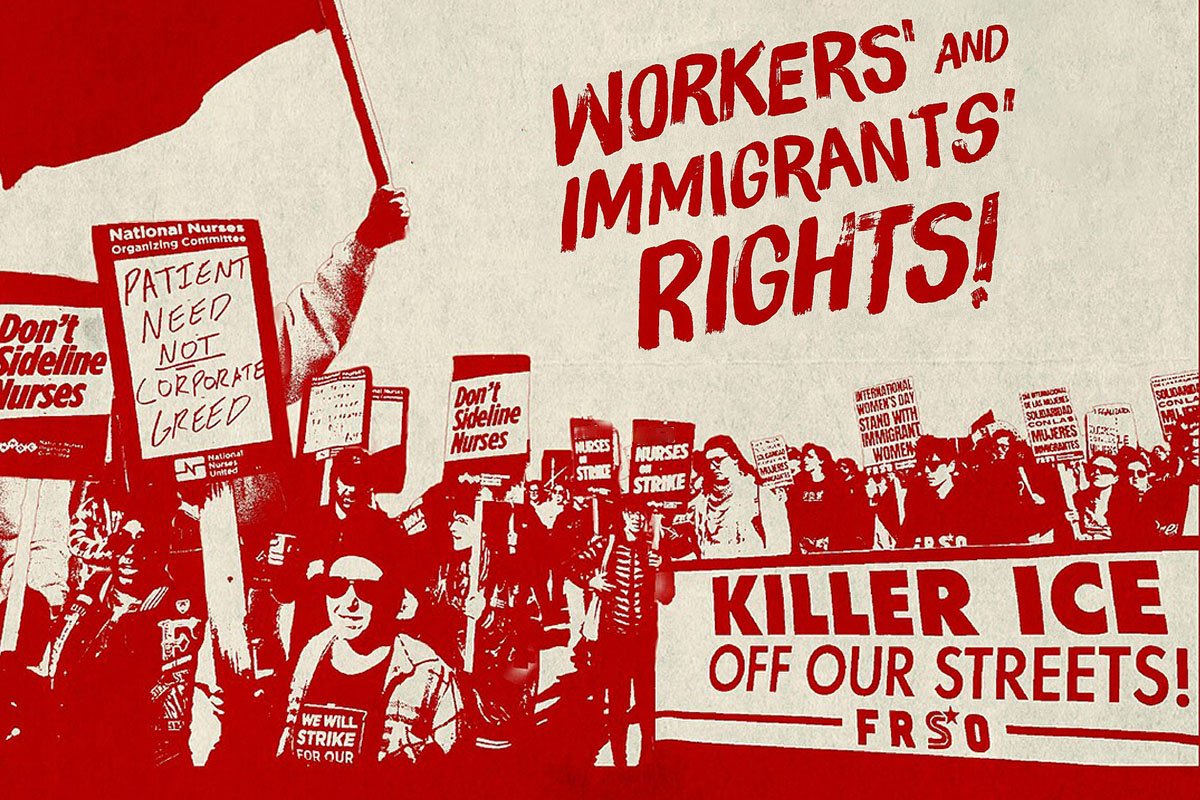


It begins slowly. First, an email with a fundraising link for a Board member’s family. Detained in a warehouse raid in Los Angeles; the location of the first incursion. Then, a prolonged absence from a staffer in another organization, in a different region. A member of their household had been abducted. Months later at the kitchen table, my mother puts on a Christmas slide show and tells me fourteen faces have been deported since this festive gathering. Each additional story underscores a growing, glaring reality: knowing your rights is not enough. Especially in the nonprofit sector.
For 15 years, I’ve helped social impact organizations decrease burnout and increase reach by building their internal systems and cultures. My work is a direct outgrowth of my own efforts in movements and the places that house parts of them. Years of experience have given me an intimate familiarity with a dynamic that confronts many in the nonprofit sector today: the seemingly unbridgeable divide between well-intentioned knowledge and radical practice.
Nonprofits are spaces with concentrated levels of formal knowledge, they are full of leaders and staff with degrees and impressive accolades who funnel their commitment to marginalized communities into a familiar, well-trodden pathway: finding and digesting ever more vast amounts of information. To wit, many have spent the past year signing up for Know Your Rights trainings where they learn the difference between observation and obstruction, distinguishing between an administrative and judicial warrant. Yet, someone can recite their rights perfectly and still panic, forget what to say, or fawn in the face of authority. We can memorize the SALUTE framework and have no idea what to do when we see a kidnapping.
When I tell an organizer I’m writing this article, they roll their eyes knowingly. A longtime abolitionist, they reach across the table, laughing as they say, “Rights don’t matter.”
Someone can recite their rights perfectly and still panic, forget what to say, or fawn in the face of authority.
I often agree. I started making Sanctuary Plans two years into the first Trump administration. These were structured blueprints that prepared for the worst-case scenario. They were preparatory, including explicit information-sharing protocols in case of a data breach and a requirement that buildings (their exits, bathrooms, access points, and so on) be researched before being booked for events. They outlined a clear point of contact for physical invasion and advocated for volunteers to monitor the perimeter of event spaces as a precaution. The Sanctuary Plans encompassed safety not just for undocumented staff, but youth, program participants, trans and disabled communities, and an intersectional combination of all the above. Arguably, the most important thing they did was counter fear.
No one talks about the fear. How the presence of police or federal agents can raise your heartrate, make your palms sweat, and clear your thoughts of anything but putting distance between yourself and their weapons of bodily harm. The sudden and sharp reality sets in that often there is nothing but empty space between the permeability of your flesh and the state authority to extinguish life. It can be impossible to recite anything—let alone your rights—in the face of riot gear, agents in unmarked cars, burst tear gas canisters, batons, and guns.
I freeze in the face of police and escalate when confronted with immigration agents. I learned this over a lifetime of copwatches, protests, and patrols. The plans I created were far more heavily reliant on the times I have interfaced with law enforcement or immigration officials than the literal hundreds of books I’ve read on race, movement building, or organizational change.
Intellectualization and abstraction are the enemies of action. Author and organizer Dean Spade calls these processes a part of non-profitization, which is meant to destabilize, delegitimize, and demobilize movements by reinforcing a key idea: “that people with advanced degrees are best suited to figure out the solutions to social problems.”
Sign up for our free newsletters
Subscribe to NPQ's newsletters to have our top stories delivered directly to your inbox.
By signing up, you agree to our privacy policy and terms of use, and to receive messages from NPQ and our partners.
The sudden and sharp reality sets in that often there is nothing but empty space between the permeability of your flesh and the state authority to extinguish life. It can be impossible to recite anything—let alone your rights—in the face of riot gear, agents in unmarked cars, burst tear gas canisters, batons, and guns.
To really protect each other, we need more than non-profitization. We need to get underneath who we think we are, the articles we’ve read, and the degrees we hold, to uncover how our bodies and psyches have previously responded to fear and how they may do so again. We need to plan for this series of reactions on individual and institutional levels. In popular consultant parlance and direct service work, this is called a trauma-informed approach—but it is more than a framework, it is also a series of decisions.
When planning a training session, a trauma-informed framework might mean we forgo the easy case studies for uncomfortable activities like monitoring the building perimeter to get a sense of how and when we are activated. It might mean role-playing what it feels like to pull out our phones to record an abduction while someone shoves us to mimic a protest crowd. Most of all, it asks us to do something altogether different from that to which we are accustomed after decades of “listening and learning.”
During the Civil Rights movement, organizers with the Congress of Racial Equality would train for sit-ins. They screamed at each other, throwing food and hurling slurs to prepare for the hatred and violence they knew they would face. But they weren’t just readying themselves for what others would do; they trained themselves to act in the face of their own fear. Every time I have faced law enforcement has been frightening. But the alternative of doing nothing is far, far worse.
At the height of Operation Metro Surge, with 3,000 ICE agents in the streets of Minnesota, Soleil Ho wrote that the current administration is stress-testing whether we as a country will accept a new series of realities. “That federal agents can kill us with impunity. That toddlers can be snatched into unmarked vans based on the color of their skin. That entire communities can be terrorized into silence while elected officials watch helplessly from the sidelines, constrained by constitutional structures designed for a government that operates in good faith.”
On a recent call with movement lawyers from Minnesota, the speakers shared that the most important thing we need to do is plan. Plan for when fear will override common sense. Plan for mass confusion. Plan for the inevitable moment that the fabric of formal rights is breached.
In my trainings, people often ask me what they should do “if I’m uncertain.” On a recent call with movement lawyers from Minnesota, the speakers shared that the most important thing we need to do is plan. Plan for when fear will override common sense. Plan for mass confusion. Plan for the inevitable moment that the fabric of formal rights is breached. Some argue that Minnesotans were better prepared for federal incursion because of the George Floyd uprisings in 2020. By the time Operation Metro Surge invaded neighborhoods pushing some into hiding and others to mutual aid, residents said, “I already had all my neighbor’s numbers in my phone, and we could start a Signal chat like that.” This series of actions belies a different kind of certainty, one born not of evidence and research, but of shared conviction.
As I edit this article, hundreds of detainees are on a hunger strike at Delaney Hall, an immigrant detention center in New Jersey. In a handwritten open letter they say, “We are not being processed equally under immigration laws and the Constitution.” And, “We have seen judges in this detention center who are ready to carry out deportations and mass expulsions without properly reviewing cases.” They cry, “We are being tortured physically and psychologically.” What more do we need to know? Outside of the facility, protestors are clashing with ICE agents because no New Jersey official or congressional representative has the legal authority to shut down Delaney Hall. What more do we need to know? We want whistles instead of guns. Neighbors instead of agents. Care instead of cages. What more do we need to know?