This story was originally written for the Substack, Civic Being, and is republished with permission from the author.
In 1874, a bold bishop and an inventive businessman paired up to build a movement that reshaped civic life for nearly half a century.
And yet, most of us have never heard of it.
The 1870s were a fertile moment in US history, shaped by the social and economic upheaval that followed the Civil War. It was a time of flux between paradigms, when old institutions were showing signs of decay and the established powers were neither agile nor innovative enough to chart new paths for flourishing. It was the cultural equivalent of that moment in a creature’s metamorphosis when it is no longer what it used to be, and not yet what it’s becoming.
Soft power was in flux. The national vision was fractured. Tensions mounted between progress and politics. It was a prime opportunity for audacious visionaries to wrangle the forces at play:
- Paradigms were shifting. Scientific and technological achievements were destabilizing long-held ideas about purpose, design, and humanity’s place in the world. Darwin’s Origin of Species and Descent of Man were upending familiar truths, while the spread of railroads was standardizing life around timetables and machines.
- Religion was wrestling with reform. The spiritual aftershocks of postmillennialism were rippling through congregations. Many Protestant leaders called for moral action in the public square, urging believers to fight for abolition, temperance, education, and other moral reforms as a religious imperative.
- Public education was budding but limited.The public education movement was well underway, with elementary schools established in every state. Yet only a small percentage of Americans, about 2-3%, completed secondary school—mostly wealthy white children and women training to become teachers.
- The middle class was emerging. Despite a severe international economic crisis, many workers were accumulating time and resources for the first time. Emboldened by industrial growth, millions of Americans were relishing their newfound disposable income and free time (albeit this is 1874, and leisure activities outside of major cities are largely limited to quilting bees, barn dances, and the ever-thrilling game of whist).
The conditions were ripe for cultural reinvention, and John Heyl Vincent and Lewis Miller intended to make full use of them.
Not Possibly Your Grandma’s Summer Camp
Vincent was a Lutheran bishop respected for his leadership and advocacy in the Sunday School reform movement, and Miller was a businessman best known for inventing an early iteration of the lawn mower (and, fun fact, for being Thomas Edison’s father-in-law).
In the summer of 1874, the two opened a summer training program on the shores of Chautauqua Lake in western New York. They believed that grappling with civic issues was essential to leading a moral life, and that religious tenets could be reconciled with budding scientific consensus through study. While originally created to provide lifelong learning opportunities for Sunday School teachers, the program’s unique blend of recreation, morality, politics, and ideas quickly caught on beyond the parish.
Soon, “Chautauqua” became synonymous with a gathering that blended civic issues with science, education, art, and leisure. Think TED Talks, NPR, and The Great Courses all wrapped up in what can only be described as adult summer camp for the well-meaning and well-to-do. Theodore Roosevelt, a repeat participant, once described the Chautauquas as “typical of America at its best”.
The headquarters (still active today) spent decades as the epicenter for politicians, artists, musical acts, spiritual leaders, explorers, and intellectuals. Participants might start their day with a swim or stroll through nature, end it with a symphony in the open air amphitheater, and spend the time in between discussing “The Uses of Mathematics” or the “Nationalization of Industry in Europe”. Crucially, the goal wasn’t to take a stand on any particular issue, but to create space for civic study and reflection at a time when there weren’t many places for most people to do so.
It was important to Vincent and Miller that this new, integrated brand of civic culture be open to all (or at least, to more than could make the trek upstate). So in 1878, they launched their “Chautauqua Literary & Scientific Circle” (CLSC), a nationwide reading program for adults to study and discuss civically-relevant ideas and current issues in local groups. It was a sort of proto-Oprah’s Book Club, but with the depth of a liberal arts degree.
Participants received curated books like The Iliad, with instructions reminding students not to “make reading these stories hard” and “relax yourself to the swing of them.” Because there’s nothing like reading The Iliad to soothe the end of your day. Students also received monthly publications on topics like “The People who Live in Algiers”, “The Actions of Glaciers”, and “Child Labor and Some of the Results”. Basically, Vincent and Miller had convinced hundreds of thousands of people to voluntarily spend their free time doing civic homework; how’s that for an American Dream?
As counterintuitive as it may sound in our culture of TLDRs and 60-second highlight reels, CLSC was an indisputable success, and paved the way for lasting change. By 1930, tens of thousands of participants had completed a formal four year course, graded by volunteer professors across the US, with many more participating in their local reading groups.
Importantly, at a time when most people weren’t completing secondary school, nearly 65% of the participants mulling over the adventures of both Homer and massive blocks of ice were women. CLSC is often cited by historians as a gateway to progressive Women’s Clubs, liberal Protestantism, and serious social reforms like suffrage and temperance. It provided a social and educational infrastructure for civic action.
In the decades after its first convening, Chautauquas evolved even further, supporting independent spin-offs built around the CLSC and summer camp models. By the early 1900s, there were hundreds of fully operational independent Chautauquas across the United States. There was probably one near you. And in 1904, an ambitious businessman decided to take the party on the road, creating “Circuit Chautauquas” that lured rural townsfolk in with their signature blend of entertainment and education, reaching as many as 12,000 towns in a single summer.
Sign up for our free newsletters
Subscribe to NPQ's newsletters to have our top stories delivered directly to your inbox.
By signing up, you agree to our privacy policy and terms of use, and to receive messages from NPQ and our partners.
By the end of their era, Chautauquas were everywhere. They had successfully reshaped the conventions and imaginaries of civic culture. On their 50th anniversary, in the summer of 1924, some reports suggest that as many as 40 million Americans, or about a third of the population at the time, participated in a Chautauqua. That’s more than turned out to vote in the 2024 presidential primaries.
Who Killed the Chautauqua?
For nearly 50 years, Chautauquas were the bedrock of civic life for many, crafted to (some of) the needs of the late 19th century. And they served their purpose pretty well, until those needs started to change.
While irrefutably imperfect and built to suit the white Protestant gaze, Chautauquas seeded a new kind of civic engagement for millions at a time when there were very few options. Before most people had telephones or hot water, they were offering a grassroots, independent, women-driven, middle-class-fuelled, self-organizing, vibrant civic culture that created space for art, science, and religion to coexist. Not bad for a couple of guys with no government backing, no college degrees, and no one’s permission.
And yet, most of us have never heard of it.
Worse still, most of us have never been invited to a festival of ideas in our town’s center where we could simultaneously talk geological formations, organize for women’s rights, and soak in a symphony. So what happened?
The short answer: a crashing economy, the rise of home radios, and no clear plan for cultural succession.
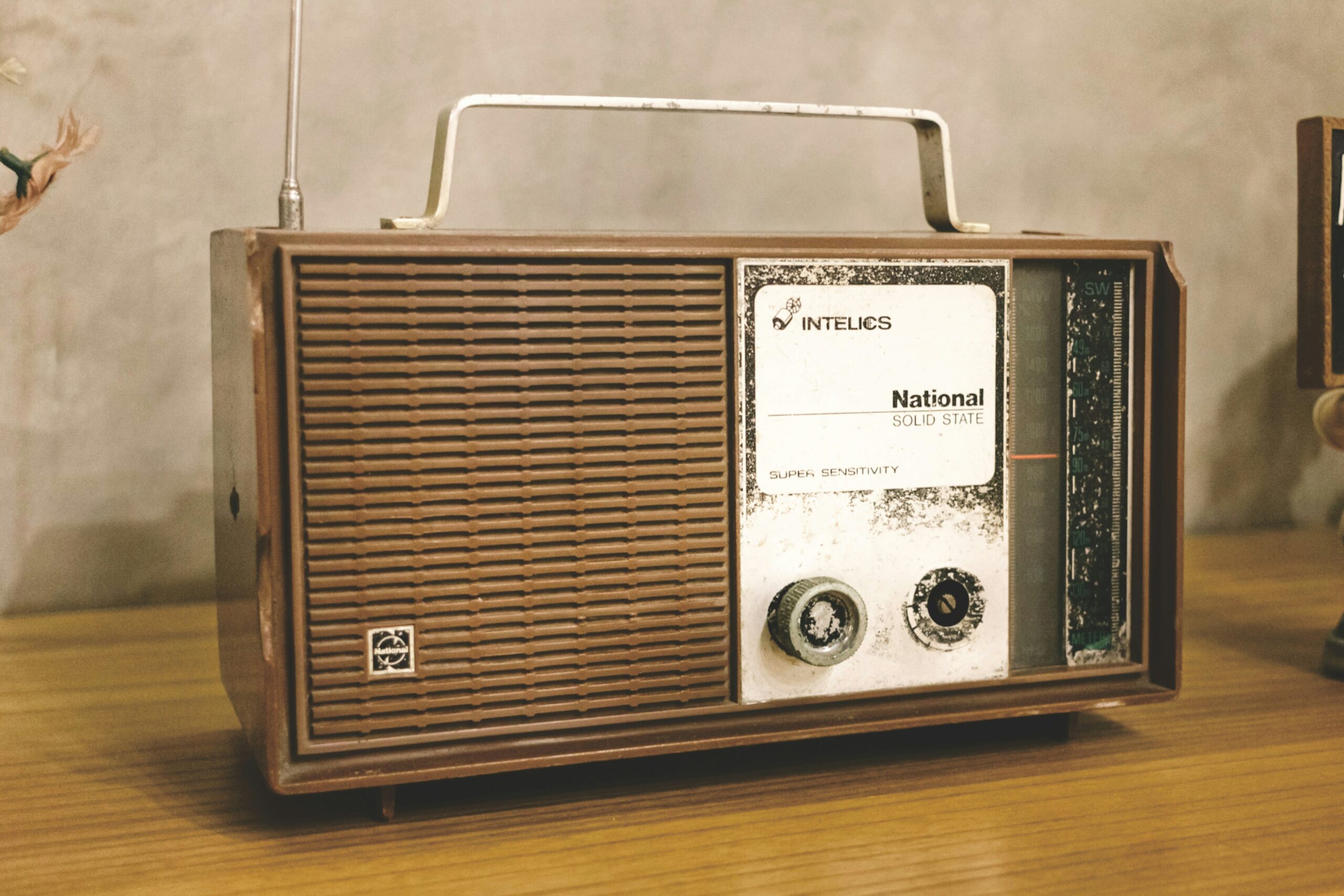
Culture is a living conversation, and by 1930, that conversation had changed. The Great Depression left little space for indulgence, no matter how noble the cause. Public education and libraries had expanded, filling some of the gaps that once made Chautauquas feel urgent. Radios brought news, stories, and music straight into the home. “Talkies”, or films with sound, took over the silver screen, and the rise of mass automobiles made it possible to drive to a nearby town to see them.
Americans needed a civic culture tuned to the realities of the time, and the Chautauqua was imprinted by a different agenda and social order. It became the same kind of relic of the past that it was initially constructed to subvert. And so it faded into the footnotes of the parts of history that the powerful aren’t particularly incentivized to tell us about (we’ll talk suppression of success stories from the unsanctioned self-organizing masses another day).
It wasn’t so much a failure as a sunsetting: an idea that had completed a cycle. Unfortunately, there was no equally ubiquitous civic operating system waiting in the wings to take its place. Civic culture refracted in hundreds of directions, as it’s done throughout much of human history. It spread across rotary clubs, campuses, nonprofits, salons, and social movements; all potent forces, but none with the same connective infrastructure or unifying scale.
Chautauquas worked because they were designed at—and to—a moment in time when the conditions were aligned. Formal systems were in transition, cultural forces were in flux, and there were enough people looking for somewhere to put their energy to keep them alive. They’re a fascinating case study in what happens when people imagine outside of the lines, radically distribute ownership, integrate ways of being, and build flexible systems that both recognize and reshape the status quo.
And most importantly, they worked because someone decided to build them.
A thriving civic culture isn’t promised, yet a healthy democracy depends on it. Without it, our futures will favor the few already in power. As our lives are sculpted by increasingly complex ideas and forces, we need systems for collective sensemaking that go beyond voting, town halls, and marches. We need to get brave and brazen in creating intentional, ground-up systems that provide public opportunities to explore civic issues, make worldshaping ideas legible, and invite the public to co-create what happens next. We need to imagine it, build it, and rebuild it—again and again.
As a society, our goal shouldn’t be to design solutions that are everlasting, but to continuously invest and reinvest in informed, living civic infrastructure built to reflect the realities of the communities and eras that they serve. The form may change, but a culture that uplifts public imagination, knowledge, agency, and belonging in civic spaces should be a fundamental characteristic of our democracy. Today, in many ways, we’re seeing the consequences that can happen when it isn’t.
There is no well-established career path, government department, or sector dedicated to creating or maintaining the kind of civic culture we need.
If we want it, we’re going to have to build it ourselves.