
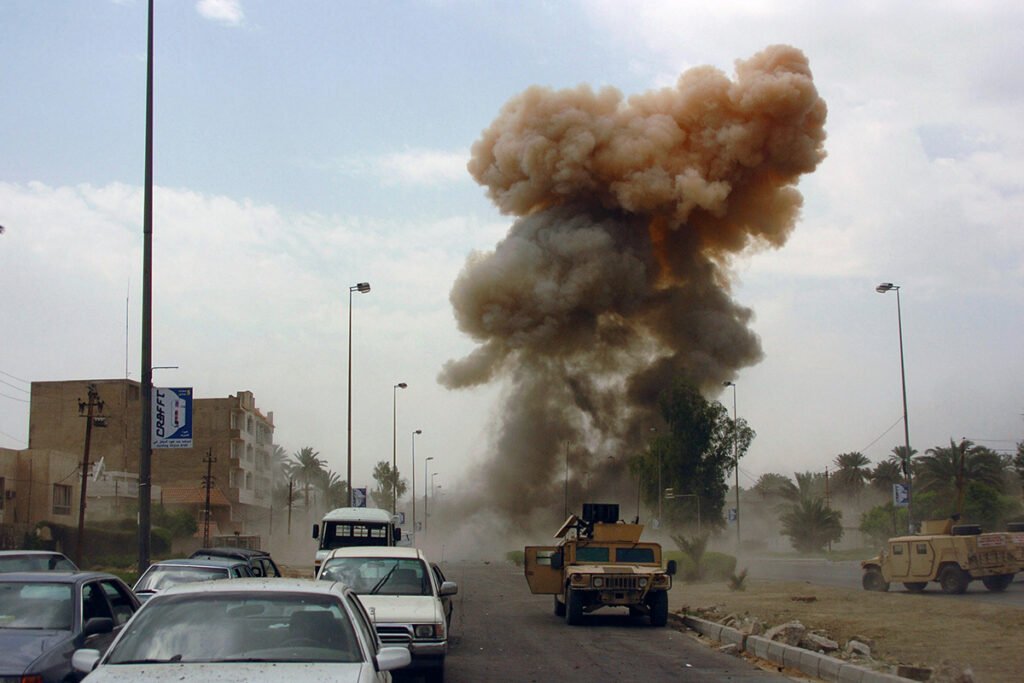
The Trump administration recently launched an expanded global counterterrorism policy that deepens the post-9/11 national security apparatus. The 2026 US Counterterrorism Strategy positions counterterrorism as a central pillar of “America First” governance. The strategy integrates global and domestic counterterrorism into a unified governing framework. Confronting this new counterterrorism state will require social movements to take a long-term approach rooted in building political alignment and scaling movement infrastructure.
What Is the Strategy?
The US Counterterrorism Strategy outlines three primary priorities on a global scale and invites multiple state actors globally to join the US government’s global counterterrorism efforts.
Confronting this new counterterrorism state will require…a long-term approach rooted in building political alignment and scaling movement infrastructure.
First, the administration reframes cartels and transnational gangs as terrorist threats to justify expanded Foreign Terrorist Organization designations, military operations, deportations, and sanctions throughout the US and Latin America.
Second, it deepens the post-9/11 “war on terror” through continued military escalation against Muslims, under the banner of combating “Legacy Islamist Terrorists.” In doing so, the strategy further embeds structural Islamophobia into counterterrorism policy by treating Muslim-majority regions as incubators of terrorism.
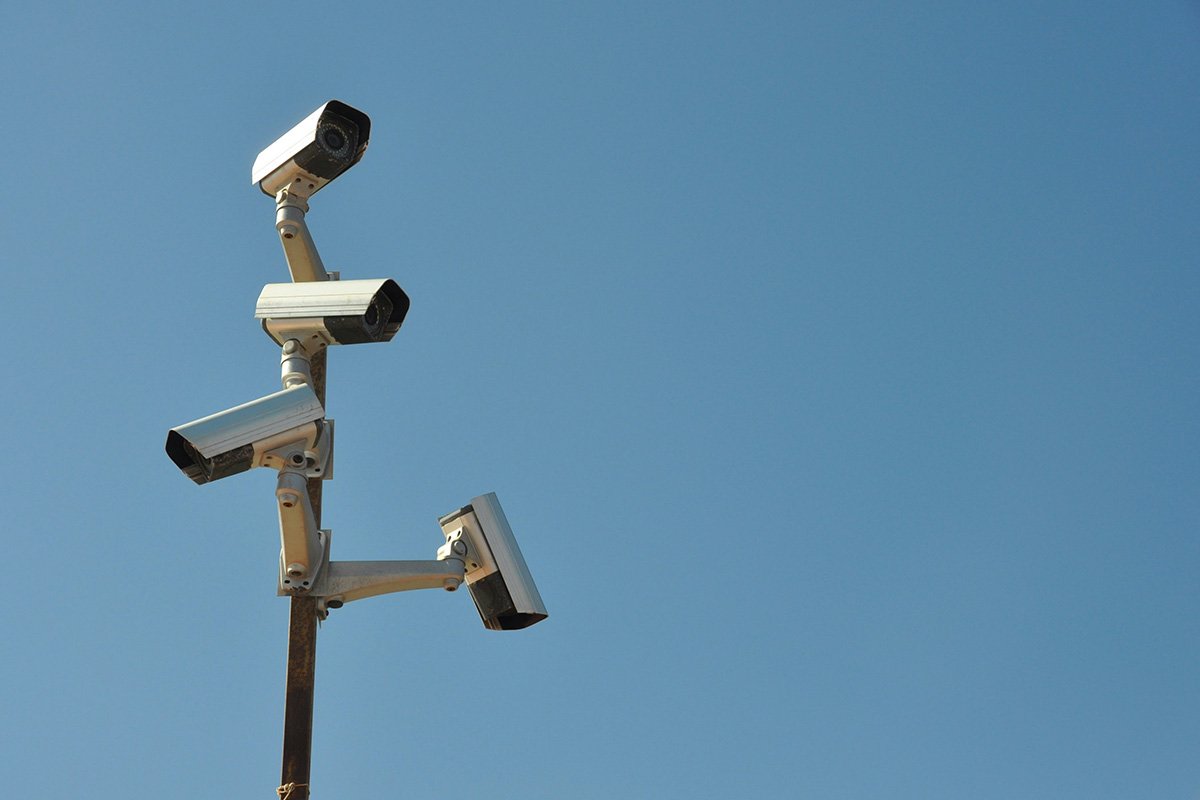
Third, and most alarmingly, the strategy explicitly incorporates domestic political dissent into the broader counterterrorism apparatus of “Violent Left-Wing Extremists.” Anti-fascists, anarchists, “radically pro-transgender,” and broader “far-left” organizing are identified as priority threats. The strategy describes the use of surveillance, financial targeting, mapping, immigration enforcement, and policing tools to monitor, criminalize, and dismantle “cartels, Jihadists, left-wing violent extremists, state actors and state sponsors, or any future terror threat” identified as threats to the “America First” framework.
Taken together, the strategy collapses distinctions between foreign counterterrorism operations and domestic terrorism. The most dangerous aspect of the strategy is its normalization of a dual political structure. In one structure, actors aligned with the administration, including White nationalist movements and Trump allies, are not mentioned and remain protected from the broader intelligence and counterterrorism apparatus. In the other, the full force of the national security state, surveillance, sanctions, immigration enforcement, policing, and financial targeting, is directed toward movements and individuals challenging state repression.
Anti-fascists, anarchists, “radically pro-transgender,” and broader “far-left” organizing are identified as priority threats . . . identified as threats to the “America First” framework.
The implementation of the National Security Presidential Memorandum (NSPM-7) and the recent Prairieland prosecution demonstrate how these frameworks are already operating in practice. In that case, political literature, solidarity actions, the use of Signal to communicate, and ideological beliefs critical of government policy were introduced as evidence of intent under material support statutes to commit an act of political violence. At the same time, states from Texas to Florida are developing terrorism designation schemes targeting Muslim civil rights organizations and broader social movements. These cases present a window into how the government seeks to deploy a political framework in which movements aligned with this administration remain protected from the counterterrorism apparatus, while movements challenging authoritarianism and state violence face expanding surveillance and criminalization.
The Historical Expansion of the National Security State
The 2026 Counterterrorism Strategy explicitly centers counterterrorism as a core pillar of “America First” national security doctrine. This moment cannot be understood outside a broader historical trajectory of the build-up of the modern US national security state that took shape after World War II. Through the National Security Act of 1947, the United States consolidated a permanent national security apparatus that steadily expanded its reach through successive moments of perceived internal and external threat. From the Red Scare and COINTELPRO to the CIA-sponsored coups and the targeting of civil rights leaders leading Black liberation struggles, the architecture of domestic and global repression continued to evolve across decades. In the 1970s, the state further expanded the national security framework through the development of “state-sponsored terrorism” designations, disproportionately targeting Muslim majority countries like Libya and Syria. The post 9/11 “war on terror” marked a critical reorganization of governance that created new institutions such as the Department of Homeland Security and framed terrorism as a permanent global existential threat requiring expanded domestic and global national security powers. Twenty-five years later, we are witnessing another inflection point in the expansion of this national security apparatus.
What Is Next? Strategic Implications for Movements
While this piece is not exhaustive and cannot fully capture the vast history of movement resistance or the lessons developed across generations of struggle, it points toward five key strategic directions that movements and civil society institutions must take seriously moving forward.
- Treat structural Islamophobia as foundational to a global counterterrorism project
One of the clearest throughlines of the 2026 strategy, and of preceding global counterterrorism strategies across administrations, is the continued centrality of Islamophobia. Structural Islamophobia remains central to the logic of the War on Terror because the national security state requires a permanent enemy that legitimizes global military expansion and domestic security governance. Modern counterterrorism policy deploys Islamophobia globally against Muslim-majority countries, labeling them as incubators of terrorism to justify using them as testing grounds for warfare. The domestic foundations of Islamophobia trace back to a longer US history pre-9/11, in which Black Muslims and Black liberation movements were treated as threats requiring securitized, monitored, and repressive state responses. The federal government viewed the Nation of Islam, Malcolm X, and Black Muslim political organizing as dangers because of their Black nationalist, pan-African, and anti-imperialist politics. Through the surveillance of Black Muslim communities, the targeting of Black liberation struggles, and the framing of Black Islam as “foreign-inspired agitation,” anti-Black racism and Islamophobia are deeply intertwined in shaping the foundations of the modern US counterterrorism state.
Given the global scale and diversity of Muslims and the deep history of how Islam has inspired anti-colonial movements, the convergence of structural Islamophobia and a permanent counterterrorism apparatus provides a US administration committed to implementing a global Christian nationalist order, backed by militarism and sanctified violence, with an ideal permanent enemy. As long as the counterterrorism infrastructure continues generating global reach, alongside political and economic power, the incentives sustaining this apparatus will remain intact. Structural Islamophobia and permanent counterterrorism governance are therefore inseparable political projects.
- Recognize anti-Palestinian repression as a testing ground for broader movements
In the past 25 years, the Palestine movement has become the strongest global movement contesting a segment of the global “war on terror” apparatus. While structural Islamophobia and anti-Palestinian racism aren’t the same, the Palestine movement offers one of the clearest sites through which the expansion of the counterterrorism apparatus can be understood. Palestine movements expose how counterterrorism frameworks operate globally through genocide, occupation, surveillance technologies, border regimes, intelligence sharing, and policing models exported across states. Despite censorship campaigns, institutional punishment, state surveillance, and coordinated efforts to criminalize solidarity organizing, the Palestine movement has transformed global discourse around militarism, apartheid, colonial violence, and state repression. Before systems can be dismantled, they must first be delegitimized.
The attacks on Palestine solidarity movements against the ongoing genocide in Gaza across universities, nonprofit institutions, workplaces, and state legislatures should therefore be understood as part of a broader counterterrorism trajectory. What is being tested against Palestine movements today gives us insight into how future transnational movements challenging the global counterterrorism apparatus will be treated.
Structural Islamophobia and permanent counterterrorism governance are therefore inseparable political projects.
3. Invest in long-term movement infrastructure capable of contesting the new counterterrorism state
Sign up for our free newsletters
Subscribe to NPQ's newsletters to have our top stories delivered directly to your inbox.
By signing up, you agree to our privacy policy and terms of use, and to receive messages from NPQ and our partners.
The 2026 Counterterrorism Strategy must be understood alongside the capital structure backing it. The administration is not simply expanding counterterrorism rhetorically, it is scaling the technological, financial, military, and institutional infrastructure necessary to sustain a permanent counterterrorism state over the long term.
The annual military budget has now reached $1.5 trillion (a “42% increase over current funding levels”), alongside a publicly traded global defense sector with a combined market capitalization by private investors approaching $2.4 trillion. The future of global counterterrorism governance is backed by enormous concentrations of political, capital, and multinational corporate power. Currently, the Pentagon is supercharging the development of the future of warfare by incentivizing private industry through venture capital firms to scale the buildup of the future of warfare. These venture capital firms will incentivize and back founders with seed capital that are willing to deploy tech and new tools to build the future of warfare. Private venture capital investment in defense technology reached a staggering $48.5 billion in 2025 alone, and the administration is now preparing to deploy up to $200 billion in federally backed loans into AI, biotechnology, and mineral extraction tied to the Pentagon.
If movements fail to recognize how rapidly this apparatus is scaling beyond formal government structures, they risk underestimating the political, technological, and financial architecture consolidating around permanent counterterrorism governance. The state and corporate sectors are mobilizing capital at an extraordinary scale to build the future of warfare, surveillance, border enforcement, and security governance.
The question for movements and philanthropy is whether there is any comparable willingness to invest at this scale in the infrastructure required to resist it. Where are the billion-dollar commitments to movement ecosystems, community governance, political education, independent media, land acquisition, digital infrastructure, legal defense, leadership development, and institutional power to contest and build alternatives to this apparatus?
This also requires fundamentally expanding how movement infrastructure itself is defined. For too long, institutional development within movements and civil society has been narrowed to audits, compliance systems, nonprofit administration, institutional hardening, and short-term organizational maintenance. But the state is not building infrastructure at the scale of paperwork and compliance, it is building physical, financial, technological, and territorial systems designed to consolidate long-term political power on a global scale. Movements must begin thinking with similar depth and scale.
The question for movements and philanthropy is whether there is any comparable willingness to invest at this scale in the infrastructure required to resist it.
Too often, support for movements remains trapped at the level of rhetoric, branding, and episodic grantmaking while the architecture of repression is financed, engineered, and scaled through massive concentrations of state and private capital. Movements are being asked to confront industrialized systems of surveillance and militarization with fragmented funding models fundamentally incapable of matching the scale of the threat. The challenge ahead is tremendous and necessitates building parallel ecosystems of political, economic, and community power capable of surviving, contesting, and ultimately replacing the infrastructure underpinning permanent counterterrorism governance.
That is the definition of building movement infrastructure that helps steward and build community power.
- Move beyond reformist counterterrorism frameworks toward movement-led political strategy
The limits of reformist approaches in the policy, advocacy, and the legal arenas are now undeniable. For years, institutions argued that the problem was how counterterrorism powers were applied rather than the governing infrastructure itself. The counterterrorism apparatus was designed to justify extraordinary forms of state violence under the banner of security. Efforts to create more “inclusive” or “civil rights compliant” counterterrorism systems largely preserved and legitimized the architecture of the “war on terror.”
This reality requires advocacy, legal, and policy ecosystems to seriously assess their own failed strategies. Too often, organizations diluted grassroots demands in exchange for proximity to power. For grassroots movements, the muscle for policy advocacy and legislative work must be invested in one that allows for the translation of abolitionist, divest, contest, and reinvest frameworks into actual governance policy platforms. A permanent counterterrorism apparatus cannot coexist with meaningful democratic rights and freedoms.
Reform cannot meet the scale of the current political moment or provide a roadmap for the future.
- Build political and material alignment across movements targeted by the counterterrorism apparatus
Movements cannot build an effective response to the counterterrorism apparatus, while sidelining the communities most directly targeted by it. Aligning with Black, Arab, Muslim, Middle Eastern, and South Asian (BAMEMSA) ecosystems is essential, particularly in building new institutions capable of organizing communities and developing long-term power. While the scale of the contemporary counterterrorism apparatus has been built overwhelmingly on the backs of BAMEMSA communities, it is increasingly being expanded outward to target additional communities.
Latine communities are increasingly becoming targets of U.S. counterterrorism policy through the growing use of Foreign Terrorist Organization (FTO) designations against Latin American gangs and cartels. These designations provide the legal basis for military strikes. The same apparatus that justified drone wars against Muslim communities, where boys and men over the age of 16 were routinely categorized as enemy combatants regardless of their actual involvement is now being repurposed against new populations. In December, the relatives of 42-year-old Alejandro Carranza Medina filed a complaint before the Inter-American Commission on Human Rights noting that Medina had been fishing, not engaged in drug trafficking, when his boat was targeted during a U.S. counternarcotics drone operation. The death toll associated with these operations in the Caribbean has now reached at least 199 people. Domestically, a recent Wired investigation found that the government has begun advancing a new category of “anti-tech extremism,” framing resistance to AI and data centers through the lens of national security.
Movements cannot build an effective response to the counterterrorism apparatus, while sidelining the communities most directly targeted by it.
This moment therefore requires material and political alignment against this apparatus across movements, sectors, and communities. This work cannot be treated as peripheral to democracy advocacy or as an issue confined primarily to Muslim communities and foreign policy. Political alignment requires different sectors and movements to recognize their shared stake in dismantling this apparatus and building alternative systems rooted in community power and democratic control. Focusing on building and freeing our economies, systems of governance, and social infrastructure from counterterrorism governance can unlock something far more expansive and liberatory for all communities. That is a multigenerational fight that also requires a generational investment capable of unlocking futures free from state terror.