This summer, as the United States marked 250 years since the Declaration of Independence was written, I joined movement leaders from the South and Midwest in Memphis as we wrestled with a question far more consequential than how we commemorate the past: What kind of democracy are we building now?
For generations, multiracial feminist organizers have understood something our public discourse has too often missed: Bodily autonomy and democracy rise and fall together.
It seems most progressives can agree that democracy must be multiracial, but I rarely see people from outside my own movement demand that democracy also be feminist. The question of gender equality is essential to democracy, and we should not ignore it—particularly at a time when authoritarianism uses gender as a lever of power. Feminist is not a bad word.
I saw that guiding question about the kind of democracy we are building take physical form during my time in Memphis. At My Sistah’s House, I saw permanent housing and community being built for Black trans folks. At CHOICES: Center for Reproductive Health, I saw people accessing reproductive and gender-affirming healthcare while communities organize around the freedom to make decisions about their bodies and future.
These may not be the institutions that first come to mind when we talk about democracy—but they should be. For generations, multiracial feminist organizers have understood something our public discourse has too often missed: Bodily autonomy and democracy rise and fall together. A democracy cannot flourish if people are denied the power to make decisions about their own bodies, families, and futures. The struggle over bodily autonomy has never been separate from the struggle over democracy; it has always been one of its defining questions.
That question has shadowed US democracy since its founding. The nation was built on expansive promises of freedom and self-government, even as those promises were withheld from many of the people living within its borders and violently imposed upon Indigenous nations that predate the country itself. U.S. democracy is often narrated as a steady march toward inclusion and liberty. Yet history tells a messier story. Rights expanded unevenly, often arriving first for those already closest to power while remaining out of reach for others. For many communities, the circle expanded unevenly, incompletely, or not at all.
The women leading these movements did not organize around race one day, gender the next, and voting rights the day after. They understood these struggles were inseparable because that is how they experienced them.
When White women secured the right to vote in 1920, many Black women in the South still faced violence, intimidation, poll taxes, literacy tests, and Jim Crow laws designed to keep them from the ballot box. Indigenous women continued to navigate barriers tied to citizenship and sovereignty. Asian immigrants remained excluded from citizenship altogether under federal law. Puerto Ricans, despite being US citizens, faced their own barriers to political participation and self-determination—and they still lack full voting representation in Congress to this day.
Every expansion of US democracy has been won through struggle. From freedom movements led by formerly enslaved people to voting rights campaigns organized by Black women, inclusion has never been affirmatively granted by those in power. It has been demanded.
And those movements were never fighting only for access to institutions. They were fighting for the conditions that make freedom real. When Fannie Lou Hamer testified before the nation after being beaten for attempting to cast her vote, she was demanding far more than ballot access. She exposed the fiction that democracy could coexist with racial terror. She understood that political participation meant little if people could be terrorized for attempting to exercise it. The women leading these movements did not organize around race one day, gender the next, and voting rights the day after. They understood these struggles were inseparable because that is how they experienced them.
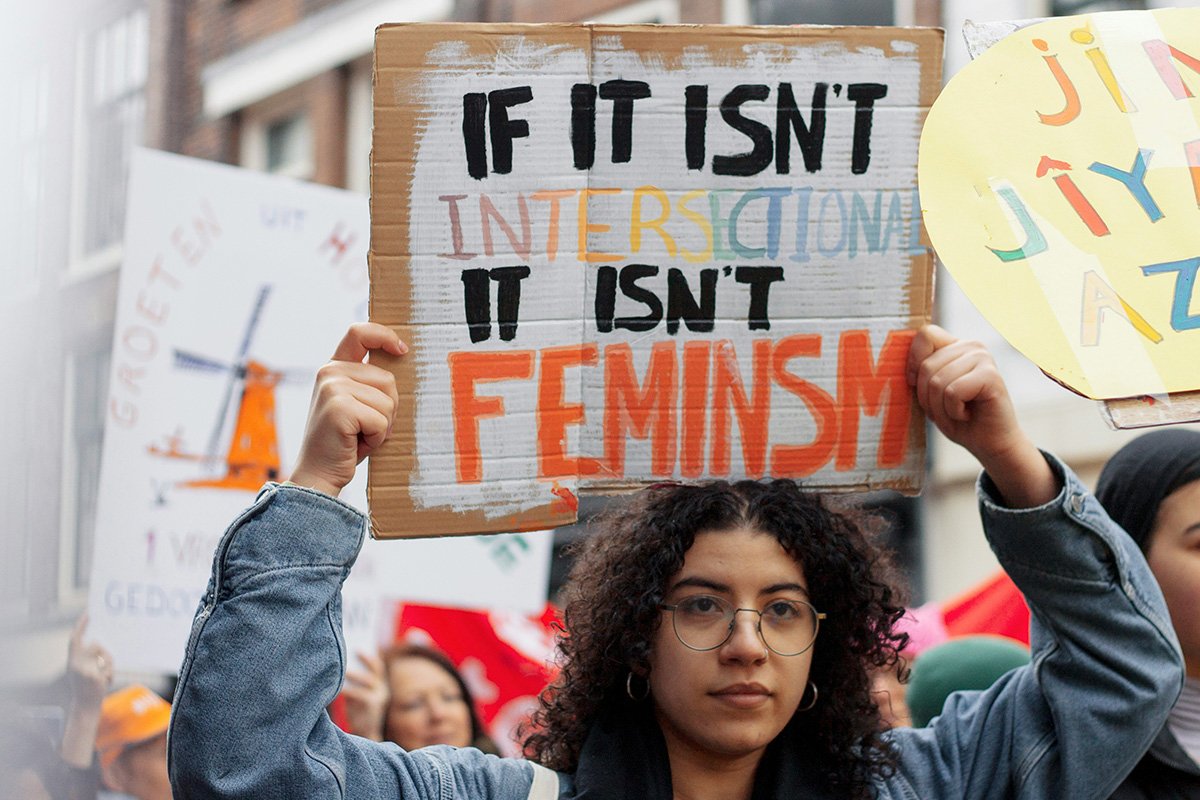
Long before the language of intersectionality entered public discourse, Black feminists were articulating a politics that refused to separate these systems of power. The 1977 Combahee River Collective Statement argued that racism, sexism, class oppression, and homophobia reinforced one another, and that liberation required confronting them together. Their analysis emerged not from academic theory, but from organizing alongside communities living those realities every day.
Women of color built movements grounded in that reality, understanding a simple truth: Freedom is indivisible. If some communities can be denied safety, dignity, self-determination, or full participation in public life, democracy remains incomplete. Multiracial feminism carries that tradition forward. Rather than asking only who should be included in democracy, it asks a more fundamental question: What kind of democracy are we building if people cannot safely exercise the freedoms they are promised?
Sign up for our free newsletters
Subscribe to NPQ's newsletters to have our top stories delivered directly to your inbox.
By signing up, you agree to our privacy policy and terms of use, and to receive messages from NPQ and our partners.
Across the country, abortion, gender-affirming care, immigration, public education, and voting rights are often treated as separate political fights. They are not identical. But each raises fundamental and intertwined questions about power: Whose rights are protected? Who gets to make decisions about their own life? Who gets a meaningful say in the institutions that govern them? When people lose power over their own bodies, that loss of autonomy does not remain neatly contained in a healthcare portfolio or a courtroom. It shapes families, economic security, safety, and ability to participate in public life.
If some communities can be denied safety, dignity, self-determination, or full participation in public life, democracy remains incomplete.
Black feminists have been telling us this for generations. Building on earlier Black feminist organizing, including the work of the Combahee River Collective, Black women developed the reproductive justice framework in the 1990s. They challenged the idea that freedom could be reduced to individual choice.
Reproductive justice reframed freedom—not simply as the absence of government interference, but as the presence of the conditions people need to make meaningful decisions about their lives and families. It asked not only whether someone had a right on paper, but whether they had the healthcare, housing, income, safety, and support necessary to exercise it. In doing so, reproductive justice posed a profoundly democratic question: What do people need to exercise meaningful power over their own lives?
In Memphis, I kept thinking about this history, and its legacy in the present. My Sistah’s House is creating permanent housing and community for Black trans women who have too often been excluded from public systems and public life. On its surface, that may look like housing work. But housing creates safety and stability. It creates the possibility of putting down roots, building relationships, organizing, and shaping what happens in your community.
CHOICES approaches the question from another direction. As abortion access and gender-affirming care have become political battlegrounds, the organization has continued providing healthcare while organizing alongside communities around the freedom to make deeply personal decisions about their bodies and futures.
Their work illustrates what multiracial feminists have argued for generations: Democracy is not merely a political system. It is also about how power is distributed in everyday life. That does not mean housing is the same as voting, or healthcare is the same as political participation. It means democracy depends on more than formal rights.
Throughout U.S. history, communities excluded from power have often become the architects of a more inclusive democracy. Black women built mutual aid societies when governments would not. Indigenous women preserved traditions of governance and collective responsibility through generations of displacement, removal, and forced assimilation. Long before many in the United States imagined democracy as inclusive, Indigenous women were sustaining systems rooted in reciprocity, community accountability, and collective decision-making. Immigrant women created networks that sustained families and communities when exclusion left them with few other options.
These were not acts of charity. They were acts of democratic imagination. As we grapple with this history, the country’s 250th anniversary serve as a useful frame—not simply as an opportunity to celebrate or critique the country’s past, but as an invitation to decide what comes next.
Some of this country’s most important democratic innovations did not come from courts, legislatures, or political parties. They came from communities that understood democracy’s promises clearly because they had so often been denied them. They understood that freedom is not simply something guaranteed on paper. It has to be possible to exercise in everyday life.
That may be the most important lesson multiracial feminism offers our democracy. It asks us to measure democracy not only by who is formally included, but by who has meaningful power over their body, family, community, and future.
Two hundred and fifty years in, the question is not simply who belongs in our democracy. It is what we are willing to build so that belonging comes with the power to be free. The fireworks are over. The work is not.