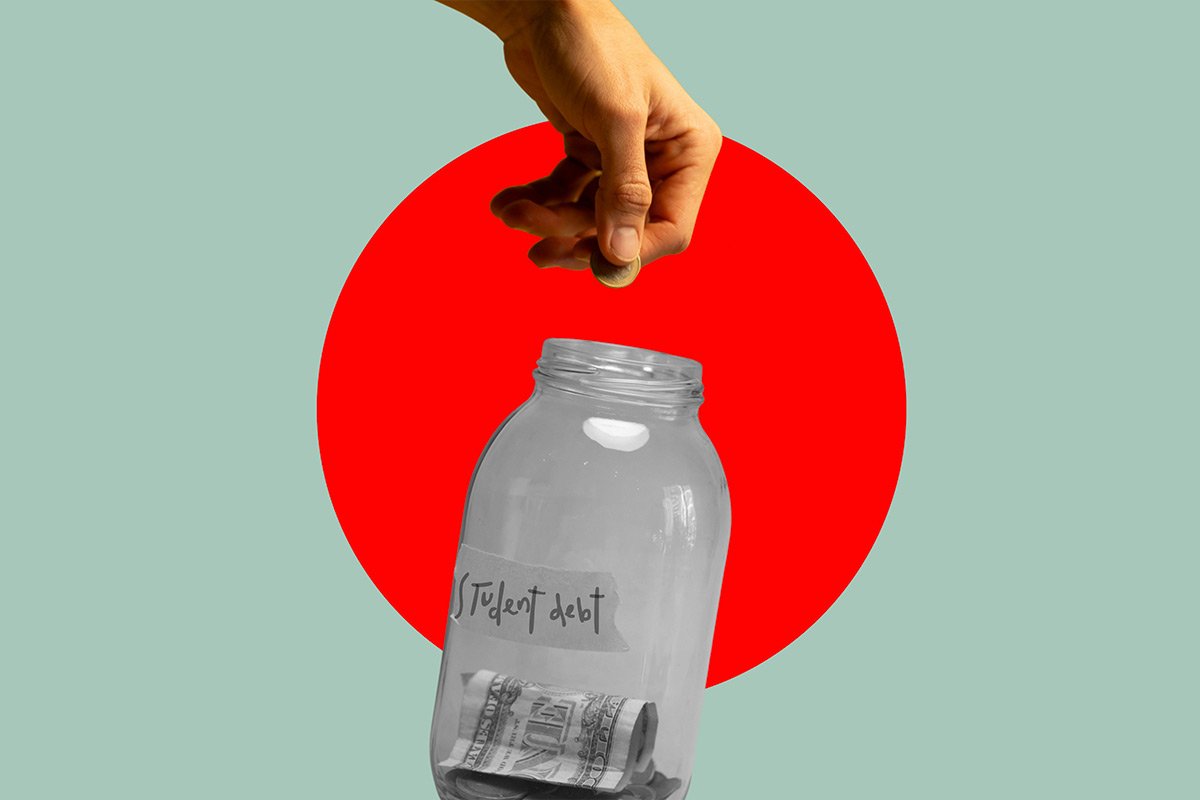
The end of the student loan payment pause, implemented during the first part of the COVID-19 pandemic, has triggered a historic surge in defaults across the United States. Millions of borrowers are once again facing monthly bills that, in many cases, exceed the cost of a mortgage or a car payment.
For more than three years, the suspension of payments and interest provided borrowers with financial relief. However, the resumption of student loan obligations has coincided with a system that is plagued by administrative errors, incorrect balances, and widespread confusion. Advocacy groups such as the Debt Collective report that borrowers are receiving inaccurate delinquency notices, inflated payment demands, and face hardships accessing affordable repayment plans. Even if borrowers could afford to make payments, it’s increasingly difficult to do so.
Harsher Repayment Terms
Today, repayment terms have become harsher, with borrowers expected to pay for 20 or even 30 years.
Braxton Brewington, community organizer and spokesperson for the Debt Collective, told NPQ, “We are asking Congress to amplify the voices of student debtors and to press the Trump administration to pause student loans once again.”
In 2020, the Trump administration paused student loans amid the onset of COVID, recognizing the severity of the financial crisis as millions of people lost their jobs and could not make payments. Payments and interest were suspended, and each month still counted toward borrowers’ credit, allowing them to move forward with their lives despite widespread administrative errors, systemic failures, and ongoing litigation.
“Now, with balances still incorrect, the Debt Collective is urging Congress to pressure the Trump administration to reinstate the pause,” Brewington said.
The present situation of student loans marks a deterioration. Today, repayment terms have become harsher, with borrowers expected to pay for 20 or even 30 years, while the Supreme Court blocked broad student loan forgiveness programs.
“Before Congress even takes action, the Trump administration has the power to make things better for struggling borrowers,” Mike Pierce, Executive Director and co-founder of Protect Borrowers (formerly the Student Borrower Protection Center), said to NPQ in an interview.
Pierce explained that the administration needs to recognize that this wave of student loan defaults is not happening because people refuse to pay or choose not to meet their obligations. “It’s happening because they simply can’t afford to—and because the system itself prevents them from keeping up with their payments,” he said, citing the backlogs and system errors.
Forgiveness Programs
The promise of mass student debt cancellation has been stalled by the Supreme Court, which in the past struck down attempts at sweeping relief by the Biden administration. Still, two federal programs remain in place as the main avenues for partial or total forgiveness.
The first is Public Service Loan Forgiveness (PSLF), which cancels the remaining balance of Direct Loans after 120 qualifying monthly payments—about ten years—provided the borrower works full-time in the public sector or at eligible nonprofit organizations. This program has benefited teachers, nurses, social workers, government employees, and military personnel.
“In the case of the Public Service Loan Forgiveness Program, the joint work of several organizations to educate lawmakers about the implications of this proposal when it was still a bill—and about what its approval in Congress would mean—has proven to be an effective method, not only in this matter but across different issues,” Verna Williams, CEO of Equal Justice Works, said in an interview with NPQ.
The so-called “One Big Beautiful Bill,” passed under Trump in 2025, profoundly reshaped the federal student loan system and has become a major financial burden for millions of households.
Thanks to the coordinated action of these organizations, attempts to restrict the PSLF program were suc cessfully blocked a few years ago. More recently, during the Biden administration, the program was made more accessible, since the Department of Education previously had rules that made it very difficult for eligible individuals to benefit.
“Today we continue working to ensure that the program remains available, because we know it has a real impact on the lives of those who need it,” Williams added.
The second program for partial or full loan forgiveness is Income-Driven Repayment (IDR), which allows cancellation after 20 or 25 years of income-adjusted payments. Recent reforms have expanded its reach.
Nearly 40 million Americans now face significant increases in their monthly student loan bills.
The Largest Expense Hike
The so-called “One Big Beautiful Bill,” passed under Trump in 2025, profoundly reshaped the federal student loan system and has become a major financial burden for millions of households. The law imposed strict borrowing limits for parents, graduate students, and professional programs, with a lifetime loan cap of $257,500 across undergraduate and graduate studies.
At the same time, the law reduced repayment options by eliminating programs such as PAYE and ICR, leaving new borrowers with fewer, more rigid choices. The SAVE plan, designed to provide more affordable payments, was dismantled after a Supreme Court ruling in 2026, forcing about seven million borrowers to shift to less favorable programs.
As a result, millions of Americans now face significant increases in their monthly student loan bills, often representing the largest expense hike of the year, surpassing even housing costs.
Sign up for our free newsletters
Subscribe to NPQ's newsletters to have our top stories delivered directly to your inbox.
By signing up, you agree to our privacy policy and terms of use, and to receive messages from NPQ and our partners.
“When you look at bills like the Big Beautiful Bill and others, what we’ve seen is bailouts for corporations and investments in billionaires, but no real effort to provide relief for everyday Americans. And it’s ordinary people—whether they identify as progressive or conservative—who are being crushed by predatory student loans,” Mary-Pat Hector, CEO of Rise, said to NPQ.
Hector explained that what many Americans are experiencing is the realization that they have already repaid the loans they borrowed from the US government, yet their balances have doubled or even tripled because of rising interest costs.
One of the Country’s Most Pressing Challenges
In this scenario, forgiveness programs remain a crucial lifeline for millions of borrowers, though their scope is constrained by judicial decisions and regulatory reforms. The tension between the urgent need for financial relief and legal restrictions keeps the debate alive over the future of higher education and student debt in the United States.
The resumption of student payments limits vital decisions such as starting a family, launching a business, or even accessing basic healthcare. During the pause, many Americans were able to save, leave abusive relationships, or invest in personal projects. Now, those possibilities are once again limited.
Grassroots movements are working to keep the issue on the political agenda. Their strategy is to link student debt to the broader debate on “affordability,” arguing that economic justice cannot be achieved without addressing a problem that affects more than 40 million people, including older generations who rely on Social Security.
As Williams explained: “One way we show how important Public Service Loan Forgiveness is by sharing the stories of those impacted. That’s why the coalition’s website highlights teachers, public interest attorneys, nurse practitioners, and others who serve our communities—so people can truly see what it means.”
The discussion has also revived a long-term proposal of free higher education as a public good, calling back to how the US once had systems of tuition-free or highly affordable colleges.
“It wasn’t until women, Black Americans…and Latinos began attending college that higher education suddenly became a gap,” Brewington said. He explained that, after the civil rights movement, once historically marginalized groups gained access, structural barriers were reinforced, making it harder for them to advance.
Nonprofit organizations emphasize the possibility of returning to a system that once worked, one that provided broader access—and extending it to everyone. This vision is not radical but familiar, since other nations—even the United States in the past—had systems that ensured educational access, while the current model simply does not.
For now, mass defaults on student loans stand as one of the country’s most pressing economic and social challenges.
This sense of urgency is echoed by Pierce, who argued that “The Trump administration’s failure to make life affordable has sparked a backlash that opens the door to a real federal commitment to things Americans have been denied for decades—like free health care, free college, and free childcare.”
Hector reinforced the call for bold action, insisting that “We have to get out of our minds that college will never be free in America.”