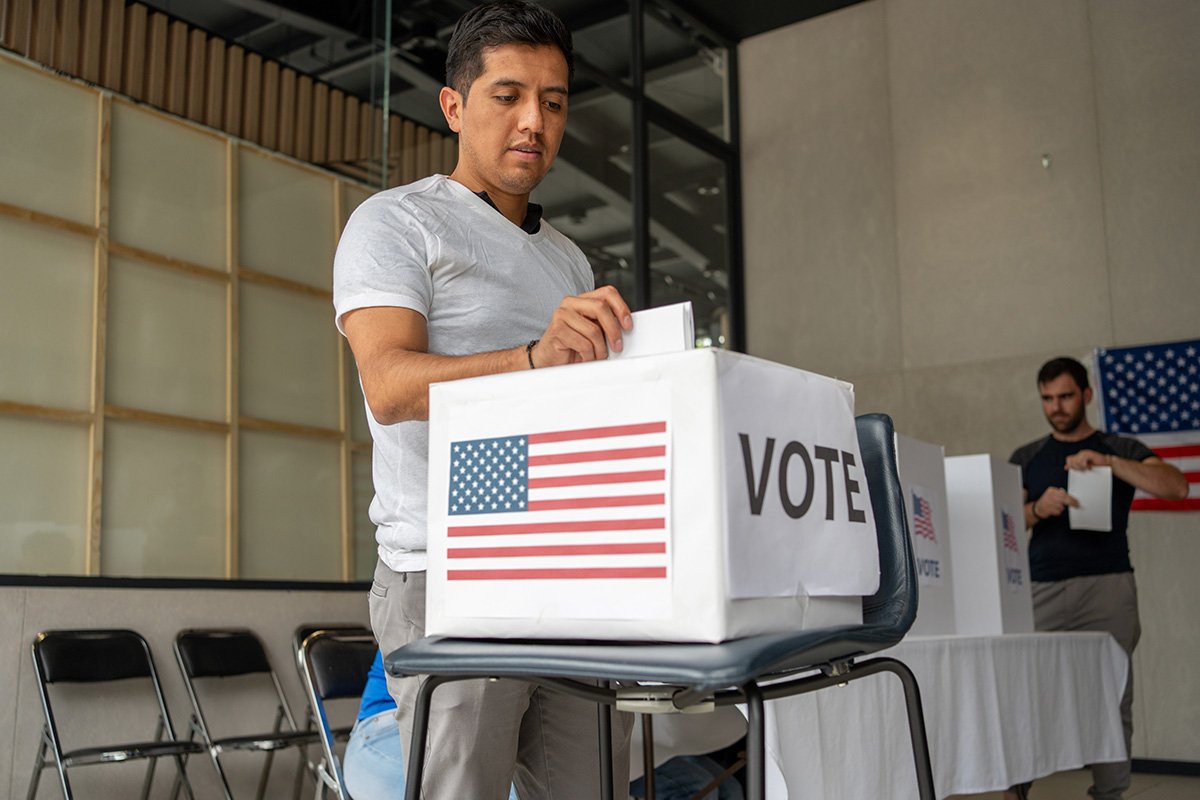
The Supreme Court’s recent decision to block a new Postal Service rule affecting mail-in ballots is about far more than election administration. At its core, the dispute reflects a broader struggle over who controls election rules in the United States, and how much authority the federal government should have over a process that has traditionally been administered by the states
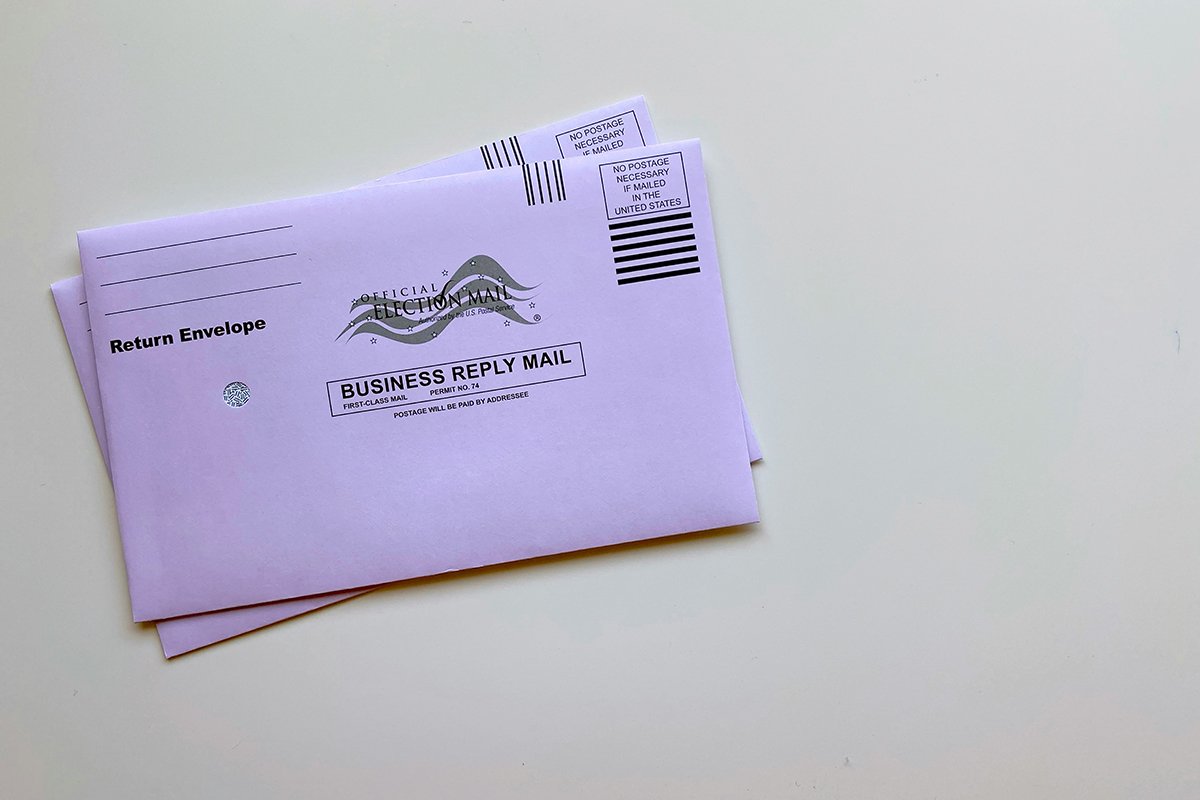
The most controversial aspect of Trump’s executive order did not ban mail voting outright, but it would have significantly expanded the federal government’s role in the administration of mail ballots. Under the order, states would have been required to provide the US Postal Service (USPS) with detailed information about voters eligible to receive mail-in or absentee ballots. USPS would then have implemented a new verification and tracking system requiring ballots to be mailed in specially designated “Official Election Mail” envelopes equipped with unique barcodes.
Most significantly, the order envisioned that the USPS would deliver ballots only to voters included on state-approved mail voting lists. States that failed to comply with the new requirements risked having their ballots delayed or outright rejected by the Postal Service.
The Trump administration argued that these measures were necessary to strengthen election integrity, improve ballot tracking, and prevent ineligible individuals from receiving mail ballots. Democracy advocates, however, contended that the proposal would have transformed the USPS from a neutral mail carrier into a federal gatekeeper of mail voting.
The Prospect of Widespread Disruption
“The facts speak for themselves. By imposing these kinds of restrictions, you are threatening the disenfranchisement of millions of people and injecting chaos and uncertainty into the democratic process. When you do that, you threaten democracy,” Karen Dolan, director of the Criminalization of Race and Poverty Project at the Institute for Policy Studies, told NPQ.
She argued that the Supreme Court was right to block the rule from taking effect before the midterm elections because there was not enough time to implement it without creating disruption. However, she noted that the Court stopped short of declaring the measure illegal or unconstitutional.
In some cases, a single barcode error could have resulted in entire batches of ballots being rejected.
Instead, the Court focused largely on the timing and practical consequences of implementing the rule before an election. This distinction has generated concern among voting-rights advocates because it leaves open the possibility that similar measures could be pursued in the future through new litigation or legislative action.
“In fact, Justice Brett Kavanaugh, in his concurring opinion, suggested that the executive branch might have the authority to take such action, leaving the door open to that possibility,” Dolan said.
The main argument before the Supreme Court was that the new requirements would fundamentally alter the way states administer absentee voting, and could disenfranchise large numbers of eligible voters. Those concerns were reinforced by a whistleblower report that raised alarms about the Postal Service’s implementation plan. According to the report, technical flaws in a yet-to-be-operational ballot tracking portal could have prevented millions of mail ballots from being sent. In some cases, a single barcode error could have resulted in entire batches of ballots being rejected.
Court filings also highlighted the practical consequences for election administration. Several states, plaintiffs argued, lacked the infrastructure and resources needed to quickly abandon or scale back mail voting and return to predominantly in-person voting, raising the prospect of widespread disruption ahead of the elections.
Instead of functioning solely as a mail carrier, the USPS would have been required to verify certain voter eligibility requirements based on information provided by states before processing or delivering some election-related mail. Advocates contend that these measures are rooted in unsubstantiated claims of voter fraud and risk undermining public confidence in democracy while making voting more difficult for citizens.
“This administration is afraid of accountability,” said Maryam Jazini Dorcheh, vice president of litigation at Common Cause, in conversation with NPQ. She added that mail ballots are safe and secure, and have been used by the president himself, so that attempts to undermine confidence in the process are intended to create confusion ahead of the upcoming elections.
In her view, that uncertainty could later be used to cast doubt on the results and discourage voters from easily participating in the selection of their elected officials.
The Battle Over Mail Ballots
The administration’s proposal was consistent with a longstanding narrative promoted by the president and his allies that US elections are vulnerable to fraud, particularly through mail voting. However, election experts, civil society organizations, and numerous studies have repeatedly concluded that voter fraud in the United States is exceedingly rare and not significant enough to affect election outcomes.
These measures are rooted in unsubstantiated claims of voter fraud and risk undermining public confidence in democracy.
“It comes as no surprise that courts have blocked [the proposal] from going into effect. The administration is trying to push the envelope to see just how far it can go and to set election rules,” Anna Baldwin, director of voting rights litigation at Campaign Legal Center, said to NPQ. Baldwin explained that even when the administration loses, it’s a win for them because it causes confusion and chaos, which furthers a goal of undermining confidence in elections and allowing misinformation to spread.
Sign up for our free newsletters
Subscribe to NPQ's newsletters to have our top stories delivered directly to your inbox.
By signing up, you agree to our privacy policy and terms of use, and to receive messages from NPQ and our partners.
“What is more troubling is the president’s effort to upend election rules and spread misinformation about voter fraud, which is, in reality, an exceedingly rare phenomenon,” she added.
Baldwin stressed that US voters will continue to have free and fair elections and encouraged voters not to be distracted by the surrounding political noise. While acknowledging that core democratic institutions and the rule of law are under pressure and have suffered real damage, she noted that the challenged rule was unlawful and should never have been proposed. The Supreme Court ultimately affirmed what had long been understood: the Postal Service’s role is to deliver mail, not to serve as a gatekeeper in the electoral process.
In addition, multiple federal courts blocked the policy before it could take effect. When the case reached the Supreme Court, the justices declined to allow the rule to be implemented before the upcoming midterm elections. The Court concluded that introducing such substantial changes so close to an election would risk confusion and disruption for voters and election officials.
For critics of the administration, the proposal represented another attempt to expand federal influence over election administration, an area that the Constitution largely places under the authority of states and Congress. They argue that allowing a federal agency such as the Postal Service to play a gatekeeping role in the delivery of ballots would fundamentally alter the balance of power established by the Constitution.
A Warning for Democracy
The broader significance of the dispute extends beyond mail voting. Since the 2020 election, Trump and his allies have supported a series of measures aimed at election procedures. These include proposals requiring stricter proof-of-citizenship documentation for voter registration, efforts to collect and analyze large amounts of voter data through federal databases, and broader initiatives designed to increase scrutiny of voter eligibility. Supporters describe these efforts as necessary safeguards; opponents argue that they disproportionately burden legitimate voters while addressing problems that have not been shown to exist on any meaningful scale.
“Nonprofits play a significant role in civil society, and even more so now, increasingly, as some of the institutions that were meant to ensure free and fair access to the ballot are being toppled,” according to Jazini Dorcheh. She explained that the Civil Rights Division of the Department of Justice had traditionally served as the primary enforcer against discrimination and last-minute provisions that could disenfranchise voters. Now, however, it is no longer fulfilling that role; instead, in her view, it is aiding those seeking to create mass surveillance of voters.
All the organizations interviewed agreed that this pattern has emerged across the country, leaving nonprofits to fill a gap once addressed by public institutions.
Voting-rights organizations also maintain that these measures contribute to confusion and distrust, arguing that repeated public claims questioning election integrity can weaken confidence in democratic institutions even when those claims lack supporting evidence.
As a result, many nonprofit organizations have expanded voter education campaigns, legal advocacy efforts, and litigation strategies designed to protect voting access and reassure voters that elections remain secure.
Allowing a federal agency such as the Postal Service to play a gatekeeping role in the delivery of ballots would fundamentally alter the balance of power established by the Constitution.
For many civil society groups, the dispute is about much more than mail ballots, but part of a wider debate over voting rights, democratic participation, and public trust in elections. A healthy democracy relies on making it easier, not harder, for eligible citizens to vote.
“Unfortunately, when the president uses the power of the bully pulpit to express a lack of confidence in our election infrastructure, it inevitably affects public confidence in our elections,” said Marcia Johnson, chief of activation and justice at the League of Women Voters of the United States (LWV) speaking to NPQ.
She explained that, to counter misinformation, her organization helps people register to vote, find their polling place, review sample ballots, and compare candidates’ positions on key issues. The goal, she added, is to provide voters with reliable information so they can participate in the electoral process with confidence and trust that their ballots will be counted.
“What we’re seeing now isn’t isolated. It’s been a rhetoric that has been happening for quite a while. And that’s why it’s really important for organizations to also be as vigilant in pushing back against that,” she said.
Underlying this dispute is a broader debate over the limits of federal authority in the administration of elections. What began as a controversy over mail ballots has evolved into a larger discussion about the balance of power between states and the federal government, and about the safeguards needed to protect democratic institutions. For many civil society organizations, this debate has become a central issue in the effort to preserve US democracy.
As the country moves toward the 2028 presidential election, questions about voting rights, election administration, and democratic participation are likely to gain even greater prominence, making this one of the defining political and constitutional debates of the coming years. And it is within this context that the nonprofit sector’s role is taking on growing importance.