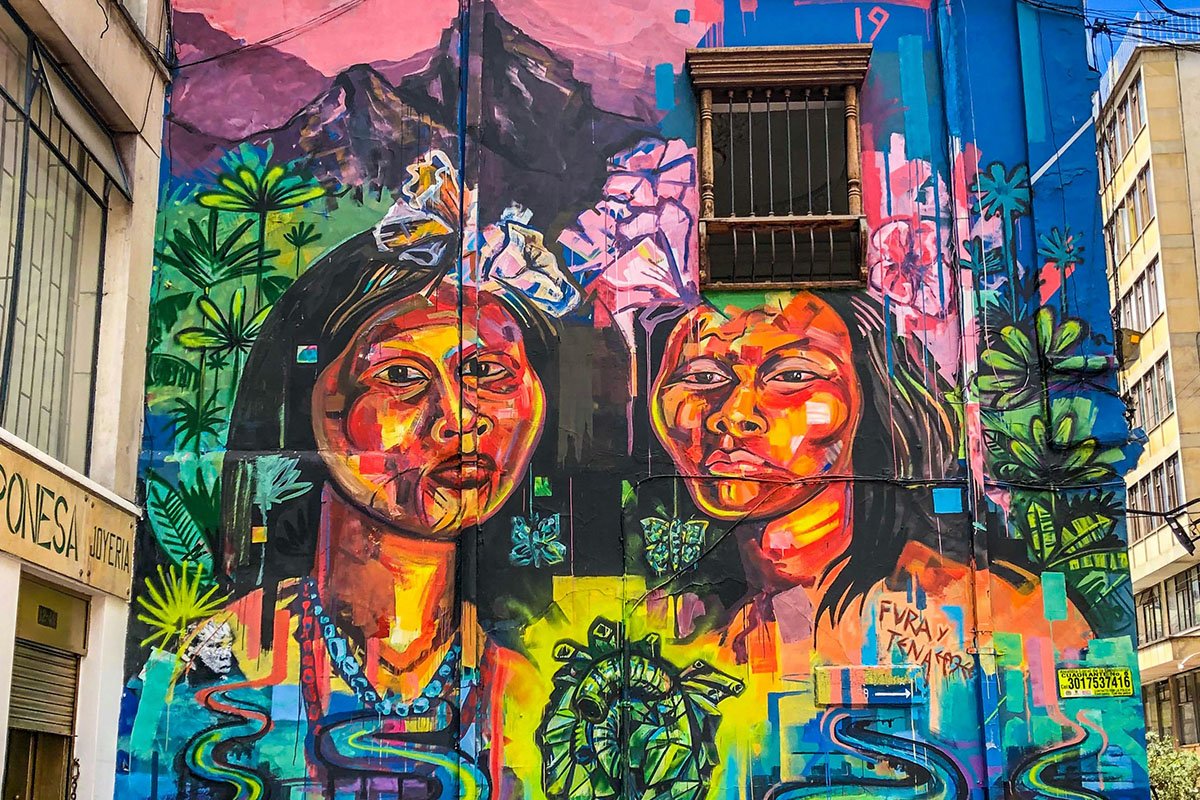

This three-part series, “Searching Mothers: The Untold Story of Latin American Resistance,” focuses on Latin American maternal activism and highlights its transformative potential at both the social and individual levels, even in repressive or authoritarian environments. The first part is set in Colombia during the early 2000s and uses this context to analyze how motherhood—an identity rooted in the domestic and private sphere—transforms into an identification with a collective forged around public political action.
This second part draws a parallel between the case of the Mothers of Plaza de Mayo and the Mothers of Soacha, exploring common issues in their experiences of activism across different contexts: the phenomenon of denialism, stigmatization, and social mobilization through symbolic, bodily, and unconventional practices.
The third and final part of this installment aims primarily to challenge the reductionist and colonizing narrative of Colombia held at the international level. We highlight how collective organization—even when originating from the margins—is capable of destabilizing the dominant discourse.
View Spanish Translation Below / Leer en Español Abajo
Activism against forced disappearance in Latin America shares profound points of convergence across the continent. These expressions of resistance uphold a central argument: History can be cyclical and repeats itself through structures of violence that differ only in a few variables.
Any study of Latin American movements against forced disappearance must draw on the emblematic case of the Mothers of Plaza de Mayo, who marked a turning point in Latin American history. In 1977, during a period of state-sponsored military dictatorship in Argentina, a group of 14 mothers decided to challenge the autocratic regime by invoking the very traditional expectations that the state had imposed on their bodies. Their strategy was as simple as it was subversive: to demand the return of their detained-disappeared children so the mothers could, precisely, carry out the tasks of raising and caring for them that society demanded of women. Although the group initially consisted of 14 women, over time relatives of disappeared persons joined the collective action, transforming a desperate search into a counterforce of civil resistance.
The mothers’ movement ushered in a narrative of resistance that continues to this day. Every Thursday at 15:30, the mothers march around the Pirámide de Mayo in downtown Buenos Aires, wearing white headscarves. A peaceful protest takes place, during which the mothers demand to know the fate of their children and, in some cases, to recover their grandchildren who disappeared during the military dictatorship.
This way of demanding justice embodies one of the main characteristics of the mothers’ movement: the logic of care and affection, which is expressed in two ways. First, love is the foundation for demanding the return of their disappeared family members. Second, the mothers carry out their mobilization by holding hands with their fellow women in the struggle, both literally and symbolically. In doing so, they transform individual pain into collective grievance through solidarity and equality as they occupy the public square.
In Colombia, many groups dedicated to searching for missing persons have also emerged, under conditions that are structurally different from those seen in Argentina. It is imperative to note that the mobilization of Colombian mothers did not arise in response to a military dictatorship, but rather within the context of a long-standing internal armed conflict. The conflict’s prolonged duration and the multiplicity of state and non-state actors coexisting in the Colombian landscape have created a complex situation, where enforced disappearance has been used as a systematic weapon of war under the guise of an apparent democratic tradition.
The collectives of “searching mothers” in Colombia demonstrate how the military, just as in Argentina, exploits national security rhetoric to cover up crimes against humanity under the pretext of the ongoing armed conflict. The activism of the Mothers of Soacha, in response to disappearances and extrajudicial executions, is intertwined with multiple forms of resistance throughout the country. Among these, the work of the Mothers of La Candelaria stands out; by reaffirming their gender roles, they also position themselves as genuine interlocutors with the state.
The Mothers of Plaza de Mayo, the Mothers of Soacha, and victims’ groups in general have understood that state violence is not limited to the disappearance and murder of their relatives. On the contrary, repression extends to systematic discursive violence that seeks to bury the truth about the victims and frame the events in a way that favors the perpetrators.
Although the Mothers of Plaza de Mayo have been active for at least 40 years and the Mothers of Soacha have been engaged in activism for more than 15 years, their journey has been full of obstacles. Their testimonies indicate that two of the most recurring challenges they face are denial and stigmatization. In this regard, the trope of madness is a recurring strategy used to delegitimize their narratives, label the mothers as “crazy,” and allow state institutions and civilian complicities to wash their hands of the responsibility they bear for the crimes that took the lives of their family members.
The Mothers of Plaza de Mayo have been challenging these narratives for decades. Far from being intimidated by being labeled “crazy,” they decided to flip the insult on its head and use it to engage with mental institutions and to understand how the accusation of madness deprived people of their status as citizens, subjects of law, and their ability to make decisions about their own lives. In this way, they reaffirmed their maternal role within the community by recognizing their children as people who, even outside the dictatorship, were victims of violence, segregation, and social exclusion.
This parallel in Argentina remains relevant in the Colombian context, where mothers searching for missing persons face the same pattern of stigmatization and delegitimization. This can be heard in their own testimonies, such as that of Cecilia Arenas in 2023: “This struggle never ends, and it grows stronger every time they try to erase us from history, label us ‘crazy,’ or justify the murders of our family members.”
Colombian society was quick to adopt this stereotype. These mothers have been labeled crazy—by members of Congress and officials at state institutions, such as the Institute of Legal Medicine and judicial offices—for expressing their anger with dignity and demanding justice in every forum available to them. Still, the Mothers of Soacha, like the Argentine “searching mothers,” have systematically denounced instances of verbal violence and revictimization that permeate their activism.
This is not an ordinary insult. It should be understood as a deliberate political and patriarchal strategy of pathologization. By portraying their public outrage as political “madness” and criminalizing their murdered children under the premise that “they weren’t saints,” the state apparatus sought to strip the mothers of their capacity for political action, question their credibility, and shift the blame for the crime onto them. However, this form of violence has had the opposite effect among the women seeking justice.
In the face of stigmatization and violence, maternal activism has deployed a set of tools to combat silence, oblivion, and impunity. The resistance strategies most closely associated with these movements are both symbolic and embodied, yet always grounded in the care-based and nonviolent nature of the movement.
Their use of visual protest has sparked visceral reactions from the traditional political establishment, demonstrating that denialism operates in a coordinated manner through physical censorship and institutional aggression. In 2025, then-House Representative Miguel Polo Polo violently removed and threw into trash bags the boots from the art installation “Mujeres con las Botas Bien Puestas” (Women with Their Boots on Right) that Madres de Falsos Positivos de Colombia (MAFAPO) had peacefully displayed outside the Congress of the Republic. In a video posted on his social media accounts, the legislator not only attacked the veracity of the crimes by questioning the historical underestimate of the 6,402 victims, but also revived the narrative of stigmatization by declaring in an inquisitorial tone that the boots on display belonged in the trash.
Similarly, a few months ago, a symbolically charged event demonstrated the state’s policy of silencing dissent and memory. A group of citizens, social organizations, and human rights groups painted a mural in support of the victims near the grounds of one of former President Álvaro Uribe Vélez’s farmhouses. In a reaction that epitomizes the state’s attempt to whitewash history, the former president decided to show up at the site and, with his own hands, grab a paint roller and white paint to erase the message.
Far from being isolated incidents, these two episodes reveal how discursive and symbolic violence seeks to politically erase these mothers. However, these actions have come up against an inescapable reality: the memory and truth of what happened are now part of a society that acknowledges the events and understands that history cannot be erased by official narratives that ignore the victims’ suffering. By subverting the stigma of “madness” and transforming individual grief into collective, solidarity-based resistance, these women have shielded the truth from systematic erasure.
Their legacy transcends the search for their loved ones. In a continent marked by the state’s impunity, the logic of care is established as the indispensable ethical imperative to ensure that justice is the only path toward the future.
Sign up for our free newsletters
Subscribe to NPQ's newsletters to have our top stories delivered directly to your inbox.
By signing up, you agree to our privacy policy and terms of use, and to receive messages from NPQ and our partners.
La historia se repite: el borrado patrocinado por el Estado y el contrapoder de la memoria
Por: Xilene Díaz y Carolina Lozano
Esta serie de tres partes, titulada “Madres Buscadoras: La Historia no Contada de la Resistencia Latinoamericana,” se centra en el activismo maternal en América Latina y destaca su potencial transformador tanto a nivel social como individual, incluso en entornos represivos o autoritarios. La primera entrega se encuentra enfocada en la Colombia de principios de la década de los 2000 y utiliza este contexto para analizar cómo la maternidad—una identidad arraigada en el ámbito doméstico y privado—se transforma en una identificación colectiva forjada en torno a la acción política pública.
Esta segunda entrega traza un paralelo entre el caso de las Madres de Plaza de Mayo y las Madres de Soacha, explorando puntos comunes en sus experiencias de activismo a través de contextos diferentes: el negacionismo, la estigmatización y la movilización social mediante prácticas simbólicas, corporales y no convencionales.
La tercera y última entrega de esta serie tiene como objetivo principal cuestionar la narrativa reduccionista y colonizadora que se tiene de Colombia a nivel internacional. Se destaca cómo la acción colectiva—incluso cuando se origina desde sectores históricamente marginalizados—es capaz de desestabilizar el discurso dominante.
El activismo en contra de la desaparición forzada en América Latina comparte profundos puntos de convergencia a lo largo y ancho del continente. Estas expresiones de resistencia sostienen un argumento central: La historia puede ser cíclica y reproducirse mediante estructuras de violencia que varían únicamente en unos pocos aspectos.
Cualquier estudio de los movimientos latinoamericanos en contra de la desaparición forzada debe basarse en el caso emblemático de las Madres de Plaza de Mayo, quienes marcaron un antes y un después en la historia de América Latina. En 1977, durante la dictadura militar argentina, un grupo de 14 madres decidió cuestionar el régimen autocrático desde las mismas expectativas tradicionales que el Estado había impuesto sobre sus cuerpos. Su estrategia fue tan simple como subversiva: exigir el regreso a casa de sus hijos detenidos-desaparecidos para poder ejercer, precisamente, las labores de crianza y cuidado que la sociedad les demandaba. Aunque inicialmente el grupo era compuesto por 14 mujeres, con el tiempo familiares de personas desaparecidas se sumaron a la acción colectiva, transformando una búsqueda desesperada en un contrapoder de resistencia civil.
La movilización maternal inauguró una narrativa de resistencia que continúa vigente aún en la actualidad. Cada jueves a las 15:30 horas las madres realizan una ronda alrededor de la Pirámide de Mayo, en el centro de la ciudad de Buenos Aires, vestidas con pañuelos blancos sobre sus cabezas. Una marcha pacífica toma lugar, en donde las madres reclaman por conocer el destino de sus hijos, y en algunos casos, recuperar a sus nietos desaparecidos durante la dictadura militar.
Esta forma de exigir justicia enmarca una de las características principales del movimiento de madres: la lógica del cuidado y el afecto, la cual se expresa en de dos formas. Primero, en el amor usado como base para exigir el regreso de sus familiares desaparecidos. Segundo, en la forma como las madres realizan la movilización, tomadas de la mano con sus compañeras, literal y simbólicamente. Al hacerlo, transforman el dolor individual en una queja colectiva a través de la solidaridad y la igualdad, al ocupar el espacio público.
En Colombia también han surgido múltiples colectivos dedicados a la búsqueda de personas desaparecidas, bajo condiciones estructuralmente distintas a las observadas en el caso argentino. Es imperativo precisar que, la movilización de las madres colombianas no nació en respuesta a una dictadura militar, sino en el marco de un conflicto armado interno de larga data. Esta prolongación temporal y la multiplicidad de actores estatales y no estatales que coexisten en el panorama colombiano, crearon un escenario de particularidades complejas, donde la desaparición forzada se ha utilizado como un arma de guerra sistemática bajo una fachada de aparente tradición democrática.
Los colectivos de madres buscadoras en Colombia demuestran que el poder militar, al igual que en Argentina, instrumentaliza los discursos de seguridad nacional para encubrir crímenes de lesa humanidad bajo la excusa de existencia del conflicto armado. El activismo de las Madres de Soacha, como respuesta a las desapariciones y ejecuciones extrajudiciales se entrelaza con múltiples expresiones de resistencia a lo largo del país. Entre ellas destaca la labor de las Madres de la Candelaria, quienes desde la reafirmación de sus roles de género también se presentan como genuinas interlocutoras del Estado.
Las Madres de Plaza de Mayo, así como las Madres de Soacha y en general, los colectivos de víctimas han entendido que la violencia estatal no se limita a la desaparición y el asesinato de sus familiares. Por el contrario, la represión se extiende a la violencia discursiva sistemática que busca sepultar la verdad de las víctimas y, relatar los hechos en una forma que favorece a los perpetradores.
Aunque las Madres de Plaza de Mayo llevan activas al menos 40 años y las Madres de Soacha llevan más de 15 años dedicadas al activismo, su camino ha estado lleno de obstáculos. Sus testimonios indican que dos de los desafíos más recurrentes a los que se enfrentan son el negacionismo y la estigmatización. En este sentido, el tópico de la locura es recurrentemente la estrategia que se utiliza para deslegitimizar sus discursos, etiquetar a las madres de “locas” y permitir que las instituciones estatales y civiles cómplices, se desentiendan de la responsabilidad que les corresponde por los crímenes que acabaron con la vida de sus familiares.
Las Madres de Plaza de Mayo llevan décadas confrontando estas narrativas. Lejos de amedrentarse al ser señaladas como “locas,” decidieron darle la vuelta al insulto y utilizarlo para acercarse a instituciones mentales y para entender cómo la acusación de la locura les quitaba a personas su estatus de ciudadanos, sujetos de derecho y la capacidad de tomar decisiones en sus propias vidas. De esta forma, ellas reafirmaron su rol maternal desde la colectividad al reconocer como hijos a personas que, aún fuera de la dictadura, eran víctimas de violencia, segregación y exclusión social.
Este espejo en Argentina mantiene su vigencia en el contexto colombiano, donde las madres buscadoras enfrentan el mismo libreto de estigmatización y deslegitimación. Así podemos constatarlo a través de sus propios testimonios, como el de Cecilia Arenas en 2023: “Esta lucha no prescribe y se fortalece cada vez que intentan borrarnos de la historia, que nos tildan de ‘locas’ o que justifican los asesinatos de nuestros familiares.”
La sociedad colombiana fue rápida en apropiarse de dicho estereotipo. Estas madres han sido tildadas de locas- por los miembros del Congreso y funcionarios de instituciones estatales, como el Instituto de Medicina Legal y Despachos Judiciales- por expresar con dignidad su rabia y exigir justicia en todos los escenarios que han tenido a su alcance. Las Madres de Soacha, tal como las “madres buscadoras” argentinas, han denunciado sistemáticamente situaciones de violencia discursiva y revictimización que permean su activismo.
Esto no es un insulto cualquiera. Debe entenderse como una estrategia política y patriarcal deliberada de patologización. Al presentar su indignación pública como una «locura» política y criminalizar a sus hijos asesinados bajo la premisa de que «no eran santos», el aparato estatal buscó privar a las madres de su capacidad de acción política, cuestionar su credibilidad y culpabilizarlas del crimen. Sin embargo, esta forma de violencia ha tenido el efecto contrario entre las mujeres que buscan justicia.
Ante la estigmatización y la violencia, el activismo maternal ha desplegado diversas herramientas para combatir el silencio, el olvido y la impunidad. Las estrategias de resistencia más asociadas a estos movimientos son tanto simbólicas como encarnadas, pero siempre se basan en el cuidado y la no violencia que caracterizan al movimiento.
El uso de la protesta visual ha provocado reacciones viscerales en la clase política tradicional, demostrando que el negacionismo opera de manera coordinada mediante la censura física y la agresión institucional. En 2025, el entonces congresista Miguel Polo Polo retiró violentamente y arrojó a la basura las botas de la instalación artística “Mujeres con las Botas Bien Puestas” que Madres de Falsos Positivos de Colombia (MAFAPO) había exhibido pacíficamente frente al Congreso de la República. En un video publicado en sus redes sociales, el legislador no solo atacó la veracidad de los crímenes al cuestionar el subregistro histórico de las 6402 víctimas, sino que también reavivó la narrativa de la estigmatización al declarar en tono inquisitivo que las botas exhibidas pertenecían a la basura.
De manera similar, hace unos meses, un evento cargado de simbolismo puso de manifiesto la política estatal de silenciar la disidencia y la memoria. Un grupo de ciudadanos, organizaciones sociales y grupos de derechos humanos pintaron un mural en apoyo a las víctimas cerca de una de las fincas del expresidente Álvaro Uribe Vélez. En una reacción que ejemplifica el intento del Estado de blanquear la historia, el expresidente decidió presentarse en el lugar y, con sus propias manos, tomar un rodillo y pintura blanca para borrar el mensaje.
Lejos de ser incidentes aislados, estos dos episodios revelan cómo la violencia discursiva y simbólica busca borrar políticamente a estas madres. Sin embargo, estas acciones se han topado con una realidad ineludible: la memoria y la verdad de lo sucedido forman parte ahora de una sociedad que reconoce los hechos y, comprende que la historia no puede ser borrada por narrativas oficiales que ignoran el sufrimiento de las víctimas. Al subvertir el agravio de la “locura” y transmutar el luto individual en una resistencia colectiva y solidaria, estas mujeres han blindado la verdad contra el borrado sistemático.
Su legado trasciende la búsqueda de sus seres queridos. En un continente marcado por la impunidad estatal, la lógica del cuidado se erige como el imperativo ético indispensable para garantizar que la justicia sea el único camino hacia el futuro.