A Depression-era program of cooperative economics at a West Virginia historically black college offers many lessons for business education programs today.
The Bluefield Experiment in Co-op Economics: Why It Matters for HBCUs Today




A Depression-era program of cooperative economics at a West Virginia historically black college offers many lessons for business education programs today.

As the nation embarks on a major infrastructure initiative, local communities and communities of color must be engaged. This does not happen by itself.

What is restorative economics? Fundamentally, it’s a values-based approach, centered on healing vulnerable communities by investing in their self-determination.

Recorded on location in Austin, Texas, NPQ’s Tiny Spark examines what a community-centered approach to homelessness looks like at a 51-acre master-planned village.

As participatory grantmaking becomes more common in philanthropy, here are some ways to effectively root control in communities.

We need more than a shift from fossil fuels. We need a justice-centered movement for clean energy, with energy produced and owned by the communities who use it.

What are some of the challenges and joys in the work that BIPOC environmental justice leaders face? NPQ talked to two local group leaders to learn more about their stories.

After George Floyd’s murder, many BIPOC environmental justice leaders were “discovered” by philanthropy. But these leaders fear the new support may be fleeting.
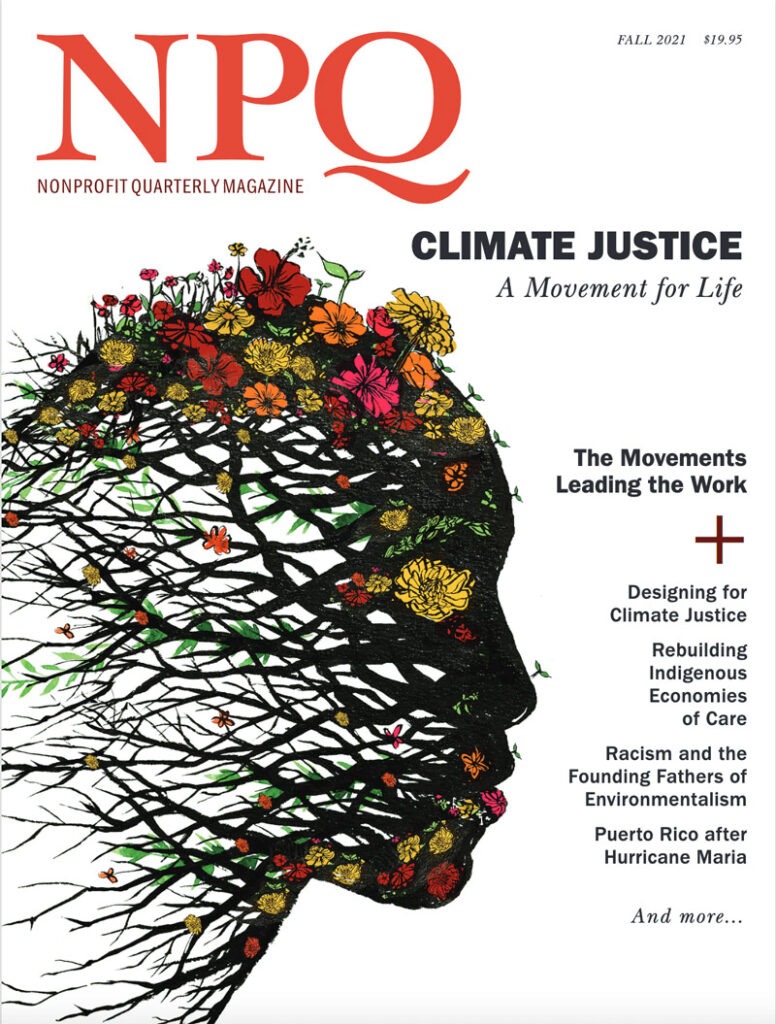
Nonprofit Quarterly’s 2021 Fall issue, “Climate Justice: A Movement for Life.”

Amid a COVID economy and a racial reckoning, co-op leaders and activists explore how co-ops can more effectively advance racial and economic justice.

In recent years, community economic development has seen more CEOs of color. This is critical but is only a first step in restoring community trust.

“Our public discourse remains largely focused on specifics. . . . Our national conversation should instead focus on clearly illuminating this rare opportunity to direct public investment with a racial equity lens, simultaneously expanding access to wealth and economic vitality for future generations.”